Friday, February 17, 2017

Chris Bell: I Am The Cosmos

In addition to the cult around Big Star, a similarly rabid one has developed around Chris Bell, who started the band and left it to Alex Chilton when megastardom didn’t come his way. Besides having an inarguable gift for songwriting, he was also fascinated with the recording process, and had the support of his family, who just wanted to see the kid happy.

He spent the years after leaving Big Star continually honing a small handful of songs, even getting to work on them outside of Memphis with the help of engineer Geoff Emerick, best known for his work with the Beatles. He would release exactly one single before fatally crashing his car into a utility pole at the unfortunate age of 27.

But those two songs made a small impact in their own way. “I Am The Cosmos” is a majestic anthem of heartbreak, with a great guitar solo to match, and a killer fade where the repeated couplet goes from “I’d really like to see you again” to “I never want to see you again”. “You And Your Sister” is very much a flipside, but not a B-side; this tender acoustic love song fits right along “Thirteen” from #1 Record, and even has Alex Chilton on harmonies.

These songs would be covered by the likes of the Posies and This Mortal Coil, and when Rykodisc began their Big Star blitz in 1992, to the label’s credit, they simultaneously released a full CD of post-Big Star recordings by Chris Bell. I Am The Cosmos is not a “lost album”, but a collection of several stabs in the studio over a few years nicely arranged into the equivalent of an LP. Some songs appear twice, in different mixes or different recordings (“Get Away” and “I Don’t Know” are basically the same song, and give the yearning “Speed Of Sound” its basic structure, though it’s not as obvious at first) and the three versions of “You And Your Sister”—the single, a solo recording and a “country version”—don’t seem like overkill.

For the most part, these songs are classic ‘70s-era power pop. “Make A Scene” has one of those rhythms that defies tapping along correctly, and the aforementioned “Get Away” and “I Don’t Know” just plain sizzle. “There Was A Light” and “I Got Kinda Lost” were Chilton-Bell songs he took when he left the band, preserved here with Andy Hummel and Jody Stephens in the rhythm section, and “Get Away” even features Alex on guitar and Jody on drums.

Part of his mythology entailed his struggles with spirituality, making “Look Up” less vague than the more foreboding “Better Save Yourself”. “Fight At The Table” has a simple structure but a raucous arrangement and burbling synth, while “Though I Know She Lies”, one of his last recordings, is suitably sad.

His material was limited, and his strangled voice can be a bit much, but I Am The Cosmos is a worthy inclusion to the Big Star oeuvre, and certainly deserves to be there as much as Third does. When the rights to the band’s recordings shifted to the Rhino, I Am The Cosmos got the expanded treatment via their Handmade sidearm. This edition slightly rejigged the first 12 songs from the Ryko set on one CD, and packed a second with variations and sundry, such as the “extended alternate version” of the title track that didn’t fade before the killer couplet mentioned above. (Also, “Get Away” on the main disc still has its pyrotechnic drum effects, but also has some reverbed mumbles cluttering up the chorus.) Because they didn’t use up all the early stuff for their box set, this disc begins with some pre-Big Star tunes in their Icewater and Rock City incarnations, ending with an acoustic experiment deflated in the last seconds.

Once the Omnivore label went even deeper (and better) with their Big Star project, this album that never really existed got a second double-disc treatment. They’d already designated the pre-Big Star material to its own compilation, so this set relies mostly on alternate takes and mixes of the original “album that never really existed”, ten of which are previously unreleased. Granted, some of these mixes are modern, to highlight different aspects of the sound scape, but since he was such an incurable studio rat it’s interesting to hear all the elements.

Chris Bell I Am The Cosmos (1992)—3
2009 Rhino Handmade Deluxe Edition: same as 1992, plus 13 extra tracks (and minus 1 track)
2017 Omnivore Deluxe Edition: same as 1992, plus 20 extra tracks
Tuesday, February 14, 2017

Pretenders 7: Last Of The Independents

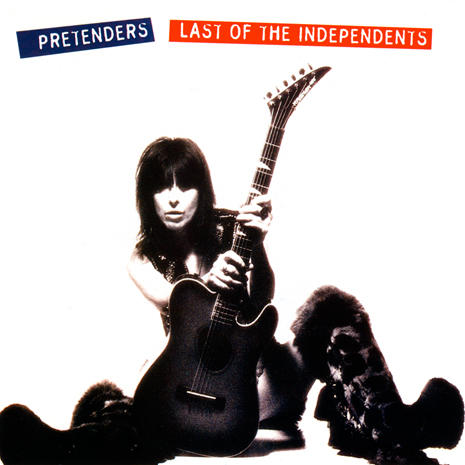
Just as Britpop started to make straight rock popular again in the aftermath of grunge, Chrissie Hynde came across another guitarist up for the impossible task of filling James Honeyman-Scott’s shoes in another incarnation of the Pretenders. Martin Chambers seemingly returned to the fold as well, but a closer look at the credits on Last Of The Independents proves that it’s yet another collection of disparate recordings from different sessions with other rhythm sections (including another refugee from the Smiths). The only constant is Chrissie herself, whom we see right there on the cover.

The sound of the first single, the unabashedly debauched “Night In My Veins”, had pundits declaring it a comeback, but the big hit was the power ballad “I’ll Stand By You”, and it’s between those poles that the album lies. The result is not unpleasant, but hardly indispensible, especially when co-written with ‘80s hit machine Steinberg and Kelly.

The opening sequence of “Hollywood Perfume”, “Night In My Veins” and “Money Talk” is comforting, since the songs all rock, and even the slowdown of “977”, both musically and vocally an homage to John Lennon’s Plastic Ono balladry, is hardly a sentimental tale of a violent lovers’ spat. The hippie social commentary in “Revolution” (not the Lennon song) is where things start to slide to the wimpy, though “All My Dreams” does feature the new “official” lineup of the band and, unfortunately, a spoken monologue.

People who bought the album on the basis of “I’ll Stand By You” may have been jarred by what follows immediately. “I’m A Mother” is a feminist rant set to a danceable Manchester beat thrown off by her tuneless howl of the title and some riffing in a different key. Much more interesting and equally maddening is the snippet of “Tequila”, a country lament that predates the first album. After one lonesome verse it’s superseded by the opaque “Every Mother’s Son”. The rockabilly of “Rebel Rock Me”, complete with hiccupping vocal, recalls “Thumbelina”, possibly the least essential song from her last good album, then we get another by-numbers Steinberg/Kelly collaboration in the way of “Love Colours”. And for some reason she chooses to end the “comeback” with a tepid cover of Dylan’s “Forever Young” (yes, the slow version).

Last Of The Independents is not a bad album, but it’s not what we want from Chrissie. To which she’d likely retort with a string of obscenities, and she’d be right. We’re waffling over whether it should be docked half a point, so watch this space for changes.

Pretenders Last Of The Independents (1994)—3

Friday, February 10, 2017

Pink Floyd 18: Creation

After grandly expanded versions of three of their biggest albums appeared, diehard Floyd heads wondered whether the same treatment would be given to the rest of the catalog. Wisely, the band knew that the market for a multi-disc version of Saucerful Of Secrets would be limited, they took the possibilities to the extreme. The Early Years 1967-1972 offers eleven CDs of mostly rare material, along with nine DVDs and eight Blu-rays of audio-visual artifacts, all divided into years and uniquely titled along the lines of “/ation”, plus replicas of their first handful of singles and tons of printed materials. (It was supposed to be ten CDs, but a disc of their Pompeii concert was included by mistake, requiring a supplement.)

Naturally, this investment entails $500 the consumer may not have handy; each of the volumes within the set would eventually be available separately eventually, with the exception of the bonus Continu/ation volume, dominated by grainy BBC sessions, a live “Echoes” from 1974, and the movies for which More and Obscured By Clouds were recorded. Of much easier consumption is the two-disc distillation of the music from the set, subtitled Cre/ation. Beginning, as required by law, with “Arnold Layne” and “See Emily Play”, it moves forward, past early singles and radio performances, through recent remasters of some tracks. An alternate version of “Matilda Mother” with different lyrics pays tribute to both Syd Barrett and Richard Wright, just as “Point Me At The Sky” seems to predict “Learning To Fly”. Then there’s “In The Beechwoods”, a wonderful performance of an unreleased Syd tune, sadly without lyrics.

Once Syd was out of the band, we can hear the other guys develop into their spacey image, with some moments to contrast and compare. “Careful With That Axe, Eugene” appears in both its single version and a shorter one live on the BBC, both of similar length. “Embryo” is also heard as a studio track, and again in a ten-minute BBC rendition. “Atom Heart Mother” is laid out in its entirety, without the orchestra or choir. “Grantchester Meadows”, Roger solo on Ummagumma, is performed for the radio with help from David Gilmour and Rick. Several excerpts from the Zabriskie Point soundtrack provide variety, and a precursor to “Us And Them”, while “Nothing, Pt. 14” is merely seven minutes of jamming that would better develop in the completed “Echoes”. The set ends with a few selections from the remastered Obscured By Clouds, but choosing to close with “Stay” seems more a tribute to Rick Wright than a wise finale.

Cre/ation is very much a teaser for the larger product, as it merely touches on the sheer volume of stuff to be found there. At the same time, it does provide an excellent lead-in to the era that began with Dark Side Of The Moon, giving plenty of exposure to Syd and some of the better moments from the albums, albeit in alternate but still tight versions.

Pink Floyd The Early Years 1967-1972: Cre/ation (2016)—4

Tuesday, February 7, 2017

David Bowie 40: Lazarus

In addition to recording what turned out to be his last album, the other thing David Bowie was working on the year nobody knew he had terminal cancer was a stage musical based on the character he played in the wacky 1976 film The Man Who Fell To Earth. If the liner notes are to be believed, the cast recording for Lazarus took place the morning the world found out he was gone.

The musical becomes something of a Bowie revue, pulling together over a dozen tunes from his career, some well-known (“Changes”, “All The Young Dudes”), some not as much (“It’s No Game”, “This Is Not America”), some more recent (“Valentine’s Day”, the title song), and three previously unheard. There’s a rock combo for the backing, with Bowie saxes, and if you ever wanted to hear the guy from Dexter and the subject of How I Met Your Mother sing Bowie, here’s your chance. Try as they might, the men can’t help but add Bowie inflections to their delivery, while Sophia Anne Caruso’s solo spots are pure Broadway kiddie schmaltz. The newer songs stick to the templates on The Next Day and Blackstar, but some of the older ones get arrangements that aren’t exactly karaoke. (Presumably key to the plot are snippets of Ricky Nelson singing “Hello Mary Lou” and Bowie’s own recording of “Sound And Vision”.)

The big deal here, of course, is Bowie’s own versions of those three new songs, added on a bonus disc along with his rendition of the title song, providing 12 precious additional minutes of music as another kind of farewell (and eventually released as the digital-only No Plan EP on its own to celebrate what would have been his 70th birthday, followed by a physical release some weeks later). “No Plan” is moody and melodramatic; “Killing A Little Time” is edgy and clattery; “When I Met You” is romantic and anthemic. All are up to the quality and spirit of the last two albums, and will likely be dissected over the years to come in the absence of any other recordings from his final years. At least they weren’t tacked onto a “special deluxe” reissue of Blackstar, which would have forced us to buy that album again, and would arguably have messed with its unity. (The rating below is for the new songs, as we’re casting—yeah, we said it—aside the versions redone for the musical.)

Lazarus: Original New York Cast Recording (2016)—3

Friday, February 3, 2017

Suzanne Vega 9: Close-Up

It’s common for musicians to release re-recorded versions of songs. It happened all the time in the standards era, so connoisseurs could compare how Frank Sinatra delivered a tune in his twenties to his approach decades later. Many live albums offer straight reproductions of hit singles and album tracks to adoring audiences. However, in an age when music can be shared and distributed faster, wider, and easier than ever, anytime an artist redoes his or her own music the cynical eyebrow is raised.

Suzanne Vega was very straightforward when she began her Close-Up series, which presented new recordings of her songs, chosen from her entire catalog, released in four thematic volumes. Her reasons were that some of her albums were out of print, and mass consolidation across the music industry didn’t guarantee future royalties from them. Therefore, new, mostly stripped-down renditions of songs she still liked playing would bring another opportunity to gets paid, yo.

We adore her voice, and wish we could hear her sing from the kitchen when it’s her turn to do the dishes, so we admit to a bias. Unlike other singers, her range is the same as it always was, though some of those high notes have been lost to a quarter-century. While some songs sound the same as ever, whether acoustic (“Small Blue Thing”, “Gypsy”) or electrically embellished (“Marlene On The Wall”), it’s more interesting to hear the ones rescued from busy production (“When Heroes Go Down”, everything from Nine Objects Of Desire). But she also keeps “(If You Were) In My Movie” and “Fat Man And Dancing Girl” close to their original clattering arrangements, and not exactly “stripped down”.

Each of the volumes has something to offer, and even had different bonus tracks, depending on where you bought them. Love Songs is the most successful; because it’s the first one, the novelty is new, but it also offers some of her prettiest tunes. People & Places, with its observations and speculations, is a little more embellished, and also has her two most famous songs in “Luka” and “Tom’s Diner”, the latter delivered closer to the style of the bootleg remix. The big draw is a version of “The Man Who Played God”, originally part of a collaboration with Danger Mouse and the late Mark Linkous of Sparklehorse. States Of Being covers “emotional turmoil”, and deviates least from the originals, with such embellishments as a string quartet and a new song in the way of the then-unreleased “Instant Of The Hour After”. Songs Of Family would appear to be her most personal songs, being inspired by her daughter, her divorce, her childhood, and her lineage. Mostly back to the original sparse brief, it includes three more produced “new” tracks, two of which were among the first songs she ever wrote.

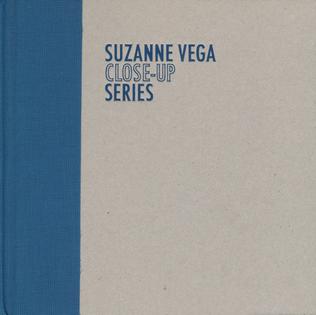
That’s four albums that revisit most of her previous seven albums, with Days Of Open Hand being the least represented. The way to get it all would be Close-Up Series, a book-style package that includes each volume, plus another disc containing another album’s worth of the bonus tracks offered up on various digital platforms (including a version of “Luka” sung in Spanish), lyrics for every song, and a live DVD. Being a box set it’s on the pricey side, but that’s to be expected.

Suzanne Vega Close-Up Vol. 1, Love Songs (2010)—
Suzanne Vega
Close-Up Vol. 2, People & Places (2010)—
Suzanne Vega
Close-Up Vol. 3, States Of Being (2011)—3
Suzanne Vega
Close-Up Vol. 4, Songs Of Family (2012)—
Suzanne Vega
Close-Up Series (2014)—

Tuesday, January 31, 2017

Flying Burrito Bros 5: Close Up The Honky Tonks and Sleepless Nights

Like any smart label, A&M cashed in on both Gram Parsons’ death as well as the first breakup of the Flying Burrito Brothers with a double-LP compilation. Close Up The Honky Tonks devoted the first half to a side each of selections from Gilded Palace Of Sin and Burrito Deluxe, plus the single “The Train Song”. The second half was all previously unreleased material. Side three was all covers—mostly country, but also the Bee Gees’ “To Love Somebody”—from a session recorded with Gram shortly before Altamont, and side four came from the sessions for the third album: more covers, as well as the lost classic “Did You See”, Sneaky Pete’s workout “Beat The Heat”, and Gene Clark’s “Here Tonight”, the one song recorded the week he was in the band. (This album would be superseded by later Burritos compilations, and many of the rarities made it to 2000’s Hot Burritos! double-CD anthology, along with the first three albums in their entirety.)

Two years later, with Gram’s legend growing, they decided to spotlight their onetime artist with another set compiled from the same source as side three of the last album, giving him top billing and a moody cover shot on Sleepless Nights. These were more country weepers, with the exception of “Honky Tonk Women”, taken even cornier than the Stones’ own “Country Honk” variation. But nine tracks weren’t enough to fill up another album, so they wisely licensed three outtakes from Grievous Angel, all duets with Emmylou Harris. Besides sounding better from being actually produced instead of just recorded, they shine compared to the others, particularly on the title track.

Overall Sleepless Nights is more country than rock, and doesn’t really spotlight the band, who could certainly cook when given the opportunity. If its legacy means anything, the album meant a lot to Elvis Costello, who would mine this and other Gram Parsons performances for the selections on his own Almost Blue five years later.

The Flying Burrito Brothers Close Up The Honky Tonks (1974)—3
Gram Parsons/The Flying Burrito Bros.
Sleepless Nights (1976)—3
The Flying Burrito Brothers
Hot Burritos! The Flying Burrito Brothers Anthology 1969-1972 (2000)—

Friday, January 27, 2017

Thunderclap Newman: Hollywood Dream

Anytime we analyze a one-hit wonder on this dais, it’s usually because the accompanying album to said hit single actually has plenty to recommend it, a result that is never guaranteed. Thunderclap Newman is one of those beloved one-hit wonders, so beloved that the first two editions of the indisputable (okay, stop laughing) Rolling Stone Record Guide gave their only album five stars. (The third edition knocked it down to three, and the most recent edition doesn’t mention it at all.)

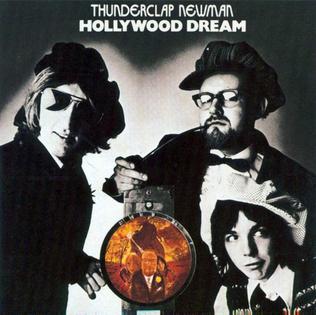
Hollywood Dream arrived about a year after the surprise success of the sublime “Something In The Air”, and though the band did some touring, they didn’t last long enough to make a follow-up. That was no big surprise, seeing as the band was built around singer-songwriter-drummer John “Speedy” Keen (who did some driving for Pete Townshend, and contributed “Armenia City In The Sky” to The Who Sell Out), ragtime pianist-horn player Andy Newman (who went to art school with Pete before going on to work for the post office) and then-teenage guitarist Jimmy McCulloch (who didn’t have any connection to Pete we can discern). Jimmy’s brother played drums on stage so Speedy could stand up front and sing, and they recruited another guy to play bass, since Pete had handled that instrument himself pseudonymously while producing the album.

That last factoid has a lot to do with why the album is still of interest to anyone outside curiosity over the single. While Jimmy would go on to be renowned for his fine fretwork, some of the drumming, simpler piano playing, and certain acoustic guitar passages sound very similar to performances us Who freaks recognize from Pete’s home demos. Maybe Speedy played on some of those? Whatever the truth, some of these songs would be pirated on bootlegs under the mistaken guise of unreleased Townshend compositions.

The original album had “Something In The Air” as the last track, while later reissues moved it all the way to the top. There’s a good argument for both ways, particularly when one notices that many of the songs follow the same basic template as the hit: two-chord intros, descending basslines at verse ends, some of the melodies, and detours over the bridges where Newman’s piano sounds like it’s in a different key than the rest of the song at hand. Another limitation comes forth as well: “Weedy” would have been a better nickname for the auteur, as Mr. Keen was not blessed with a fine singing voice or reliable pitch. (He also had a nose rivaling that of the producer.)

The single aside, the album is bookended by two different versions of the same song. “Hollywood #1” ends in a solo piano ramble, while “Hollywood #2”, which comes out of the unrelated instrumental title track, has percussion piled on like closing credits. In between, the album bounces back and forth like a taut bungee cord. “The Reason” sounds a lot like 1970 Pete, is a strong tune to rival the single, and provides a similar template for the cover of Dylan’s “Open The Door, Homer”, yet to be let out of the basement. “Look Around” and “The Old Cornmill” are solid rockers, but the big eyebrow-raiser is “Accidents”, a slightly morbid nursery rhyme turned into a nine-minute exploratory jam.

While essential for Who fans, Hollywood Dream inhabits a unique corner of pop music, a British version of country, music hall and trad jazz. The Bonzo Dog Band is referenced in other summaries, but we hear early Badfinger in here too. And since it was their only album, the CD reissues kindly include the single versions of “Something In The Air”, “The Reason” and “Accidents” (at less than half the length, with different vocals) along with their B-sides, and more kazoo than most people will endure.

Thunderclap Newman Hollywood Dream (1970)—3
1991 CD reissue: same as 1970, plus 6 extra tracks