Wednesday, December 30, 2009

Rolling Stones 13: Through The Past, Darkly

While the Stones took their sweet time finishing their next album, both their American and British record companies filled the gap with a hits collection (naturally, with different contents to complement with what each had already compiled in 1966). Through The Past, Darkly brought us up to date on the band’s middle period, straddling the transition from Swinging London to the cusp of their ascension to the title of best rock ‘n roll band in the world. (The Who would disagree, but we don’t have time for that now.)

All the big singles to date are included, in a juggled chronology that still flows well. “Paint It, Black” gives way to “Ruby Tuesday” (making its third LP appearance, along with “Let’s Spend The Night Together”) before falling into the psychedelia of “She’s A Rainbow”. “Jumpin’ Jack Flash” and “Honky Tonk Women”, still classic singles, make their 12-inch debuts, while “Mother’s Little Helper” and “Have You See Your Mother, Baby” get encores. “Dandelion” and “2,000 Light Years From Home” continue the trippy feel, and it all comes home with “Street Fighting Man”.

Sure, there were a few unalbumized songs that could have been collected, but that would be rectified soon enough. Besides, there was that cool eight-sided sleeve with the dedication to poor departed Brian Jones on the inside to make Through The Past, Darkly seem even more special. The music speaks for itself, and they were just getting warmed up. (The British version of the album was released the same day, and with the same cover design, but with a rejigged order that also omitted the songs that had already appeared on their version of Big Hits (High Tide And Green Grass) three years before. In their place came “You Better Move On” from the first EP, “Sittin’ On A Fence”, which the US got on Flowers, and “We Love You”, which wouldn’t make an American album for another three years.)

Rolling Stones Through The Past, Darkly (Big Hits Vol. 2) (1969)—5

Monday, December 28, 2009

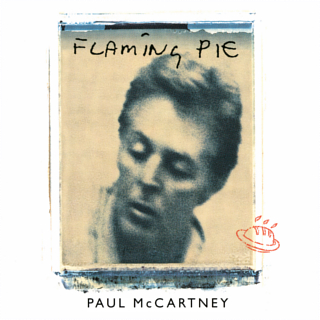
Paul McCartney 23: Flaming Pie

Beatle activity took precedence for a time, so Paul abandoned the band he took around the world twice. Once the Anthology project blew over, we were pleasantly surprised to hear he had a new album all ready, and mortified to hear that half of it was produced by Jeff Lynne.

Flaming Pie might as well be called McCartney III, since it was written and recorded fairly quickly, with a minimum of pretension and him on most of the instruments. But there are other musicians on it, and the resulting title refers to a John Lennon expression as a nod to the old days when making records was fun and carefree.

“The Song We Were Singing” is a fantastic start, not unlike a pub singalong. “The World Tonight” has some fine spiraling guitar that’s not undercut by the drums. Constant readers will have noted how Jeff Lynne can take some of the world’s greatest rock drummers and make them sound like a machine. In this case, it’s Paul on drums, so he can only sound better. “If You Wanna” is an inoffensive throwaway not unlike “Things We Said Today”. “Somedays” is a very sad sounding song, with mournful strings, but the lyrics are more wistful in their nostalgia. “Young Boy” was the British single, and a good choice, with a slowed-down ending stolen from “Whiter Shade Of Pale”. “Calico Skies” was recorded during the Off The Ground sessions with George Martin, and is full of overtones from his first album. Then “Flaming Pie” comes crashing in. With its obnoxious vocal and pounding piano, it’s another example of getting the recipe exactly right.

“Heaven On A Sunday” takes the mood down again, with atmosphere and interlocking guitars, one played by his son James, for a nice evocation of late-period Wings. The wholly unwelcome Steve Miller is all over the idiotic “Used To Be Bad”, but “Souvenir” provides a little bit of soul, a well-written R&B torcher. “Little Willow” is an incredibly gentle song for any lost friend, in this case Ringo’s ex-wife Maureen. Truly touching and elegantly played. He made a big deal out of finally writing a song with Ringo, but “Really Love You” isn’t a song, it’s a five-minute timekiller. If you skip this one you go right into “Beautiful Night”, that one song per album that’s guaranteed to please. The verses are gorgeous, the choruses are gorgeous, the orchestral arrangement is gorgeous, and the silly party ending can’t kill it. And it’s always nice to follow a beautiful night with a “Great Day”, which probably dates from the 1971 “Bip Bop”/“Big Barn Bed” period. Linda joins in, and the next thing you know, you’re pressing the play button again.

Flaming Pie was such a nice surprise, and completely unexpected. Even Jeff Lynne and Steve Miller couldn’t tarnish the fun to be had herein. In fact, even taking out “Used To Be Bad” and “Really Love You” we still have twelve above-average, fully realized McCartney songs. And with the late-year release of yet another classical work, Paul McCartney’s Standing Stone (a tone poem with orchestra and wordless chorus), he had every reason to be proud. But all was not well at home; Linda’s health would be a concern for the time.

The album was a surprising installment in his ongoing Archive Collection series, partially because it came out before two Wings reissues, and certainly because many fans were faced with buying an expanded version of an album they’d already bought on CD once. The cheaper version included a full second disc with demos of all but two songs—namely, the not-missed “Used To Be Bad” and “Really Love You”—plus other alternate versions and four B-sides of varying musical quality. Exactly two “new songs” are included: the improvisation “C’mon Down C’mon Baby” and the still half-written “Whole Life”, supposedly a collaboration with David A. Stewart, working the Tom Petty example backwards.

More affluent collectors could spring for the big box, which spread the extras over two discs, with a few more rough mixes. Another disc is devoted to the Oobu Joobu samplers previously excerpted on various British CD singles, presenting some further rarities in a proto-podcast radio show format. A fourth disc called Flaming Pie At The Mill consists of an audio stroll through the making of the album. Two DVDs, a book, facsimiles, and other ephemera left many wishing they had a fraction of Paul’s disposable income.

Paul McCartney Flaming Pie (1997)—3½
2020 Archive Collection: same as 1997, plus 21 extra tracks (Deluxe Edition adds another 12 tracks plus 2 DVDs)

Friday, December 25, 2009

Beatles 28: Anthology 3

To close out the trilogy, Anthology 3 followed in October. But this time there would be no “new” song, so the set starts with a short orchestral piece by George Martin that purports to be from the White Album sessions, but is actually incidental music from the Yellow Submarine film.

The rest of the disc is not strictly chronological, but only features songs from the latter half of 1968. There are those who demand the release of the legendary 27-minute version of “Helter Skelter”; if this plodding excerpt is any indication of the quality, we’re not missing anything. Several songs recorded at George’s house shortly before the White Album sessions started give an interesting perspective on material that would turn up later. Unfortunately, most of the EMI outtakes included from this period sound too close to the standard versions for them to be interesting, but there are a few exceptions. “Ob-La-Di, Ob-La-Da” is the first completed version, more calypso than ska. “Good Night” begins with just Ringo and George Martin’s piano, then fades into the orchestra. George stark, haunting solo demo of “While My Guitar Gently Weeps” will floor anyone who thinks of it only as a heavy tune. “Not Guilty” wouldn’t be heard by the public until George rerecorded it in 1979, despite the over a hundred takes it took to get to this version that would have been a worthy White Album track. The first mono mix of “Glass Onion” included an odd collage before George Martin replaced it with sinister strings; this version is welcome here. “What’s The New Mary Jane” is a chaotic collaboration by John with Yoko, George and Mal Evans. The song itself is weird enough, but the four minutes of noise at the end will be less appealing to those who can’t stomach “Revolution 9”. A take of “Julia” closes the disc, and there’s something very poignant hearing John talk with Paul at the end without any of the tension that supposedly permeated throughout the year.

The second disc also jumps around to liven up the dull Get Back takes, but then again, that whole period was out of order to begin with. An aborted “I’ve Got A Feeling” that had been strangely shortlisted for the original album starts us off, followed by a trudge through “She Came In Through The Bathroom Window”. Paul lopes through “Teddy Boy” to nobody’s pleasure—not even his. A dull “Oh! Darling” is undercut by John’s preoccupation with Yoko’s divorce, but it is nice to finally hear “The Long And Winding Road” before Spector got his mitts on it. Three demos by George are scattered throughout the program to add some excitement. “Mailman Bring Me No More Blues” was on the aborted Sessions album, which slightly justifies its inclusion here. The only part of the famous rooftop performance we get is the final “Get Back” after the cops arrived. There isn’t much included from the Abbey Road sessions, save a raspy, low-key “Ain’t She Sweet”, Paul’s one-man band demo of “Come And Get It” that was the note-for-note prototype for Badfinger’s single, and an ethereal mix of “Because” that shows off the vocals. “I Me Mine” shows up in its original short form with timely studio chat. “The End” has more guitars and orchestra for the grand finale, and the last thing we hear is the final piano chord from “A Day In The Life”: rising, striking, and falling.

Each disc on Anthology 3 is over 70 minutes, compared to the 60-minute program on the other volumes, which almost makes up for the lesser quality of selections here. Listening to this volume, whether in tandem with or separate from the first two, only reminds us that for all the effort they put into Abbey Road, the band truly ended with a whimper and so much left undone. Had they only managed to stay interested longer, they still could have put some pretty good albums together and apart. But it doesn’t matter now. Each Anthology CD set, as well as the video box set, sold just as well as expected. Their back catalog already had strong legs, and continued to sell despite a premium price tag. While EMI hinted that there would be more goodies to come, the Threetles insisted the well was finally dry. (Spoiler alert: it wasn’t.)

The Beatles Anthology 3 (1996)—3

Wednesday, December 23, 2009

Beatles 27: Anthology 2

Anthology 2 followed just a few months after the first installment, with just a slight delay for a rejigged sequence. Another “new” song opens the set, and it’s a winner. “Real Love” was first heard legally as an acoustic snippet from the Imagine film in 1988, and because it was actually finished before the others got their mitts on it, it was the favorite. (Hence the solo writing credit for John.) Paul and George were able to add their parts instinctively, though we don’t know whose idea the key change was. If you’re looking for the grand finale to the Beatles songbook, it beats “Free As A Bird”.

But while we’re here, it’s back thirty years. Anthology 2 neatly covers the band’s transition to a strictly studio band, while giving plenty of evidence that despite their attitude, they could still cut it live.

Moving outside a strict chronology, we hear an early take of “I’m Down” that kicks the tempo up a bit. The shortcomings of the Help! LP come through with the full-fledged outtakes of both “If You’ve Got Trouble” and “That Means A Lot”. The former is a loud Ringo basher, while the latter steals its arrangement from “Ticket To Ride”. Excerpts from a TV show include George’s hilarious introduction to the crowd’s first acquaintance with “Yesterday”, while Shea Stadium is represented by “Everybody’s Trying To Be My Baby”; the roar of the audience is deafening. Only three outtakes from Rubber Soul appear: an early “Norwegian Wood”, the completed first stab at “I’m Looking Through You” without the middle eight, and a three-minute edit of the notorious “12-Bar Original”. Then, it’s feet first into Revolver with the first recording of “Tomorrow Never Knows” that’s even crazier than the final take. “Got To Get You Into My Life” is dominated by discarded harmonies and a single organ chord. John and Paul giggle incessantly throughout an overdub session for an embryonic “And Your Bird Can Sing”. Some later run-throughs of “I’m Only Sleeping” show that perhaps the version we know wasn’t always their favorite. The full take included is anticlimactic coming after the effective instrumental on vibes. We go to Japan for two live songs from the last tour—and that’s just the first CD.

For those who enjoy such things, some of the more thorough bootleggers have compiled entire LPs with nothing but “Strawberry Fields Forever” in various stages of development. Disc 2 doesn’t go quite that far, but does allude to its progress. We first hear parts of John’s demos, followed by the first studio take and the complete take 7 with the drum coda from take 26. This way we get the song as originally played, plus a peek at how the two halves sounded on their own. Alternate mixes of “Penny Lane” and “A Day In The Life” demonstrate some of the fascinating sounds that were discarded before the final mixes. Without the brass, “Good Morning, Good Morning” sounds truly different—and listen to the bass running all over the place. “Only A Northern Song” also benefits from having the chaotic effects stripped away. The alternate “Sgt. Pepper (Reprise)” is notable for the minor chords at the start that got buried on the album, but the real surprise comes with the reedited “You Know My Name”, in stereo for the first time, with a previously unheard ska section that’s just plain hilarious. Simpler takes on “I Am The Walrus” and “Fool On The Hill” are mesmerizing, while a soothing, more Indian stab at “Across The Universe” ends the collection.

As it covers 1965 through the first sessions of 1968, Anthology 2 was the early choice as the installment most likely to be the most interesting. And it really is. There’s plenty here that hadn’t been heard before, and it shows how the boys began to really stretch in the studio. It also enhances one’s enjoyment of Anthology 1, giving it a wider perspective. Many purists cried foul at so many of these tracks being compiled from separate takes, but this way they could include all the interesting parts of each song. (Three and a half songs’ worth of “Strawberry Fields” is the limit here.) You can’t please everyone, and those who were most offended had all the missing stuff on bootlegs anyway. And now they had stuff they’d never have heard otherwise.

The Beatles Anthology 2 (1996)—4½

Monday, December 21, 2009

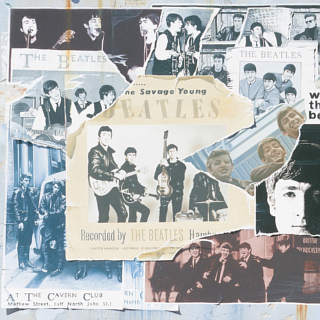
Beatles 26: Anthology 1

For years, anyone and everyone connected with Apple said that the standard albums (and Past Masters collections) contained all the Beatles music that was to be heard. However, that was not the complete truth. EMI had even prepared a companion to Rarities of all unreleased recordings called Sessions, but quashed it after John died. Once pristine bootlegs started appearing with hours of tape from the Abbey Road vaults, it was clear that not only was there more to be heard, but some of it was actually pretty good.

By the ‘90s, a montage of home movies compiled by Beatle insider Neil Aspinall had ballooned into a full-fledged band-endorsed autobiography, consisting of a multi-part television documentary—with video release and companion book to follow—concurrently promoted with three double-disc CD sets. Adding to the excitement, the first two TV installments each had a countdown clock over the closing credits leading up to the worldwide premieres of the first new Beatle songs in over 25 years. (Both were original late-’70s demos of Lennon compositions embellished by the “Threetles” with help from Jeff Lynne to ensure that the classic vibe would remain.)

Of the CDs, Anthology 1 most closely mirrors the documentary format of the broadcast. We follow their growth from a ragtag rockabilly outfit into EMI recording artists, with several tracks of spoken words from John, Paul and Brian Epstein included to help the story along for those of us who didn’t already know it by heart. But the very first thing we hear is “Free As A Bird”. Anticlimactic at first listen, this song has managed to tug all the right heartstrings without fail since its debut. Jeff Lynne drains all the life out of Ringo’s drums, but the harmonies and solo vocals by Paul and George more than suffice. Could we really have expected this to rank with any one of their greatest songs?

From there it’s all about the history, from the 1958 recordings of “That’ll Be The Day” and “In Spite Of All The Danger”, through some home demos from 1960 to highlights from a real studio in Germany. The best moments from the much-recycled Tony Sheridan period include “My Bonnie”, which looms large in the apocrypha, “Ain’t She Sweet”, with John’s confident swaggering lead, and the instrumental “Cry For A Shadow”. Then we’re listening to their failed Decca audition; Pete Best’s drumming is pretty dull, and Paul suffers from nervous over-enthusiasm. Once at EMI, we get official releases of such legendary outtakes as “Besame Mucho” (Paul does Ricky Ricardo), “How Do You Do It” and “One After 909”, seven years before its appearance on Let It Be. The remainder of the first disc showcases their live sound from various radio and TV shows.

Disc 2 takes us back to John telling the Windsors to rattle their jewelry, followed by an appearance on the BBC’s Morecambe & Wise TV show. It’s a quick jump to Paris for the first try at “Can’t Buy Me Love”, a pleasant change from the classic version that found its way onto seven or eight Capitol LPs. Ed Sullivan’s introduction of “All My Loving” is an essential piece of history, then it’s back to the studio. “You Can’t Do That” is fairly close to the released version, but the big surprise is the first take of “And I Love Her”, with heavier tom-toms and a more electric backing. The highlight of some recordings for the Around The Beatles TV show is undoubtedly their unique version of “Shout”, crammed into a minute and a half. The blistering “Leave My Kitten Alone”, had it been included on Beatles For Sale, would have been hailed as one of their best performances of that era. A fascinating sequence shows the evolution of “Eight Days A Week” through various experiments before they arrived on the fade-in idea. Riveting alternate takes and other unheard songs round out the set.

Anthology 1 is essential listening for any Beatle fan who’s already devoured the canon proper. With all the new material, diehards were mostly impressed by this first installment, and looking forward to the next two. The general public bought it too, though coming on the heels of the TV show, those who hadn’t read the fine print thought they were getting a hits package. The CDs subsequently showed up in used bins, much to the delight of consumers willing to pay it closer attention. We couldn’t wait for more.

The Beatles Anthology 1 (1995)—4½

Friday, December 18, 2009

Brian Eno 7: Cluster Collaborations

Fans of Eno’s “first four” would be well advised to seek out his work with Cluster, a German duo who’d been big on the electronic scene for some time. These more obscure albums go in and out of print every couple of years or so, usually reappearing in a different track sequence, but stand out above some of the less, shall we say, exciting entries in his catalog.

Cluster & Eno is entirely instrumental, covering a wide range of sounds and moods, with only their predominantly German titles to give any hint to the meaning. The opening “Ho Renomo” (whatever that means) is perhaps the most successful track, a wandering improvisation of three different keyboards and some guitar interjections. “Schöne Hände”, “Wermut” and “Steinsame” are more uneasy, but “Für Luise” is a little prettier in its sadness. The phonetically accurate “Die Bunge” fits something of a cowboys-in-space motif, while “One” is an improvisation featuring what sound like sitars.

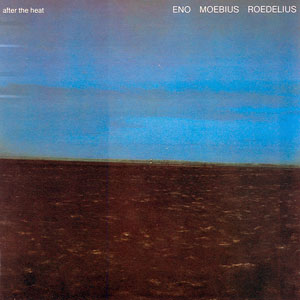
Because of the lack of credits, it’s not easy to tell just how much of the album was Cluster and how much was Eno. What he contributed is much clearer on After The Heat, which includes three vocal tracks scattered throughout the mysterious and mystical instrumentals, including the luminous “Old Land” and “The Shade”. The best vocal by far is “The Belldog”, which brings back the sound from Before And After Science with a wonderfully opaque lyric and soaring melody. “Broken Head” is given a monotonous reading, and “Tzima N’arki” meshes an Asian-influenced backing track with a backwards vocal that produces a similar feel. (And once you realize that the vocal comes from “King’s Lead Hat”, you’ll spend half the song trying to sing along.)

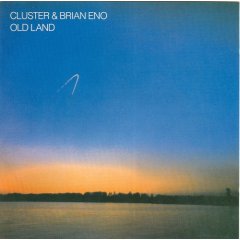
This music wasn’t more widely available in this hemisphere until 1985’s Old Land compilation, which sampled both albums, including the tracks with Eno’s vocals, though they swapped the titles of two songs. This mistake would be continued when both albums were finally issued on CD ten years later, as well as on the two Begegnungen compilations, which further covered Cluster’s collaboration with Eno and without. These albums aren’t everyday listening, but they deserve wider exposure. The possibilities of the Internet make it easy to find them with just a little digging.

Even more obscure, mostly because of its understated labeling, is an album worth of recordings that pre-date Cluster & Eno. Shelved for over two decades, Tracks And Traces is credited to Harmonia 76, being the moniker the Cluster duo used when working with former Neu! guitarist Michael Rother. “76” refers to the year the sessions took place, with Eno along for the ride. More electronic than the other two, it’s occasionally prettier and occasionally unsettling.

Cluster & Eno Cluster & Eno (1977)—3
Eno Moebius Roedelius
After The Heat (1978)—3½
Cluster & Brian Eno
Old Land (1985)—3
Harmonia 76
Tracks And Traces (1997)—3
2009 reissue: same as 1997, plus 3 extra tracks

Wednesday, December 16, 2009

Rolling Stones 12: Beggars Banquet

Beggars Banquet is the first of several Stones albums from the undisputed height of their career. While it does sound of a piece with its time—such as the occasional use of a Mellotron and Indian instruments—they mostly went back to basics, concentrating on guitars and the straight production style of Jimmy Miller, an American who’d recently worked with Traffic.

You may have heard it so many times, so you’re forgiven for skipping the first track on side one, the well-worn “Sympathy For The Devil”. You’d be well rewarded by diving straight into “No Expectations”, featuring Brian Jones’ last great contribution to the band (the mournful slide guitar) and the great Nicky Hopkins on heartbreaking piano. This song always conjures mental images of a stream in the woods for some reason. “Dear Doctor” is a funny one; who would have guessed they could be this clever? “Parachute Woman” is a chugging interlude before the epic “Jigsaw Puzzle”, with its Dylanesque cast of characters. Right there you’ve got a classic album side, and you’d be excused to lift the needle back to “No Expectations” several times before finally flipping the record over.

On to side two. The first thing to say about “Street Fighting Man” is that there’s not a single electric instrument on it—the drums and acoustic were recorded to a cassette and everything else was added after that, which is why it sounds so distorted. Get down indeed. “Prodigal Son” is a dirty blues tale right out of the Bible, while “Stray Cat Blues” is about as far as you can get from the Bible. The drums here are just one reason why Charlie Watts should be knighted. This is an incredible performance, and the last minute or so still kills every time—Mick’s “ba-ba, ba-boom boom CHA”, the rumbling bass, Charlie and Nicky taking over while Keith strangles a few more notes out of the guitar, and on out till the mix stops. “Factory Girl” is a fiddle-laden slice of English folk, while the closing “Salt Of The Earth” could pass for the real thing. Keith sings the first part of this one, and his young voice is already wrecked.

Beggars Banquet is one of the more unlikely country albums by a rock band, along with Elvis Costello’s Almost Blue. While it’s definitely electric, and no one would confuse it with Garth Brooks, the majority of the tracks sports acoustic guitars and hick vocalizations. But calling this “Stones do country” risks a disservice to an album that needn’t be pigeonholed as such.
The album came out in the days when bands (in the UK, anyway) would have put out a new single the same week, with tracks that weren’t on the album—in this case, “Jumpin’ Jack Flash”, which you can find on any number of hits collections, and the unjustifiably buried classic “Child Of The Moon”, which can be found on More Hot Rocks. Back in the days when you’d put Beggars Banquet on one side of a 90-minute Maxell (usually with Let It Bleed on the other), both of those songs had to be added at the end of the side. Rules, after all, are rules.

The 50th anniversary of the album would have been an excellent opportunity to include that single, any of the outtakes that dribbled out on Metamorphosis, and of course, unheard sessions and whatnot. Instead, the anniversary packages were limited to yet another remastered CD and, if you bought the vinyl version for thirty bucks, a flexidisc with a “rare” Jagger interview and a one-sided 12-inch 45 of “Sympathy For The Devil” in mono. At least, in respect to the history of the album, the invitation style cover shown above was used as a slipcase over the infamous toilet shot that had originally prevented the LP’s release, yet had been the standard cover since the album’s reissue in 1986 on CD and remastered vinyl.

Rolling Stones Beggars Banquet (1968)—5