Thursday, February 28, 2013

Paul Simon 6: Greatest Hits, Etc.

Having begun to work more slowly than ever, Paul Simon went for the standard contract-ending maneuver. Greatest Hits, Etc. compiled tracks (hits and otherwise) from his four solo albums of the decade, sweetened by two new songs to suck in those who’d already bought the albums. “Slip Slidin’ Away” has since become one of his more popular standards, an easygoing meditation on good people trying to do good things, with a clip-clopping rhythm and the Oak Ridge Boys harmonizing along. “Stranded In A Limousine” is a funky, jazzy parable that’s probably about something more profound, or at least designed to sound that way.

There’s no denying the worthiness of the hits in this package (“Me And Julio”, “Mother And Child Reunion”, “50 Ways…”) but some of the choices to fulfill the “etc.” label are up to personal taste. “Have A Good Time” mars side one, but is redeemed by the live version of “Duncan” that follows, and “I Do It For Your Love” on side two. “Take Me To The Mardi Gras” is simply an odd way to end the album, particularly coming after the raucous “Loves Me Like A Rock”. What’s more, “My Little Town” is glaringly absent.

With the snail’s pace that would follow, it would be a long time before he had any worthy contenders to add to his roster of “hits”. By the time that happened—in a big way—Greatest Hits, Etc. no longer sufficed, and was replaced with a more comprehensive set on another label. “Slip Slidin’ Away” would remain in the pantheon, but “Stranded In A Limousine” would revert to rarity status, not returning to general availability until the new century.

Paul Simon Greatest Hits, Etc. (1977)—
Current CD availability: none

Wednesday, February 27, 2013

Frank Zappa 14: Just Another Band From L.A.

Frank kept the latest version of the Mothers busy on the road, performing against mounting odds and rigorously rehearsing new material with which he could astound audiences. Just Another Band From L.A. was recorded a whole two months after (and across the continent from) the Fillmore album, capturing a (mostly) new set of music.

The centerpiece is “Billy The Mountain”, a side-long operetta designed to showcase for Flo & Eddie’s capacity for inside jokes designed to please Frank, but what’s staggering is the band’s ability to stay so tight despite the seemingly improvised structure. The jokes that succeed best are the musical ones, from the repeated quote from the Johnny Carson theme to “Suite: Judy Blue Eyes”. As ever, Flo & Eddie are fine when they’re harmonizing straight, but have two incredibly obnoxious voices at other times (particularly when they’re trying to out-snark each other). There are even some nice melodies framing the piece, which would have been nice to enjoy unadorned. Unfortunately, this would not be the last time Frank would attempt a lengthy narrative piece.

Side two is a little more structured, bookended by two older Mothers tunes (“Call Any Vegetable” and “Dog Breath”) that were good choices to be tackled by the new lineup (and something of a thumbed nose to the discarded Mothers who’d originally recorded them). “Eddie, Are You Kidding?” would seem to be a parody of a local guy hawking suits off the rack, while “Magdalena” is a more blatant in its content, that of a man attempting to rape his presumably hot teenage daughter. (Pretty hilarious, right?)

When the music is allowed to breathe—and Frank stopping his “directing” long enough to rip a wah-wah solo—it’s fairly impressive. But overall, Just Another Band From L.A. is another assault, a dare to those not “with it enough to get it” and another cheap thrill for those who wished the Fillmore album wasn’t so short. In the real world, a variety of mishaps caused Frank to disband this version of the Mothers as well, effectively putting Flo & Eddie out of work. Proving that with most things in life, we must take the good with the bad.

Las Mothers Just Another Band From L.A. (1972)—2

Monday, February 25, 2013

Traffic 2: Traffic

Traffic was barely out of the gate (sorry) before Dave Mason left the band. He was soon coaxed back for their second album, where he would play a more prominent role. Traffic bears little of the psychedelia that defined their first album and singles, so maybe that’s why it got the simple title.

The jaunty “You Can All Join” is a celebration of the communal spirit still prevalent in 1968, a happy little singalong to start the side. “Pearly Queen” manages to get a good groove out of a blues riff, with plenty of organ. “Don’t Be Sad” is a nearly sweet pop song with clever rhythms and sustains, while “Who Knows What Tomorrow May Bring” would be improved a year later as “Shanghai Noodle Factory”. Hidden at the end of side one is a song that would soon become something of a standard from the throat of Joe Cocker, but here, “Feelin’ Alright?” shows its roots as a more unsettled tune, albeit with two chords.

“Vagabond Virgin” mostly lopes along, sounding for all the work like a precursor for Crosby, Stills & Nash. “40,000 Headmen” brings us back to the mythology of the house in the country, a mysterious little song, nicely followed by “Crying To Be Heard”, with its subtle harpsichord matching the “sail across the ocean with the wind against your back” sentiment. A ghostly soprano sax heralds “No Time To Live”, one of those “who am I” songs that succeeds despite itself, thanks to the descending piano chords and Winwood’s excellent R&B delivery. “Means To An End” isn’t the best finale, but it will have to do.

Traffic has a lot of stops and starts (sorry), and overall it’s very disjointed—mostly because Dave Mason worked on his own, while Winwood and Capaldi collaborated very well with Chris Wood. It’s an odd little album, still good, but missing something.

Traffic Traffic (1968)—3
2001 CD reissue: same as 1968, plus 3 extra tracks

Friday, February 22, 2013

Jimi Hendrix 9: The Alan Douglas Albums

The legend of Jimi Hendrix only grew as the seventies progressed, doubtless helped by such documentaries as Woodstock and Monterey Pop, plus of course his popularity on AOR FM stations. Having seemingly done all they could with whatever he’d left finished, producer Alan Douglas decided the next best thing to a new Hendrix album was to grab some working tapes, wipe off everything but Jimi’s parts, and have a bunch of jazz-funk studio musicians—none of whom were involved with the original sessions—overdub fresh arrangements. And not just bass and drums, either—percussion, backing vocals and even another guitarist were involved.

While the results were certainly listenable, every year of hindsight only raises more questions as to whether the albums should be considered the equivalent of either colorized films or just mashups. While technology has made it easier to create things like Natalie Cole’s duet with her father and the Threetles “completion” of a couple of Lennon demos, Hendrix students would ultimately prefer to hear the untampered recordings, many of which have surfaced on a variety of archival releases. For the duration of the Reprise era, however, these albums were considered part of the catalog, and they have their defenders.

Crash Landing was the first volley, albeit short at less than 30 minutes. Three of the songs would have been moderately familiar, studio versions of the Band Of Gypsys tracks “Message Of Love” and “Power Of Soul” (here called “With The Power”) and a remake of “Stone Free”. The mis-titled “Somewhere Over The Rainbow” is not the Wizard Of Oz tune, but it is a half-decent piece of slow stank. The title track is something of an anti-drug message, though his concern for his lady’s health is overshadowed by his horniness. “Come Down Hard On Me Baby” is a pedestrian blues shuffle, not one of his best. “Peace In Mississippi” is a burning solo hampered by the too-slick additions, while “Captain Coconut” is a strange montage of various solo experiments.

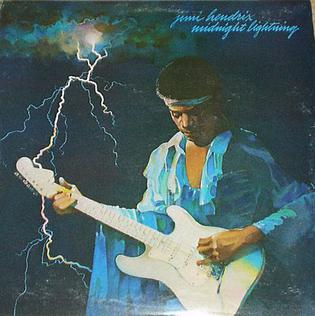
Douglas struck again by year’s end with Midnight Lightning, following the same idea. A couple of songs were repeated from War Heroes: “Trashman” is an expansion of “Midnight”, and “Beginnings” doesn’t even include Mitch Mitchell, who wrote it. The title track is torpedoed by the additional backing vocals, which merely repeat the title over and over. A half-decent studio take on “Hear My Train A Comin” doesn’t quite match the excellence of the live versions, nor could it, but it tries, and the same could be said for “Machine Gun”. “Gypsy Boy” is a tentative sketch filled out to the point where the new parts nearly overwhelm the basic track. A cover of “Blue Suede Shoes” applies an original riff that should have been spun off into an original. And although it’s over five minutes, “Once I Had A Woman” ends just as it starts to burn.

Seeing as the two albums are cut from the same reconstituted cloth, a single CD could cover both albums; however, even though Crash Landing was reissued CD in the US once upon a time, the Hendrix Estate has decreed that these albums stay deleted. They’ve done the same to Nine To The Universe, another Douglas product that simply presented edits of five separate jam sessions, with no embellishment. Of the three albums, it’s the jazziest and purest, and therefore preferred. But all is not completely lost; selections from these albums, in their original unaltered states, have emerged on various compilations in this century, sometimes in better context.

Jimi Hendrix Crash Landing (1975)—3
Jimi Hendrix
Midnight Lightning (1975)—3
Jimi Hendrix
Nine To The Universe (1980)—
Current CD equivalent(s): none

Wednesday, February 20, 2013

Jam 3: All Mod Cons

A whopping twelve months passed between Jam albums, and it was worth the wait. Appetites were whetted with two excellent singles—first, a faithful cover of the Kinks’ “David Watts”, which helped in that band’s New Wave revival, while the B-side spoke of an “‘A’ Bomb In Wardour Street”, continuing the link to the Mod generation while staying firmly in the present (spelling out the word “apocalypse” and ending with an explosion). It was their next single that grabbed the attention. “Down In The Tube Station At Midnight”, quite simply, is a first-person real-time account of a mugging in the London Underground. The sound effects aside, it’s a harrowingly edgy song, from the jagged guitar slashes to the funk-noise bass. The verses extend the tension, and each chorus shows the victim more helpless than the last, up to the final realization that his wife may not be safe.

All three of these songs were included on All Mod Cons, a title that combined with the cover art for a clever British pun. They certainly enhance the program, just as the writing and musicianship has gained sophistication.

It would appear that the tribulations of fame are top of mind, with the blink-and-you’ll-miss-it title track questioning the motives of fairweather friends, and “To Be Someone (Didn’t We Have A Nice Time)” already looking back at success that has passed. In both cases, the words are spit out and garbled under catchy chords and riffs. “Mr. Clean” looks at success from another angle; this time the object would appear to an upwardly mobile businessman, a subject not alien to Kinks fans, but here the singer threatens to topple him at first chance. The Kinks connection is underscored by the placing of “David Watts” next, but what follows is another departure. “English Rose” fades in on the sound of foghorns and lapping waves, before a gently picked acoustic helps sing to the “one true love” of the title. (Paul Weller was apparently so embarrassed by the words that he purposely left them off the lyric sheet.) The excellent “In The Crowd” ends the side, an ambivalent ode to the comforts and trappings of conformity. It’s shows the effect age has on the teenage drive, recalled over the second half of the song, an extended one-chord Who homage incorporating backwards guitars masking the transition from the repeat of “in the crowd” to “away from the numbers”. A tour de force.

“Billy Hunt” would appear to be the name of the young lout complaining about his job, showing his immaturity with revenge fantasies based on Superman, James Bond and even Steve Austin. “It’s Too Bad” is a decent pop song nicely influenced by The Who’s “So Sad About Us”, which The Jam had covered quite well for the “Tube Station” B-side. “Fly” is cut from similar cloth as “English Rose”, but with an electric coating on the acoustic base. “The Place I Love” is a Weller (read: defiant) interpretation of the “In My Room”/“There’s A Place” lyrical theme. The ending segues well as a setup for “‘A’ Bomb In Wardour Street”, itself leading well to “Tube Station”, which couldn’t really go anywhere else on the album but the end.

All Mod Cons is an excellent progression for this young band, with the slower songs just as strong as the fast ones. Hearing different guitars adds dimension, as does the subtle touches of piano and organ here and there. It seemed they’d finally found “their” sound.

The Jam All Mod Cons (1978)—

Monday, February 18, 2013

Monkees 8: Present and Changes

Granted that “fan” is short for fanatic, it’s understandable there are people rabid for anything the Monkees have done. While some of their albums have merit, our main complaint about the Pre-Fab Four is that their post-TV show albums make it all too clear that they weren’t really a band. Onstage they may have supported the singers okay (and Nesmith insisted to his dying days that, if anything, they were Davy’s backup band) but their separate work in the studio left no possibility for unity. They didn’t merely work separately—they practically partitioned themselves from each other. Their individual idiosyncrasies blended somewhat in the early days, but once Peter left—taking his classical training and folk tendencies with him—Davy always sounded like Davy, Nez was increasingly obsessed with straight country instrumentation, and Micky seesawed between pot-fueled social commentary and bubblegum pop.

However, even after the show had transitioned to Saturday morning reruns, the boys still had keys to the shop, and were still allowed to record to their hearts’ content, fuelling the hubris that nearly led to a double album with each side spotlighting an individual member. Since they were down to a trio anyway, The Monkees Present was limited to a single LP totaling half an hour, barely worth the plastic it was cut upon.

Some of the digging that filled up the last three albums remained in place, with two 1966 recordings spruced up to no real pleasure. “Looking For The Good Times” is practically a backwards version of “I’m Not Your Steppin’ Stone”, while “Ladies Aid Society” was a hideous idea that Ray Davies would have done better. Both of these songs were sung by Davy, where Micky and Peter would have been better suited for them—that is, if they weren’t so awful. Mike offered more cuts from his trip to Nashville the previous summer; “Listen To The Band” and “Good Clean Fun” were both singles, and are arguably the best of those sessions.

As for the “newer” songs, they’re nothing special. Micky’s “Little Girl” is a gentle song performed way too fast. “Bye Bye Baby Bye Bye” is a barely expanded riff on the chant at the center of “Mommy And Daddy”, his truly scathing indictment of middle-class hypocrisy. (Unsettling as it is, the alternate lyrics in the version on the Rhino reissue are even further from acceptable teenybopper fare.) Then there’s “Pillow Time”, a lullaby written by his mother, which gives him the opportunity to close the album yet again. (Some 20 years later he’d market a collection of lullabies called Micky Dolenz Puts You To Sleep.) Davy attempts to tug heartstrings with “If I Knew” and “French Song”. Mike continues his country explorations with the music hall/saloon delivery of “Oklahoma Backroom Dancer” and “Never Tell A Woman Yes” (which predicts Charlie Daniels’ “Uneasy Rider” by a few years).

Those 12 songs only scratched the surface of the studio time spent to come up with this hunk of plastic, and true to Rhino form, three discs were crammed full of alternate mixes, outtakes and other tests of fandom as part of a so-called Deluxe Edition in 2013. To mirror the original album, these include further spruced-up rejects from 1966 and more Nashville tracks by the itchy Nesmith. Some songs only heard on the reruns now appear in context, like the bafflingly popular “Steam Engine” and even their Kool-Aid commercial. While a few songs were repeated from other Deluxe Editions, at least the set stuck to the one period.

There would be one more album under the moniker, 1970’s exceedingly bland Changes. By now the “band” was down to Davy and Micky, and like good little soldiers they added vocals to a pile of generic tracks hurriedly recorded by people clearly inspired by the Partridge Family (as evidenced by the backing vocals). To ensure a connection to the past, they also dredged up a couple of tracks from a pre-Headquarters session, and let Micky include his own “Midnight Train” (which appears in a much more palatable demo elsewhere in the catalog). In all, a dull end to a career that had already ended.

The Monkees The Monkees Present (1969)—
1994 Rhino CD: same as 1969, plus 5 extra tracks
2013 Deluxe Edition: same as 1995, plus 68 extra tracks
The Monkees Changes (1970)—1
1994 Rhino CD: same as 1970, plus 3 extra tracks

Friday, February 15, 2013

R.E.M. 21: Part Lies Part Heart Part Truth Part Garbage

The somewhat surprising announcement of R.E.M.’s pending disbandment was met with a variety of reactions from people who thrive on such things. In general, it was viewed as understandable, if not exactly inevitable. It had been years, decades since they’d been that self-contained unit of four guys battling against the mainstream. Even without their original drummer, the three remaining founders had flung themselves to opposite parts of the country, so that getting together to record, much less tour, took a lot of logistics.

But there had been clues, so we couldn’t say it was a complete surprise. Their last album was the first since Fables Of The Reconstruction to include any photographic representation of the band members on the front cover, and more to the point, Stipe was depicted as waving goodbye. They also didn’t tour behind the album, and waited six months to announce the end of the band in conjunction with a career-spanning double-CD hits collection. (They were, after all, businessmen.)

Part Lies Part Heart Part Truth Part Garbage 1982-2011 attempts to cover all the bases, giving more or less equal time to each of their albums. The liner notes graphically detail the sources of each track (complete with the typography from said sources) with brief gushing paragraphs from various members about why they love the songs so much. Some of the selections are obvious, having already appeared on one or two previous compilations, but where the hell are “Cant Get There From Here” and “Drive”? Surely “New Test Leper”, “Get Up”, or one of the Collapse Into Now songs could have been moved for those.

There isn’t much in the way of rarities, with the exception of the three new tracks, none of which are very exciting. “A Month Of Sundays” is said to be in the style of Pylon, but it’s no “Crazy”. “We All Go Back To Where We Belong” has something of a late-‘60s pop arrangement with Bacharach horns, while “Hallelujah” is even more lush, adding scary strings, making a weird end to their career.

As an in-depth overview, Part Lies Part Heart delivers, but it’s highly unlikely that anybody who cares about the band wouldn’t have the catalog already. They never had casual fans; you were all in or all out. Future generations will likely rip songs for their own mixes, or download a track at a time.

R.E.M. Part Lies Part Heart Part Truth Part Garbage 1982-2011 (2011)—4