Friday, November 8, 2013

Bruce Springsteen 11: Lucky Town

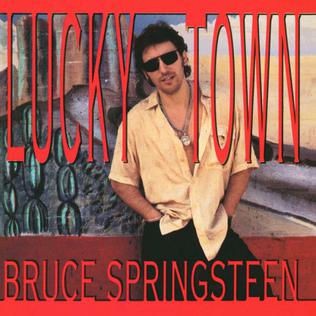
The other album that came out the same day as Human Touch had a better shot at being accepted by those who’d struggled through the 14 songs they heard already. Lucky Town is a 20 minutes shorter than its brother, and was recorded even more quickly than that. It’s another one-man-band deal, with the addition of veteran session drummer Gary Mallaber and good old Roy Bittan. By not being as labored, it has a freshness the other lacks, and has aged better.

Just like its brother, it begins with a potboiler in the form of “Better Days”, which gets its growl from the drop-D tuning all over the album. (It also takes the daring step of rhyming “piss” with “kiss”.) The title track certainly sounds like a textbook Springsteen song; it could have been combined with “Local Hero”, which crackles like a Mellencamp song, though it loses its way lyrically following the updated “Glory Days” sentiment of the first verse. “If I Should Fall Behind” is a gentle love song, not at all clichéd, but “Leap Of Faith” is an empty arena singlaong that sounds too much like “Local Hero” to stand out.

“The Big Muddy” is the requisite song of mystery, in dire need of a better chorus and hook; surely a scholar like Bruce would have heard the phrase from Pete Seeger. The true centerpiece of the album is “Living Proof”, a song about his newborn son and infused with emotion not at all staged. Despite its overused title, “Book Of Dreams” celebrates his wedding, providing a much happier ending to Tunnel Of Love. “Souls Of The Departed” is a well-intentioned lament for boys damaged by war overseas and at home, but one gets the feeling he wrote it already. And “My Beautiful Reward” is a nice little ending, an acoustic strum helped along by organ and drums in to the sunset.

Could these songs have been better served by the E Street Band? While not as easy to answer as whether McCartney should have stuck with Wings, the distinct absence of a saxophone suggests that Bruce wanted to move on.

Lucky Town is the better album of the two, and not just by comparison. Still, because this is exactly the forum for such speculation, here’s our suggestion for the 45-minute album that should have been released that day, still called Human Touch:
Side one: “Better Days”, “Lucky Town”, “Local Hero”, “With Every Wish”, “Roll Of The Dice”
Side two: “Human Touch”, “If I Should Fall Behind”, “I Wish I Were Blind”, “Living Proof”, “Book Of Dreams”
Burn a CD of that and see if you agree. If you don’t, submit your own.

One of the ways he tried to promote the albums was an appearance on the then-trendy MTV Unplugged show. He began with a solo performance of his playful “Red Headed Woman”, then said “screw the format” and brought out his non-E Street touring band, which is how the show and resultant album was titled MTV Plugged. Most of the set pulls from the new albums, but the past is acknowledged with “Atlantic City”, “Darkness On The Edge Of Town”, a subdued “Thunder Road”, and most surprisingly, “Light Of Day”, the theme song from a much-maligned film starring Joan Jett and Michael J. Fox as sibling bandmates. (For some reason the album was released everywhere but the U.S. until 1997, which is why we’ve dated it that way below.)

Bruce Springsteen Lucky Town (1992)—3
Bruce Springsteen
In Concert/MTV Plugged (1997)—3

Wednesday, November 6, 2013

Bruce Springsteen 10: Human Touch

Bruce had begun working on his follow-up to Tunnel Of Love soon after the end of the tour supporting it. In the meantime, his marriage ended, he took up full-time with Patti Scialfa, they started having kids, and he fired the E Street Band. (Roy Bittan was the exception, but he wasn’t an original member anyway.)

After about two years of recording in virtual secret (as Al Gore hadn’t invented the Internet yet) with hired guns including Randy Jackson fresh from Journey and Jeff Porcaro before his bizarre gardening accident, Bruce was on his way to having something ready. Then he wanted to write just one more song to finish it off, and ended up writing ten. So instead of combining the best, he released both sets as separate but similar entities, on the same day, mere months after Guns ‘N Roses had done the same thing. However, this was not a case of Jersey Illusion I and II. While Bruce’s albums shared similar design elements, they weren’t parts one and two of the same stew.

A sizable gap between albums being part of the Springsteen experience, the result was usually that the finished product was worth the wait. But nothing is a given in the record business, and Bruce was suddenly in the position of finding out who his true fans really were.

Human Touch was that mostly completed album, and it’s easy to see why he sat on it so long. The title track is an engrossing six minutes, and a good demonstration of simplicity working in his favor. But “Soul Driver” is sunk immediately by keyboards that were already dated in 1992, and a melody he’d already used for a song he gave to Gary U.S. Bonds a decade earlier. (Like other tracks here, it sports a Sam & Dave vocal arrangement, with the bonus here being that it actually is Sam Moore singing his part.) “57 Channels (And Nothin’ On)” is the type of song that would have gotten airplay as a non-album B-side; here, the novelty plot takes up space. “Cross My Heart” is a simple song sent askew by a bluesy solo that takes it away from whatever romantic sentiment is meant in the lyric. Likewise, “Gloria’s Eyes” misses its potential with a generic backing. However, “With Every Wish” shows what he could do with other musicians, as the backing here is provided by three veterans of the ECM and Windham Hill labels, and it’s quite soothing. Then “Roll Of The Dice” crashes in, but since it’s a by-now welcome return of the E Street sound, it’s a great return to form.

It’s tempting to say the same for “Real World”, but’s it’s pretty much the same song, except for that ridiculous bell that clangs every eight beats in place of the glorious Bittan piano. “All Or Nothin’ At All” builds on the rockabilly beloved by “Pink Cadillac” without going anywhere, while “Man’s Job” is a passable expansion of a cliché. Speaking of which, “I Wish I Were Blind” isn’t a new sentiment, but his lyric is an excellent update. Here the duet vocal comes from Righteous Brother Bobby Hatfield. (And if you get tired of waiting for the song to fade, you can always repeat the closing choruses of “Science Fiction Double Feature”, which is always fun.) “The Long Goodbye” is an apt title for a song with two more after it, but at least it’s not as canned sounding as “Real Man”, which comes across as a Springsteen parody. The closing “Pony Boy” is basically a lullaby to his new baby son, and while it’s nice, it’s also superior to most of what has gone before.

Ultimately, Human Touch is a dull album, which is a shocking statement to say about Bruce Springsteen. It’s also an hour long, proving that he hasn’t always been his best editor. The handful of bright spots does keep it from being a complete waste, and besides, there was another album to consider.

Bruce Springsteen Human Touch (1992)—2

Monday, November 4, 2013

Jethro Tull 1: This Was

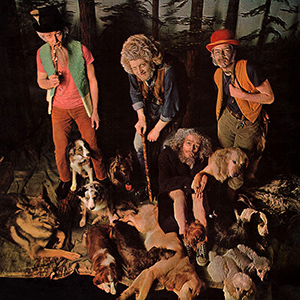
Say the name Jethro Tull to the average person, and there’s a good chance his or her mental image will immediately depict a wild-eyed, frizzy-haired guy wearing a codpiece and wielding a flute. But they were more than that, as we’ve come to find. (For one, that guy with the codpiece isn’t named Jethro. Chances are you knew that if you’d read this far, but then again, maybe not.)

They began as many British bands in the late ‘60s did—as a blues band. Tull’s difference was not so much in the power category, but in the jazz influences, most obvious in Ian Anderson’s placement of the flute as the center solo instrument, over the guitar or harmonica. If you’re not a particular fan of the flute, as we haven’t been, that can be enough of a deterrent from going any further with them.

Which would be a shame, because their debut, This Was has a lot to recommend. “My Sunday Feeling” offers up a little Cream volume, and then they take it way down for “Some Day The Sun Won’t Shine For You”, which is basically “Key To The Highway” with new lyrics. A snaky riff underpins “Beggar’s Farm”, and Ian steps aside to let guitarist Mick Abrahams sing on “Move On Alone” (foreshadowing alert!) complete with a sympathetic horn arrangement. Side one ends with “Serenade To A Cuckoo”, a Roland Kirk instrumental that the liner notes helpfully inform us was the first thing Ian learned on his flute. (Well, not that helpfully, printed as they are in neon green text on a bright orange background.)

“Dharma For One” is another jazzy instrumental, although one they wrote themselves. As drum solos go, Clive Bunker is no Ginger Baker, but the guitar has a cool tone. They take a trip to more typical blues with “It’s Breaking Me Up” (complete with harmonica) and yet another version of “Cat’s Squirrel”. “A Song For Jeffrey” is a striking departure from the program, combining blues and skiffle into the sound that would soon become all theirs. With its open ending, the minute or so of “Round” serves as something of a coda.

The title is equally open-ended, one reading being “This Was what we sounded like then, and we’ve moved on”. If that’s the case, so be it; we didn’t expect to enjoy at as much as we did on first listen, and maybe other newbies will have the same experience. Fans knew all along, and they, like the band itself, were on to something.

The Tull catalog has undergone a handful of sonic re-evaluations in the digital era; the initial expanded This Was added three contemporary tracks from singles, while the eventual “40th Anniversary” edition included mono and stereo mixes, a pile of BBC performances, and further singles. Because seemingly every album that came out in 1968 required a 50th Anniversary edition, This Was got one too. This time, in addition to the original mono and stereo mixes and BBC stuff, there’s a new stereo mix of the album and subsequent single, plus some unreleased tracks and further rare cuts. And a DVD with surround mixes and whatnot.

Jethro Tull This Was (1968)—
2001 remastered CD: same as 1968, plus 3 extra tracks
2008 40th Anniversary Collector’s Edition: same as 2001, plus 22 extra tracks
2018 50th Anniversary Edition: same as 2008, plus 21 extra tracks

Saturday, November 2, 2013

Dave Mason: Alone Together

It’s hard to say where exactly Dave Mason fit into Traffic, the band he helped found. The psychedelia of their first singles gave way to more straight music, to the point where his compositions sounded very different from what Steve Winwood and the others were doing. He was on their first two albums, and quit the band after each one was finished. Even his first solo single featured them as the backing band on the B-side. When he finally recorded his first solo album, he’d gone even further away.

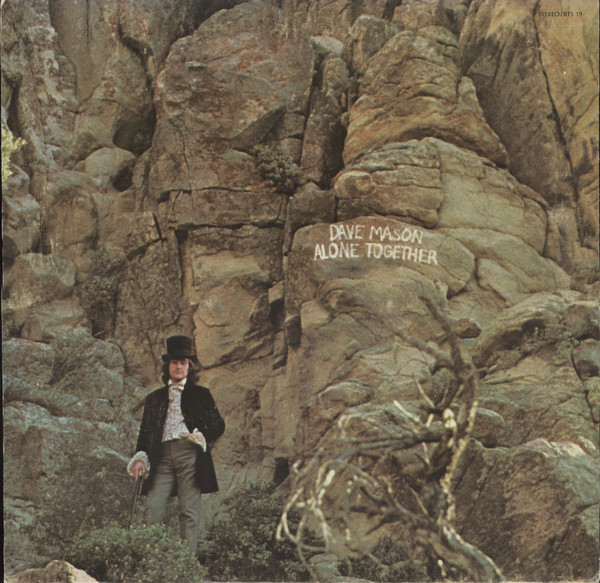
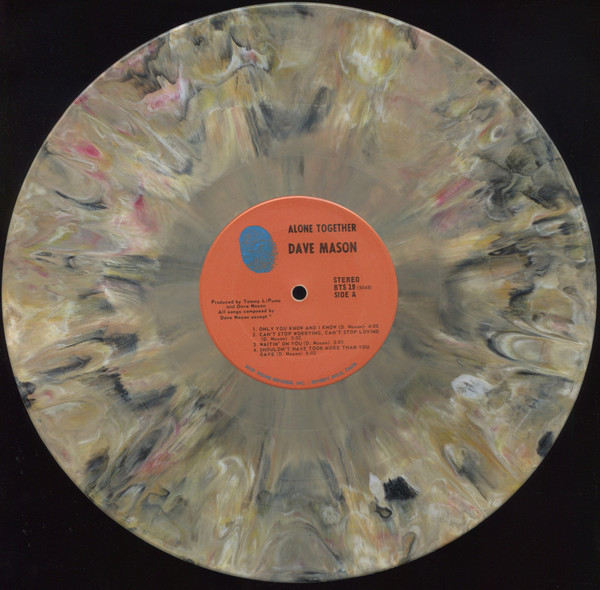
The credits on Alone Together have always been vague; there is a comprehensive listing of musicians, but it’s not clear which tracks specifically feature Leon Russell, Larry Knechtel, Jim Gordon, Jim Keltner, Carl Radle, and other names familiar from Delaney & Bonnie and Joe Cocker’s band. But right along with other albums out around the same time with those luminaries, this is more of your basic boogie. If anything, it’s most notorious for its elaborate cover art, which extended to the puke-colored vinyl.

“Only You Know And I Know” would be the “Feelin’ Alright” of the album, having been covered by lots of people since its introduction here. It is infectious, with its layered guitars and harmony blend fitting well into the Layla mold. “Can’t Stop Worrying, Can’t Stop Loving” is more laid back, but has a nice full sound, and shows his tendency to restrict his melodies to a three-note range. “Waitin’ On You” is a little more funky, with a prominent electric piano and a “soul choir” to help out with the choruses. “Shouldn’t Have Took More Than You Gave” sounds most like a Traffic sound instrumentally, with his wah-wah at full volume, and is that a banjo in the mix?

“World In Changes” is all trilling guitars with a nice organ counterpoint that eventually swallows the arrangement. “Sad And Deep As You” is fittingly titled, another nice piano and acoustic track, whereas “Just A Song” is just that, with a few more chord riffs, plus the banjo and the soul choir again. “Look At You Look At Me” was written with Jim Capaldi, which may explain why there’s something about it that seems unique while sounding like everything that’s gone before.

The album itself has gone in and out of print over the years, mostly because since the Blue Thumb label ceased to exist and MCA never knew how to keep it going. For its 50th anniversary, Mason rerecorded and released it as Alone Together Again, initially because he said he never liked his vocals, but more recently he’s blamed the Universal Studios fire of 2008.

We’re going to make the bold statement that Dave Mason was always a better session guitarist than he was a solo artist. Prominent and welcome on various Crosby, Stills & Nash solo and duo albums, his biggest hits would generally come from other people. His eventual addition of “All Along The Watchtower” to his live shows was a tribute driven by his appearance on Jimi’s original track, and gave him a chance to wail. There will be those that champion his albums, but we just disagree.

Dave Mason Alone Together (1970)—3

Friday, November 1, 2013

Van Morrison 21: Irish Heartbeat

On something of a roll, Van’s next album was a full-blown collaboration with the Chieftains, the venerable Irish combo. Essential for fans of both artists, Irish Heartbeat is a treat from start to finish, offering eight traditional pieces and remakes of two recent Van originals, all treated the same way. Besides being an obvious go-to pick for St. Patrick’s Day listening, it can be enjoyed all year long, assuming you find it pleasing.

Basically, they’re the band, he’s the singer, albeit one who is also credited with guitar and even drums. Half the songs are duets with Mary Black, Maura O’Connell, June Boyce and/or the band’s own Kevin Conneff. Each side begins with an infectious jig, and both “Star Of The County Down” and “I’ll Tell Me Ma” encourage singalongs. Some of the tunes, like “Raglan Road”, “Carrickfergus” and “She Moved Through The Fair” are already standards of sorts, and are welcome here. Less well-known are “Tá Mo Chleamhnas Déanta” (sung in both Gaelic and English) and the moody “My Lagan Love”, where he really lets loose with the Irish equivalent of scatting. It all comes to a joyous close with “Marie’s Wedding”.

It sounds like a no-brainer today, but this was merely the first of the Chieftains’ successful summits with singers not normally filed in the same part of the record store. But while they appeared on other Van albums after this one, Irish Heartbeat has yet to spawn a sequel, which is too bad, seeing as they don’t have as much time left. It was also arguably the last time he sounded remotely happy.

Van Morrison & The Chieftains Irish Heartbeat (1988)—4

Wednesday, October 30, 2013

Frank Zappa 22: Zoot Allures

Hindsight shows us that this was a transitional period for Frank. Henceforth all of his albums would be under his name, as opposed to rotating with some permutation of the Mothers. He was also suing his managers and record companies, so that put a lot of projects, already vulnerable to that day’s X-acto knife, in continual change.

The cover of Zoot Allures is misleading, since it depicts Frank and newest drummer Terry Bozzio alongside two guys who aren’t even on the album. The tracks themselves come from a small handful of sources; unfortunately, some incredible music is crammed between (or beneath) some vocals that are truly uncomfortable to endure.

“Wind Up Workin’ In A Gas Station” is a silly song, with that conceptual continuity to make it appear significant. The vocals are split between a falsetto and a “German” accent for added mystery. Luckily, it soon fades for “Black Napkins”, one of Frank’s best solos. It’s only four minutes long, which is too bad, since the next track is more than twice that. From a studious standpoint, “The Torture Never Stops” could be taken as another piece of social commentary, delivered in the up close ‘n personal voice he’d debuted on Over-Nite Sensation, over a slowwwww Bozzio beat and Frank on everything else (guitars, electric piano, bass). As a track it’s mesmerizing, and somewhere out there must be a mix of the song without the prominent female moans (allegedly recorded during a threesome, and used here to blur the line between pleasure and pain). When critics call Frank a misogynist with a sadistic streak, this is their ammunition. It doesn’t help that he follows it up with “Ms. Pinky”, a tribute to a sex doll that both the Police and Roxy Music did way better.

“Find Her Finer” is a fairly generic stroll in the same vein, driven by what was probably (for the time) a unique synth bass effect. This meanders along until the tentative introduction for “Friendly Little Finger”, in which a guitar solo is synchronized with an altogether different drum track. A brass arrangement of “Bringing In The Sheaves” sets up “Wonderful Wino”, which had loomed in the background for about six years; while folks might like that guitar tone, this is not the best version of the song. However, the instrumental title track is a truly marvelous piece of mystery, sadly fading into “Disco Boy”, built around a rhythm box and a “doody” motif. (It was something of a hit, naturally.)

It’s becoming tiresome to say—and it’s not going to be a popular opinion in this case—but Zoot Allures is another of those Zappa albums that just misses being worthwhile. With more instrumental tracks like “Black Napkins”, “Friendly Little Finger” and “Zoot Allures” in place of the vocals, it could have been another Hot Rats or Waka/Jawaka. Archeologically, it did point Frank toward the possibilities of generating product out of guitar solos, and showed him a new way to create something from other somethings.

Frank Zappa Zoot Allures (1976)—

Monday, October 28, 2013

Traffic 4: John Barleycorn Must Die

Steve Winwood is often associated with keyboards, but those who paid enough attention to Traffic and Blind Faith would have heard him on guitar as well. So it wasn’t altogether surprising that after Blind Faith stopped, he would start recording all by himself. (After all, Paul McCartney was doing it around the same time.)

Halfway through the process he decided that the songs needed a little something extra, so he called his old colleagues Jim Capaldi and Chris Wood to add drums and winds. That was all it took to turn John Barleycorn Must Die into a full-fledged Traffic album, less than two years after they’d split. Even without the psychedelia that cloaked their earlier work, it still evokes an aural image of guys playing in a room somewhere, probably in a house.

Side one is a contender for the title of Perfect Album Side. “Glad” lands on the front step with a thud, the piano dancing over its riff for eight bars, then stepping for the sax, coming back eight bars later. And back and forth they go, the sax even finding a wah-wah pedal along the way. The last two minutes are a little exploratory, a harbinger of the future if you will. All the time the song always seems on the verge of having lyrics, but that doesn’t happen until after “Freedom Rider” and its glum saxophone kicks in. The words are beyond our comprehension, but that doesn’t keep you from trying to sing along. A neat little transition quotes from “Glad”, giving way to a dual flute solo that brings to mind a more restrained Jethro Tull. Steve’s piano pounds away over the coda, and it all tumbles down into “Empty Pages”. This happy-sounding song is apparently about writer’s block, disguised as a love song. Or something.

The second side has a lot to live up to. “Stranger To Himself” is Winwood alone, except for a few bars of Capaldi harmony. It shows his able skills at arranging, playing the guitar off the piano, as well as the drums. There’s even a pretty dirty lead guitar all the way through. Then things slow way, way down. “John Barleycorn”, as explained on the cover, is an extended interpretation of an old English folk song about alcohol. Played on a high-capoed acoustic, its verses circle and circle under a flute, to the point where the story gets denser and denser. Finally, “Every Mother’s Son” has just enough Hammond to supply the “majestic” tag. It’s another mostly one-man performance, and our favorite part is when the drums forget to keep playing during the organ solo.

John Barleycorn Must Die arrived right about when English folk was getting an electric renaissance, and fits well alongside other Island artists of the time. But despite those rustic touches, there’s a thick coat of jazz, combining for one excellent rock album. The band was off to a fresh new start.

As with many classic albums, what they put out was what they had, and reissues haven’t brought forth anything forgotten from the sessions. The first (UK-only) upgrade added some live tracks and two brief session outtakes; the US version included only the outtakes. The Deluxe Edition had neither outtake, and used different live tracks, filling up the space with alternate mixes. It’s a good argument for preserving the original as it was.

Traffic John Barleycorn Must Die (1970)—
2001 remastered CD: same as 1970, plus 2 extra tracks
2011 Deluxe Edition: same as 1970, plus 10 extra tracks