Saturday, November 30, 2013

Stephen Stills 10: Stills Alone

It was all too telling that when Stephen Stills got around to releasing another solo album, it was on a tiny independent label, ran about half and hour, and was a mix of originals and covers, several of which are revisits. Even with all that against it, Stills Alone reminded people exactly what he could do. The title says it all: he sings and plays acoustic guitar by himself, occasionally overdubbing a lead electric or harmony, and in one case, percussion.

The originals are excellent. “Isn’t It So” and “Just Isn’t Like You” are both lovely and sad meditations on love with subtle touches, like the Buffalo Springfield flourish at the end of the former. “The Right Girl” is a delightful country-tinged strum thankfully absent of any production touches that could ruin it. “Amazonia” lets him explore his Latin fascination via some clichés about saving the rainforest, while the excellent “Treetop Flyer” makes its first appearance on a Stills album. His cover choices are mixed; “Everybody’s Talkin’” had been in his repertoire for years, but “In My Life” is surprisingly effective, just as “Ballad Of Hollis Brown” could have been a decent blues workout but isn’t. “Blind Fiddler Medley” deftly weaves the traditional song into his own “Do Unto Others” and “Know You Got To Run”.

Stills Alone was such a nice surprise, and as a further middle finger to those who’d written him off—guilty as charged—it’s now impossible to find unless you’re willing to shell out the bucks.

Stephen Stills Stills Alone (1991)—3

Friday, November 29, 2013

Band 3: Stage Fright

The Band had two highly appreciated albums under their belt, so it was time for the “difficult third album”. Stage Fright shows the balance of power changing in this democracy, with most of the songs solely credited to “Jaime Robbie Robertson”, despite the ensemble work that went into each. Robbie says today that the album was intended to get away from the mythology set forth by the first two, but he’s never been one to let the truth get in the way of good reissue liner note copy.

“Strawberry Wine” features Levon at his most nasal, while Garth wanders around his accordion-sounding keyboard, which he’ll do for the better part of the album. But Richard comes in to sing “Sleeping”, sweet as ever. It’s an excellent Band performance, and surprising that it’s not as well known. “Time To Kill” and “Just Another Whistle Stop” are more raucous, giving Robbie plenty of room to shred in his own way, and particularly that pinched tone. “All La Glory” slows it down again, presenting Levon sounding more than ever like Richard and Rick.

Things get more familiar on the second side, where the hits resided. “The Shape I’m In” is more along the lines of the second album, with a funky clavinet and shaggy dog lyrics to match. Similarly, “The W.S. Walcott Medicine Show” evokes Levon’s memories of the music he heard passing through town as a kid, which led him to stage his own “Midnight Ramble” in the later years of his life. “Daniel And The Sacred Harp” is a forced re-framing of the ancient parable about someone who sells his soul for music, about as subtle as a sledgehammer. The swapped vocals don’t really help, but the instrumentation should please anyone still hung up on the second album. The title track is still the best song on the album, from the jumpy piano and sympathetic bass to the shaky vocal from Rick. “The Rumor” has just enough mystery to make it special, but that only underscores what’s been missing.

It’s not just the lack of rustic mystery that keeps Stage Fright from being overly successful; maybe it doesn’t seem to have as much of that five-guys-playing-in-a-room vibe. (Which is odd, since legend has it the album was recorded in a theater setting. Perhaps the dueling mixes by Todd Rundgren and Glyn Johns are to blame. The upgraded CD would have been a great place to include both, but only offers a few alternates and a radio commercial.)

When the album was due for its golden anniversary expansion, Robbie took the opportunity to not only have the album remixed yet again, but shuffled the track sequence to match what he said was the original intention. Now the sides are flipped, front-loading the set with the more familiar tunes from side two (which he wrote alone, of course). Having the album end with “Sleeping” is a nice touch, as are the stark mixes of that song and “Strawberry Wine”. The balance of the disc is devoted to seven primitive “Calgary Hotel Room Recordings” featuring Robbie, Rick, and Richard busking a few songs, including two rehearsals of “Get Up Jake”. A second disc consists of a 1971 concert at the Royal Albert Hall, both performed and recorded well.

The Band Stage Fright (1970)—3
2000 CD reissue: same as 1970, plus 4 extra tracks
2021 50th Anniversary Edition: “same” as 1970, plus 29 extra tracks

Wednesday, November 27, 2013

Van Morrison 22: Avalon Sunset

For fans of aging rockers, 1989 was a boon of a year. Paul McCartney, Bob Dylan and the Stones all returned to both the charts and popular favor. Even cult guys like Lou Reed, Elvis Costello and Joe Jackson made a big leap towards mainstream notice as well. But one of the biggest surprises was Van Morrison, who didn’t do anything too different from the bulk of his ‘80s output, but managed to serve up a recipe that resonated.

Avalon Sunset begins, improbably, with a duet featuring Cliff Richard, one of the first pop stars to be knighted by Her Majesty and a long time away from the pop charts, in America at least. “Whenever God Shines His Light” sets up a pious mood that will last for the duration, but most directly in the moody “Contacting My Angel”. That song is more of a meditation, but only if you listen closely. “I’d Love To Write Another Song” is only another in a growing line of disgruntled complaints about the record industry, here suggesting that he’s stuck. Which is why “Have I Told You Lately” makes such a nice choice to hear next; the sentiment had been used by other songs for years, but somehow Van’s actually seems heartfelt. Then he sits down for a two-chord meditation about “Coney Island”, obviously some place local to Belfast as opposed to the amusement park us Yankees know about. Just as we’re getting lulled into the wonder of this particular never-never land, the tearjerking theme of “I’m Tired Joey Boy” comes in, and we’re baffled by the philosophy of this particular character’s head.

Lest anyone think his piety was too much to follow, “When Will I Ever Learn To Live In God” shows that Van is still struggling, but at the very least, he can get an album title out of it. “Orangefield” brings him back to the fields wet with rain on a golden autumn day, and yet he can still get another decent song out of it. The celebration of existence continues on “Daring Night”, an incredibly simple song caught up in, well, a sense of wonder. And finally, “These Are The Days” provides another reminder of what there is to savor, while we can.

He may not be doing anything new or different, but Van was able to build on his best work of the decade into something completely palatable (read: sweet) for those who might have only known him from Moondance. The image of the world painted by Avalon Sunset is very enticing; one wonders if the world he sings about actually exists. Or, as one of the songs says, “Wouldn’t it be great if it was like this all the time?” Truly, and I ask you. (Extra tracks on the expanded CD consisted of a Cliff-less “Whenever God Shines His Light” that shows what was missing, plus a six-minute meditation on “When The Saints Go Marching In” that name-checks several saints.)

Van Morrison Avalon Sunset (1989)—
2008 CD reissue: same as 1989, plus 2 extra tracks

Monday, November 25, 2013

Eric Clapton 3: Layla

So much has been written over the years about this album that we hesitate to weigh in. Certainly it’s essential for any fans of the electric guitar; even after everything Eric Clapton accomplished in the ‘60s, Layla was still a new height for his development, both professionally and creatively.

It’s understandably considered a Clapton album—released only three months after his solo debut—but we must remember that Derek and the Dominos were, above all, a band. Clapton and keyboard player Bobby Whitlock collaborated early and often on the album, Bobby’s vocals adding a Sam & Dave-style vibe to the album as a whole. Bassist Carl Radle and drummer Jim Gordon were tight, having played with Delaney & Bonnie (where they met Clapton) and Joe Cocker’s Mad Dogs & Englishmen. All four (along with Dave Mason, seemingly incapable of being in any band for more than a few gigs) worked on George Harrison’s All Things Must Pass, and went off to Florida to record. While there, they crossed paths with the Allman Brothers Band, which is how Duane Allman ended up guesting on the album. (That’s also important to mention: he didn’t play on the whole thing, and only played two shows with the Dominos. He was devoted to his own band and remained so.)

“I Looked Away” is a great opener, and a song that doesn’t get enough attention. All of the elements of the band are introduced here, setting a standard for the four sides. Jim Gordon inverts the snare and kick on “Bell Bottom Blues” in a way no one else do, yet makes it work. “Keep On Growing”, just like “Anyday” on side two, builds a good groove over six and a half minutes, working the guitars and organ nicely against each other. Likewise, “Nobody Knows You When You’re Down And Out” and “Key To The Highway” establish themselves as the modern standard by which these blues standards are known today. If there’s a clunker in the first half, it’s “I Am Yours”, which uses a poetic idea from an earlier century but not as well as the title track, and predicts Clapton’s laid-back style of the ‘70s.

The second half of the album is stellar. “Tell The Truth” finds the stank and stays there, giving Duane plenty of room to soar. “Why Does Love Got To Be So Sad?” builds on a hyper-tense rhythm—with excellent fretwork from Carl Radle—eventually settling into a nice groove for the fade. “Have You Ever Loved A Woman” is another cover, but more fitting with Clapton’s overall theme for the album, that being his infatuation with George Harrison’s wife.

Things absolutely take off on side four. Their epic, keening arrangement of “Little Wing” does to Hendrix’s original what he did to “All Along The Watchtower” (and amazingly, they recorded it before he died). The final cover is the much simpler “It’s Too Late”, which gets its point across much faster than the blues workouts of the other sides. It’s merely a sorbet for the unmistakable riff of “Layla”, a song that’s a classic all its own, but is truly made by Jim Gordon’s gorgeous piano theme (which he stole from Rita Coolidge) over the second half of the track. It is truly one of the finer moments in music. And where can you go from there? Bobby’s solo “Thorn Tree In The Garden” has been compared to “Good Night” following “Revolution 9”, but we think it’s more like having to settle for vanilla ice cream because they ran out of chocolate.

There’s a lot of music on Layla, and the great moments still stand out, even after decades of Classic Rock Radio threatening to kill them off. It’s very possible to make a stellar single LP out of the music here, but that would suggest that the lesser tracks are garbage, which they’re not.

Because of the length, it first appeared as a double CD until the industry caught up to capacity capabilities. It was also the recipient of the first box set devoted to a single album; 1990’s The Layla Sessions served up the album on a single disc, plus a disc of jams with and with the Allman Brothers Band, and another disc of alternate takes. That was for the 20th anniversary; the 40th anniversary brought forth a deluxe edition, with other unreleased tracks, plus songs recorded for their stillborn second album, and the so-called “super deluxe” version, which added an expansion of 1973’s In Concert album to all that. These are all for those with unlimited income; everybody else should stick with the original. On vinyl. Or the single CD, ‘cos it’s convenient.

Derek and the Dominos Layla And Other Assorted Love Songs (1970)—
1992 The Layla Sessions: 20th Anniversary Edition: same as 1970, plus 15 extra tracks
2011 40th Anniversary Deluxe Edition: same as 1970, plus 13 extra tracks (Super Deluxe Edition adds another 13 tracks plus DVD)

Friday, November 22, 2013

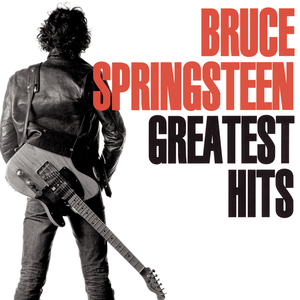
Bruce Springsteen 12: Greatest Hits

Meanwhile, Bruce tried to stay busy in the ‘90s. The two new albums released the same day weren’t as successful as the tour supporting them, as fans flocked to see their hero running around a stage with people that pointedly were not the E Street Band. But he did manage to recapture some respect with a song written for the highly popular film Philadelphia; “Streets Of Philadelphia” wasn’t as dramatic as the song Neil Young wrote for the same movie, but it caught on enough to garner an Oscar, and eventually a few Grammies. It was also a key selling point for his first-ever Greatest Hits album.

The title ticked a lot of fans off, since not all the songs were hits, not all the hits were on it, and there was nothing from his first two albums (likely because that would have put money in the pocket of his former manager and producer). Chances are they had the four songs from Born In The U.S.A. a couple of times already, too. But for people whose CD racks consist solely of hits collections, soundtracks and such, Bruce’s Greatest Hits did cover enough of those bases. If you like one of the songs, you like them all.

Most attention was paid to the four brand new songs at the end, all recorded with—ta-da!—the E Street Band. First, there was “Secret Garden”, destined to replace “Every Breath You Take” as the most misunderstood song choice for wedding receptions, helped along by Jerry Maguire. Its understated keyboards had already become a Boss trademark, and his intimate vocal belies something of a bizarre “Candy’s Room”. “Murder Incorporated” wasn’t exactly new; this angry track was left over from the Born In The U.S.A. sessions, dusted off and sounding great. “Blood Brothers” is back to quiet, with lyrics that seem to refer to the band, but probably don’t. It soon picks up a galloping beat not unlike Dire Straits, and that’s meant as a compliment. Finally, “This Hard Land” was another early-’80s leftover, but newly recorded.

Songs as strong as these only made people wish Bruce and the boys could record and release a full album. But that wouldn’t happen for a while. In the meantime, Greatest Hits ensured big-box record retailers outside the 201 area code that they could still have a Springsteen slot in their racks with decent turnover.

In time, of course, Bruce (or more likely, his management team) would allow himself to be anthologized further. But while he continued to make music in the new century, none of it was popular enough to garner a Volume Two where this set left off. Therefore, any future collection would include most of what was on the first Greatest Hits, followed by whatever they felt worthy of being tacked on. While The Essential Bruce Springsteen had some merit, particularly in its first incarnation, the decision to market a Greatest Hits of “Bruce Springsteen & The E Street Band” was first head-scratching since they’d already played on most of the original hits album anyway, but moreso when it was initially sold exclusively at Walmart. Five of the twelve selections hadn’t been on the first one, and three of those were from this century. At least the later European version added another six tracks to fill up the disc.

Three decades after that first set, someone decided we needed a Best Of Bruce Springsteen, despite the self-defeating nature of somebody else deciding what his best would be. The usual grab bag of selections from before 1995 were amended by four subjective choices from four of his ten post-9/11 albums. That filled up a CD, but the increasingly common “digital edition” added another hour’s worth of music, including four more songs from this century, three representing more recent albums skipped on the retail version. Given the proliferation of vinyl releases outside of Record Store Day, it was truly a cash grab, and considering how much flak he was getting for astronomic ticket prices, many fans felt it underscored how out of touch he’d become. That said, the music was still as good as it ever was.

Bruce Springsteen Greatest Hits (1995)—4
Bruce Springsteen & The E Street Band
Greatest Hits (2009)—
Bruce Springsteen
Best Of Bruce Springsteen (2024)—

Wednesday, November 20, 2013

Billy Joel 13: The Bridge

And so we enter the Wayfarer years, wherein Billy Joel competed with Bruce Willis for who could have more photos taken of him in sunglasses. (To their credit, they didn’t go the stupid hat route, considering their eventual hairlines, or lack thereof.) The Bridge was Billy’s first album since who cares when that didn’t have some kind of theme or style tying it together, unless that theme is “I’m sleeping with Christie Brinkley and you’re not.” Or “Check out the guest stars I’ve got all over this thing.” Hmm. Maybe there’s a theme after all.

At any rate, were the tunes any good? That depends. “Running On Ice” begins with a suitably illustrative piano part, followed by another syncopated section that plays off the song’s edginess, and likely kept it from being a hit single in those feel-good times. Instead, folks ate up “This Is The Time”, a fairly overt Valentine to his wife, sure to replace “Just The Way You Are” as that decade’s first wedding dance. That single came after “A Matter Of Trust”, pushed along by the count-in and prominent video wherein the Piano Man actually plays a guitar! Except that according to the liner notes, he doesn’t, and this decade’s ears wish they sounded more like, you know, guitars. Still, an undeniably catchy tune. The first single from the album was actually “Modern Woman”, heard originally to promote the shrill Bette Midler vehicle Ruthless People, and sounding like a sped-up descendant of “You’re Only Human”. A fourth single was “Baby Grand”, a smoky duet with Ray Charles—both guys sing and play piano here—that works as a slightly faster “New York State Of Mind”.

One jazz tune wasn’t enough, so side two is blasted open by the big band horns of “Big Man On Mulberry Street”. It pales in comparison to “Baby Grand”, which wasn’t as obvious in the days when you had to flip the record or tape between sides. Still, it does clean the palette somewhat for “Temptation”, a moody tune stuck between love and guilt. “Code Of Silence” is possibly the album’s hidden gem, musically and even lyrically. Co-written with Cyndi Lauper at the height of her multicolored career, she’s used sparingly on vocals, thankfully, with a minimum of chirp. (Liberty DeVitto cleverly turns the beat around, if you notice.) With only one song left, it’s time to bring in the last guest, and for “Getting Closer” it’s Steve Winwood, then firmly back in the high life again. His Hammond B-3 works around a rhythm that wants to be a Traffic homage, but isn’t.

Despite the novelties of each track, there’s no real progression on The Bridge. Synthesizers abound, since it was 1986. The odd thing is that even when Billy Joel was exploring old styles he was doing something “new”, while this is merely a collection of songs that don’t seem to have a lot to do with each other. Then again, there’s nothing wrong with just having an album of songs.

Billy Joel The Bridge (1986)—3

Monday, November 18, 2013

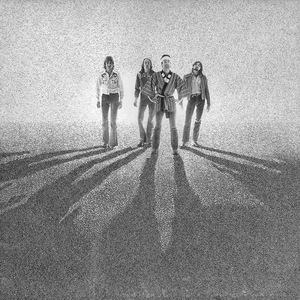
Bad Company 4: Burnin’ Sky

Sometimes when you go back to the well, there’s nothing there, which Bad Company found out on their fourth album in four years. Burnin’ Sky has everything already in the band’s bag of tricks, except for songs that stick in one’s brain.

Heralded by a clap of thunder, the title track is pretty much the only song anybody remembers. It’s a fairly basic riff that goes on a little long. It fades into birds chirping, suggesting that whatever set the sky a-burnin’ is made better by the “Morning Sun”, an acoustic idea that isn’t much of a stretch, covered up by flutes. The strut tempo returns on “Leaving You”, which isn’t too deep, but stutters to an uneasy halt, which is surprising, since this band could never be accused of not being tight. “Like Water” is credited to Paul Rodgers and his then-wife, which was nice of him, except it doesn’t really go anywhere. For some reason, a very quiet, jokey rendition of “Happy Wanderer” appears next, followed by “Everything I Need”, which sounds like it wants to be a ‘50s pop parody, with hiccupping vocals and a spoken interlude, except that the chorus section has a little more meat to it. Amazingly, this trifle is credited to all four members.

“Heartbeat” would have been a good contender for a single, especially with the intricate dual guitar solo. It’s not until Simon Kirke’s “Peace Of Mind” that a sensitive piano song appears, but it’s sunk out of the gate by Paul Rodgers’ “people I just wanna tell ya” monologue over the intro; somewhere Paul Stanley took notice. “Passing Time” begins with a hint of an epic—probably the “Sympathy For The Devil” bongos—following some basic changes through some very disconnected lyrics. Mick Ralphs serves up two riff-heavy tracks, but again, neither “Too Bad” nor “Man Needs Woman” offers anything we haven’t heard already. “Masters Of Ceremony” is also credited to the entire band, but at seven minutes, it’s little more than a jam on the title track, with stock blues phrases drunkenly blurted here and there.

So once it spins down to nothing, Burnin’ Sky becomes a lot of time spent on not much. Outside of those fleeting moments, there isn’t anything really driving one back to hearing it again, especially as the closing track takes away the charm of the title song. It is simply background music—not so annoying to take off, but not enticing either.

This too was expanded in line with the rest of the catalog; outside of a couple of takes of the title track that sound less menacing than the finished product and the aptly titled outtake “Unfinished Story”, the other works-in-progress don’t show anything we missed, unless you want an even longer run through “The Happy Wanderer”, or wonder how “Too Bad” and “Man Needs Woman” sounded like with Mick singing.

Bad Company Burnin’ Sky (1977)—2
2017 Deluxe Edition: same as 1977, plus 14 extra tracks