Friday, March 28, 2014

Tom Waits 21: Orphans

Best described by the man himself as “a bunch of things that fell behind the stove while making dinner,” Orphans is a three-CD set presenting a grab bag of new music and extracurricular activities. Subtitled Brawlers, Bawlers & Bastards, it separates the music into those three, somewhat descriptive categories. Because it offers nothing from the ‘70s, this is not the ultimate Waits rarities collection. However, it does offer such nuggets as his wonderful dwarfs-on-strike arrangement of “Heigh-Ho”, and a whole pile of songs previously hiding on movie soundtracks, like the mandolin-scented “Bottom Of The World”, his cover of “Sea Of Love” and even a song from Shrek 2.

There’s an awful lot of music here, so much that it takes a long time to take it all it. Hence, we find the multitude of end-of-year accolades a bit suspect. Sure it’s trendy to champion Tom Waits in this century, but they can’t all be zingers, can they? Therefore, the best way to approach the set is how it was designed: as three separate albums.

Brawlers is the most consistently upbeat disc, starting strong with the hiccupping rockabilly of “Lie To Me”. Many of the tracks sound like outtakes from Mule Variations or Real Gone, and a couple of tracks had debuted on a Waits-produced John Hammond album that came out in between those. There’s a full-fledged studio recording of “Fish In The Jailhouse”, a rousing encore from his 1999 tour, and “Rains On Me”, written with old pal Chuck E. Weiss. “The Return Of Jackie And Judy”, from a Ramones tribute album, sports a rhythm track straight off of White Light/White Heat (essentially a faster version of “LowDown” back at the start of the disc). But the song that got all the attention was “Road To Peace”, an outright indictment of American activities in the Mideast, sung with sparing concern for rhyme, taken nearly verbatim from pages in the New York Times. (He even names names.)

Bawlers would suggest a pile of songs aimed in the general vicinity of one’s heartstrings, but for the most part, it’s more of a tuneful antidote to some of the noisier elements of the first disc. “Bend Down The Branches” is a brief lullaby, of all things, but if you’re looking for variations on “Kentucky Avenue” or “Take It With Me”, you can save the Kleenex. It’s not until “Shiny Things” (once you get past the banjo) that one of those heartbreaking melodies emerges, and flowers full on the intro for “World Keeps Turning”. One true gem is “If I Have To Go”, a pretty ballad left off of Franks Wild Years, while one of the oldest songs here is “Take Care Of All Of My Children”, written for a 1984 documentary about homeless teenagers (and ties in with “Never Let Go”, from a later film based on that documentary). “Tell It To Me” is a gentle waltz, decorated with a rare pedal steel, which also turns up on his cover of “Young At Heart”. He leads an overdubbed choir of himself raising pint glasses to “Goodnight Irene”, and there’s even another Ramones cover in “Danny Says”.

Bastards is devoted to his wackier side, from spoken word pieces to collaborations and obscure covers. How obscure? Well, there’s stuff from tribute albums dedicated to Kurt Weill, Daniel Johnston and Skip Spence, a recital of a Charles Bukowski poem, and two variations on an excerpt from Jack Kerouac’s On The Road. (“Home I’ll Never Be” is the better of the two, and could go on the Bawlers disc; the rest could conceivably fit on Brawlers, but for their inherent wackiness.) Next to “Heigh-Ho”, the highlight is “Altar Boy”, an outtake from the project that inspired Blood Money, sung in the drunk style of the Small Change album. Overall, much of your enjoyment of this disc will depend on how much you liked the Real Gone approach. Two hidden tracks are tucked at the end: “Dog Treat”, a pre-song monologue while his fingers wander about the piano keys (always a highlight of his live shows), and “Missing My Son”, a story with a trick ending that may or may not be an old joke.

This admittedly only scratches the surface of everything in Orphans. Sure, it’s good; there’s just way too much of it. And one person’s single-disc distillation will certainly differ from any other. And the only reason why the album exists is because the Anti label was happy to finance anything he did, on his terms. Must be nice. (For the collector, the set was released three years later as on vinyl, each section split into two records, with a seventh disc including six more songs.)

Tom Waits Orphans: Brawlers, Bawlers & Bastards (2006)—3
Tuesday, March 25, 2014

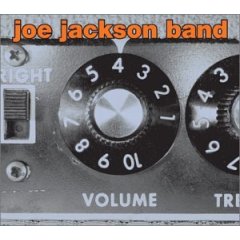
Joe Jackson 16: Volume 4

Having gone back in time once already, sort of, Joe’s next move went even further. He reunited the original Joe Jackson Band and picked right up where they left off. Okay, not really, but Volume 4 does well to wash away the bad taste left by much of Beat Crazy all those years ago.

Right away, Dangerous Dave Houghton rolls in the drums and Graham Maby percolates a bass line, Joe lets out a howl and Gary Sanford proves that he hasn’t changed his amp settings in 23 years. But then Joe throws on a piano part right out of Night And Day, and “Take It Like A Man” manages to meld a lot of styles together. The equally clever “Still Alive” nicely apes the XTC version of the Beatles, with a bridge reminiscent of Steely Dan’s “Barrytown”. “Awkward Age” absolutely crackles, just like they used to. And just like they used to, they get mellow, or at least mellower, on “Chrome”, with its intricately plucked guitar and a bass solo where the guitar or piano solo would be. The mood stays that way for “Love At First Light”, a slightly melancholy portrait and a rather adult perspective on a casual encounter. As a possible reaction, “Fairy Dust” crashes in with a 5/4 tempo, heavy wah-wah guitar and jazz attack, and presents another argument about sexual roles.

“Little Bit Stupid” has a great trashy sound to go with the title, before moving back to a sensitive approach on “Blue Flame”, about as close as the album gets to a seduction. Then, as if to wipe that away, there’s “Dirty Martini”, complete with the band chanting backups and a cheesy Farfisa-guitar duet, stopping for a New Orleans-flavored piano break. “Thugz ‘R’ Us” works where it shouldn’t, a ska-fueled spoof of angry youth, sounding mostly like a Madness track of, say, 23 years earlier. And finally, “Bright Grey” comes to an edgy, angry finish, just this side of chaotic.

Volume 4 is no more a “comeback” than any other artist’s so-called “return to form”, but what makes it successful is its simplicity. Listeners knew by now that Joe Jackson was an exceedingly talented musician, and even a skilled composer, though sometimes songs require a more straightforward approach, and that’s what we have here.

Those whose appetites were whet by the six-EP included in early pressings of the album (the Japanese, incidentally, got an excellent cover of Todd Rundgren’s “Couldn’t I Just Tell You”) would have been very pleased to scoop up Afterlife, captured on the reunited band’s tour, mixing old and new, including songs that only Graham Maby may have played before.

Joe Jackson Band Volume 4 (2003)—3

Friday, March 21, 2014

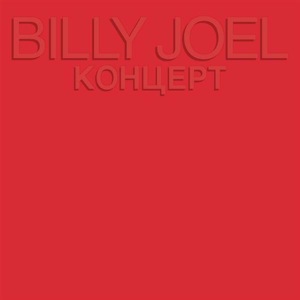
Billy Joel 14: Kohuept

After The Bridge, Billy Joel was about as American as apple pie, blue jeans and baseball. Somehow he took his tour to post-glasnost Soviet Union, which his label commemorated with a live album, a two-record set short enough to fit on one CD. (Technically, the album’s title is Kontsert, which is phonetic Russian, but we boorish Americans have no respect for other cultures, so to us, the Russian alphabet appeared to spell Kohuept, which was easy to ridicule as Kaput. And of course, the cover was bright red.)

The set opens with a Russian folk song sung a cappella, before plowing through “Angry Young Man”. “Honesty” is played solo, sounding very much like the classical piece it began as. Billy came to build bridges and educate, so he offers a lengthy explanation before “Goodnight Saigon”, made lengthier by the translator. “Stiletto” makes a surprising appearance, being more of a deep cut than even a radio hit. A bigger band fleshes out the jazz sentiments of “Big Man On Mulberry Street”, but his Ray Charles impression on “Baby Grand” comes out more parody than homage. Similarly, on “An Innocent Man” he apes the growls of Ben E. King while ceding the high notes to a backup singer.

From there it’s pretty much all hits, until the obligatory cover of “Back In The U.S.S.R.” He does strap on an inaudible guitar for “A Matter Of Trust”, and ends the show with a solo acoustic version of “The Times They Are A-Changin’”. By then he sounds exhausted.

The album was recorded at the end of a long tour, and his voice isn’t always up to the task. But for a long time, this was the only official souvenir of his longtime band playing the big hits, Songs In The Attic being a live album with a twist. Many years later, in the era of the deluxe package, the album was expanded, with a new title, and now ran the equivalent of a full show. The first half now sounds completely different with the addition of “Ballad Of Billy The Kid” (completely with an introductory explanation that includes the theme from The Magnificent Seven), “She’s Always A Woman”, and “Scenes From An Italian Restaurant”. A snippet of the doo-wop chestnut “What’s Your Name” precedes “The Longest Time”. More hits a scattered throughout the second half, and the disc closes with rehearsal recordings. (Sadly but predictably, footage of him throwing a tantrum during one performance of “Sometimes A Fantasy” was not included.)

Since he seemingly stopped writing songs, the only “new” Billy Joel albums have been of the live variety. This upgrade is arguably more entertaining, as it comes from the height of his career, rather than the motions of the oldies circuit. Liberty DeVitto was his best drummer anyway.

Billy Joel КОНЦЕРТ (1987)—3
2014 A Matter Of Trust: The Bridge To Russia: same as 1987, plus 11 extra tracks

Tuesday, March 18, 2014

Bad Company 6: Rough Diamonds

With a mix of mystery, a neat circular piano motif and tasteful guitar work, “Electricland” continues the Bad Company tradition of starting every album by grabbing the listener by the throat. It’s a terrific song, full of changes and lyrics just on the verge of meaning something. And from there, Rough Diamonds is their most forgettable album yet.

The disco thump on much of the record—particularly in “Cross Country Boy” and “Untie The Knot”, though the latter does have a pretty cool break after the bridge—suggests that these are leftovers from their last album, three years before. As for the rest, the overwhelming feeling is just bland. “Ballad Of The Band” is an attempt at sardonic commentary on rock ‘n roll that flies by at just over two minutes. “Nuthin’ On The TV” is tied to a New Orleans stomp, complete with horns, and Mick Ralphs soloing throughout. (Both of those are credited to Boz Burrell, so maybe that was the problem.)

They were never much good at storytelling, yet they try just about every angle. “Painted Face” suggests another sad tale of fame gone bad a la “Shooting Star”, but it doesn’t quite get past the setup, and the synth accents place it firmly in the early ‘80s. More typical of their old sound is “Old Mexico”, about as underdone as “Downhill Ryder” and “Racetrack”, back-to-back juxtapositions into other high-speed occupations, likely metaphors for something known only to him. Only “Kickdown” provides anything remotely of the quality of “Electricland”, even if the narrator was “brought up in a back street/workin’ every night and day”.

So what happened? Even Paul Rodgers, who can still belt with the best of them, sounds pretty bored throughout Rough Diamonds. The Swan Song label was on its last legs anyway, and the Hipgnosis artwork is as arbitrary as ever, with a serrated edge likely to not get too bent from repeated filing. For all their potential, did Badco really not have enough in them to make it to six albums?

Bad Company Rough Diamonds (1982)—

Saturday, March 15, 2014

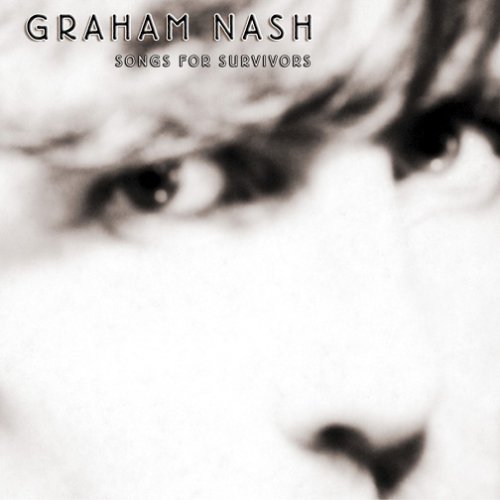
Graham Nash 5: Songs For Survivors

For the first time, the winner of the “who’s gonna be the first of CSN to do a solo album” contest went to Graham Nash, though apparently it took him two years to find a label that would distribute it. The nod to the title of his first solo album 30 years before is clever, but as with most sequels, Songs For Survivors has a high hill to climb.

The first drawback is his voice, which shows the effect of time, and gets in the way when he tries to sound sincere. “Dirty Little Secret” is a strong opener, referencing the specter of racism, but “Blizzard Of Lies” and “Lost Another One” are just too cheerful musically to match the lyric content. It’s dangerous for anyone but Leonard Cohen to write about “The Chelsea Hotel”, but at least he stays away from overt references to that song (or Joni’s “Chelsea Morning”, for that matter), choosing instead to celebrate the artists who led mostly bleak lives there. Just when you think he couldn’t possibly still be sappy, “I’ll Be There For You” is the pick-me-up nobody we know requested. (Maybe it got somebody through a crisis, which would be fine.) “Nothing In The World” delivers the same sentiment, but it’s a better song all around.

“Where Love Lies Tonight” is pure ‘70s James Taylor, if you like that sort of thing, but the cover of Richard and Linda Thompson’s “Pavanne”, featuring harmonies from one Sydney Forest, is particularly surprising, and very nice. “Liar’s Nightmare” may sound like it rips off “Masters Of War”, but since that stole the melody of the traditional “Nottamun Town”, no harm no foul. Despite the length, it’s the best tune on the album, and somehow makes “Come With Me” bearable.

Despite all we’ve said, Songs For Survivors is still one of his better solo albums, though that’s considering how thin the competition is. Soundwise the production is commendable, thanks to the father-son team of Russ and Nathaniel Kunkel, while instrumental support from the likes of Matt Rollings, Dean Parks, and Viktor Krauss is understated and more than competent.

Graham Nash Songs For Survivors (2002)—3

Friday, March 14, 2014

Joy Division 1: Unknown Pleasures

While not every punk band was ignorant musically, the genre did inspire many to pick up instruments and learn as they go. That’s pretty much what happened with Joy Division, a band that literally self-destructed on the eve of their arrival in America. They still managed to gain enough of a following to become more than just a cult curio; at the same time, their limited career keeps their legacy nice and compact: two studio albums, a bunch of collected singles and some live recordings. Because of their capabilities, nobody sounds like them, though many have tried.

With a cover image resembling a mountain range but revealed to be radio waves, Unknown Pleasures was split (on vinyl and cassette) between “Outside” and “Inside”. The sound on both sides is cold, claustrophobic and somewhat industrial. (They were, after all, signed to Factory Records.) Drums sound almost electronic even when they’re not, and the bass player drives a melody without any notice of what the rhythm is. The guitar parts are inventive in a way that only someone with limited ability can find, and that’s meant as a compliment. Over it all, Ian Curtis sings with anger and frustration, emotion compensating for pitch, occasionally echoing Iggy Pop and, dare we say it, Jim Morrison. The band’s devoted following have spent decades ingesting and interpreting the lyrics, so we’re not about to try and do that; these brief descriptions will have to suffice for now.

With an invitation to pogo, “Disorder” is an excellent opener, even with sound effects that appear to be a toilet flushing. Things slow down right away for “Day Of The Lords”, describing a scene of some remembered horror, culminating in repeated queries as to “when will it end?” “Candidate” seems a lot longer than it is, possibly because it’s so low-key—mostly drums and a bass sounding like a cello, with atmospheric noises here and there. “Insight” is about as minimal, except for the truly silly synth-drum hits and electronic meltdown in the bridges. Things truly coalesce on “New Dawn Fades”, which deftly pairs a poetic lyric with a song structure.

The nearly robotic “She’s Lost Control” is an “important” track, being apparently about witnessing somebody’s else’s grand mal seizure, which will loom large in his legend. In any other band, the bass and guitar would play the same riff in unison, but not these guys. “Shadowplay” begins very slowly before acquiring more energy through minimal changes. Some of those seem so arbitrary that one occasional deviation sounds like a mistake, except that the band hits it at the same, seemingly random instance, that it’s either genius or a happy accident. As for “Wilderness”, this time the guitar and bass do move mostly in unison until they get bored and start wandering, well, off into you know where. With an intro borrowed by Devo for “Whip It”, “Interzone” is downright energetic, with its dueling Lou Reed vocals. It’s also the shortest song on the album, coming right before the longest, the gloomy and foreboding “I Remember Nothing”, the machine eventually running out of fuel to the sound of breaking glass and crashing metal.

The influence of Unknown Pleasures can be heard on the debut albums by such bands as U2, R.E.M. and The Smiths, so it’s safe to say that college alternative started here. The production does make it sound dated, but it’s also a style that indie bands are still trying to emulate. It’s also a case where the real thing does justice to the legend. (The eventual Collector’s Edition upgrade added a contemporary concert on a second disc.)

Joy Division Unknown Pleasures (1979)—
2007 Collector’s Edition: same as 1979, plus 12 extra tracks

Tuesday, March 11, 2014

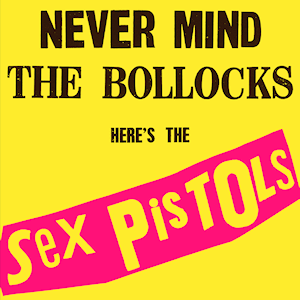
Sex Pistols: Never Mind The Bollocks

Not every band known as punk pioneers was made up of tone-deaf kids who didn’t know how to play their instruments. The Sex Pistols cultivated an image as anti-music despite the undeniable chops of guitarist Steve Jones and drummer Paul Cook. Their original bass player, Glen Matlock, was seemingly kicked out of the band for being too talented. The self-styled Johnny Rotten, who definitely had the attitude, brought in his musically incompetent friend Sid Vicious to play bass instead; that was the most “punk” thing about them. (While not credited as such, Steve Jones either played bass on their sole studio album, or had his guitar parts mixed in such a way to give the tracks some bottom. And who was that producer? Chris Thomas, famous from his work on the White Album and Dark Side Of The Moon.)

We’re not going to attempt to recount their entire story, mostly because it’s been done so well elsewhere, but suffice it to say that their basic legacy endures in its most simple form as a single LP, which was released by the third label to sign them in the UK, and has remained in print on Warner Bros. since its release in the US. What’s especially convenient about Never Mind The Bollocks Here’s The Sex Pistols is that it includes all of their singles. (Naturally, some of the mixes and performances are different from those singles, so good luck if you’re a completist.) Musically, it’s no more distorted than most heavy metal, mostly based around power chords learned from the Who and the Kinks, while lyrically, it’s occasionally very funny.

Marching feet and a riff stolen from The Jam kick off “Holidays In The Sun”, Johnny shouting garbled references to Belsen and the Berlin Wall. “Bodies” is blatantly anti-abortion and pro-fanity, the latter easily keeping it off many right-to-lifer’s playlists. “No Feelings”, “Liar” and “Problems” all display the defiant attitude that had been pissing people off for months, none more so than “God Save The Queen” (which became such a piece of history that it was included as part of the Olympic ceremonies in London, with Her Majesty in attendance).

“Seventeen” is an oddity; besides being the shortest song on the album, its title is a smokescreen for the chorus (“I’m a lazy sod”, which soon turns to “I’m a lazy Sid”). It’s over in time for “Anarchy In The U.K.” to make its appearance. A wonderful mix of acronyms and anger, it’s easy enough to transfer to other countries and associations for the millions of bands who’ve covered it. Want more proof these guys were clever? Manager Malcolm McLaren told them to write a song about submission; thus “Submission” takes it literally (“I’m on a submarine mission for you, baby… I can’t get enough of your watery love”). They apparently needed no such prodding for “Pretty Vacant”, another statement of purpose. “New York” slams more stolen power chords into the wax, its lyrics insulting people on two other continents, including those who might have actually appreciated the band. Finally, “EMI” leaves a fat raspberry for their first former record label, getting in a dig at A&M at the end.

There was no way such a good thing could last, and the band was done within months of releasing Never Mind The Bollocks. The two talented guys went on to record with Ronnie Biggs, the Great Train Robber, and take whatever gigs they could get; Johnny went back to his own name and fronted the ever-changing and truly anti-music Public Image Ltd; Sid’s solo career didn’t get him any further than being accused of stabbing his girlfriend to death and dying himself before he was brought to trial. Trying to mop of the rest of their recorded legacy is difficult, not least because of the spottiness and repetition of everything they did. So it’s just as well that this album presents them at their best, and most influential.

Sex Pistols Never Mind The Bollocks Here’s The Sex Pistols (1977)—4