Tuesday, July 29, 2014

Joy Division 3: Still

To deal with the loss of their friend, singer and main lyricist, the rest of Joy Division simply went back to work making music. The trio morphed into New Order, using the smoother voice of guitarist Bernard Sumner, and added the drummer’s girlfriend on keyboards to take some of the pressure off their new singer. The band’s first single, “Ceremony”, was a new recording of a song played live at the final Joy Division show, a gig memorialized on two sides of a double album, Still.

It’s another Joy Division album with a title that could be taken any number of ways, the most common assumption being that it was intended to combat bootlegs. Indeed, the other two sides collected studio outtakes, mostly from the time of the first album and subsequent singles, but none of their extraneous singles save one rare compilation track. (The eventual CD left out one of the live songs, unlisted on the LP to begin with.)

The outtakes are interesting in their own way, but it’s often clear why they were unreleased in the first place. It may well have been pointed out that the melody for “Something Must Break” is identical to the Perry Mason theme. Meanwhile, on “The Ice Age”, the repeated chorus “I’m living in the ice age” sounds more like “I’m really, really angry”. “The Sound Of Music” is the most recent studio cut, and naturally sounds more developed than the other tracks (with the possible exception of “Glass”, from the first sampler that included the band’s music). Allegedly the surviving members applied some “post-production” sweetening to these tracks, but they’re still pretty rough.

As a document, the live half does show off the energy of the band, while underscoring their drawbacks—the bass has no oomph, drums rush and slow down, fingers miss frets and the synth goes way off-key for a full minute of “Decades”. The rest is hit or miss, “Ceremony” starting halfway through, yet leading smoothly into “Shadowplay”. Perhaps it’s a stretch, but performances like “New Dawn Fades” and “Transmission” predict early U2. And it’s almost fitting that the last song of the show, “Digital”, was also one of the first songs they’d ever released, providing a true bookend for Ian’s career. (The studio half ends with an encore cover of The Velvet Underground’s “Sister Ray” from a month before; it’s pretty sloppy, but does show some humor when Ian makes a “Louie Louie” reference at the end.)

Since it was never intended to be the final Joy Division album, it shouldn’t be treated as such, but should only be considered as an addendum. And as New Order would evolve and dominate the ‘80s techno scene, the legend of Joy Division would only grow, and inspire further epitaphs. (Keeping with tradition, the eventual Collector’s Edition included an earlier 1980 concert and soundcheck on a bonus disc.)

Joy Division Still (1981)—3
2007 Collector’s Edition: same as 1981, plus 14 extra tracks
Friday, July 25, 2014

Jimi Hendrix 25: West Coast Seattle Boy

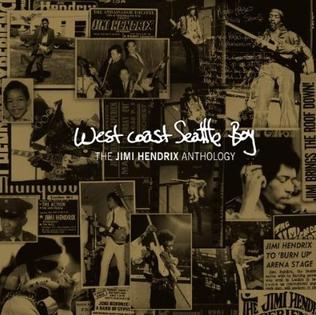
Collectors were still acquainting themselves with whatever bounty they could take from Valleys Of Neptune when, hold and below, another four-CD Jimi box appeared. Rather than repeat the 2000 box, which had been part of the previous MCA deal, West Coast Seattle Boy prefaced three discs of unreleased music with a disc devoted to the session work he’d done before the Experience, for the likes of the Isley Brothers, King Curtis and Little Richard. This stuff had been clogging up gray-area records and tapes since Jimi was alive, and while there are some who will welcome these things in best-ever quality, the real story doesn’t begin until disc two, after he’d hooked up with those two English guys and truly became the Jimi Hendrix of legend. (Perhaps to make up for it, the set included a DVD, and was also available in a single-disc distillation, which was the style at the time.)

So, just like the 2000 box, we travel chronologically through studio alternates and a handful of live tracks, some of which were on since-deleted box sets, others further songs from the Berkeley concert and Band of Gypsys shows. Pay close enough attention and you’ll hear some pretty interesting things.

Many of the outtakes and rarities are instrumental, allowing us to focus on his playing. The best include “Little One” from the Electric Ladyland era, featuring some Indian drones likely contributed by Dave Mason. “Cat Talking To Me” is also pretty decent, particularly without the Mitch Mitchell vocal heard previously. “New Rising Sun” is a longer mix of the dreamy piece that opened Voodoo Soup. “Calling All Devil’s Children” follows a terrific riff unfortunately mixed down to allow a “political rally” to take over the track. “Young/Hendrix” is a 21-minute jam previously excerpted on Nine To The Universe, notable for a five-second riff that Lenny Kravitz stole for “Are You Gonna Go My Way”. Then there’s “Messenger”, a jam on chromatic riffs with Jimi’s overdubbed piano on top. And “Peter Gunn/Catastrophe” is rescued from oblivion, or more accurately, War Heroes.

Of course, there are some actual songs here. “Mr. Bad Luck” purports to be the original mix of the track that sported 1987 overdubs on Valleys Of Neptune; the later version that now opens South Saturn Delta as “Look Over Yonder” is still the one to have. A handful of home recordings preview songs destined for Electric Ladyland and Cry Of Love, including a solo “My Friend”, plus “Tears Of Rage”, not yet widely known outside the Dylan circle. “The Everlasting First” is one of his final guest sessions, with Arthur Lee’s second incarnation of Love. The last piece on the disc is the acoustic “Suddenly November Morning”, from a longer suite of unfinished ideas.

While good, West Coast Seattle Boy was another missed opportunity. Considering all the distinct eras and bands of Jimi’s short career, the grab-bag approach ultimately gives short shrift to the story, distorting it, and making his official catalog even harder to navigate. And the Estate wasn’t done yet.

Jimi Hendrix West Coast Seattle Boy: The Jimi Hendrix Anthology (2010)—3

Tuesday, July 22, 2014

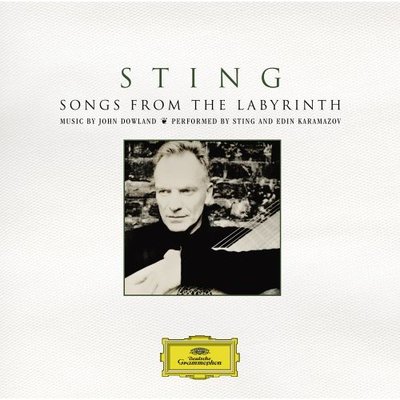
Sting 10: Songs From The Labyrinth

Never one to miss a chance to remind you just how much smarter he is than you are, Sting’s second album of the millennium was in the classical vein. Songs From The Labyrinth consists solely of music written by English Renaissance composer John Dowland, performed entirely on lutes. This is hardly an excavation of buried treasure, as Dowland was already well known to connoisseurs; fellow New Wave refugee Elvis Costello had already performed, recorded and released some pieces several years before Stingy got around to it.

Wisely, he lets special guest Edin Karamazov handle the fretwork, and indeed, the pieces with no vocals are the least distracting. Sting himself plays lute in the background on one interlude, and in duet on another longer piece. When he does sing, and he does, he does so in his imitable style, up close and back-of-the-throat nasal. This approach was great for something like his cover of “Spread A Little Happiness”, but gets a bit trying here. “Can She Excuse My Wrongs”, for instance, would be much better served with a softer vocal, or at least smoothing out all the sharp inhales. As the first track with a vocal, it sets a tone for the album at large.

Because many of the pieces were originally written for ensembles, we’re treated to multiple Stings singing in harmony. “Fine Knacks For Ladies” is one example of this overkill, but will certainly influence any number of college a cappella groups to tackle it.

And because the album is designed to be something of an aural biography, every three tracks or so he reads excerpts from a letter, written by Dowland, in his breathiest BBC accent, accompanied by stock sound effects. It doesn’t help. (One track’s music is credited to Robert Johnson—not, need it be said, the blues legend, but a Dowland contemporary.)

As might be expected, Songs From The Labyrinth topped the classical chart, as many crossovers tend to do upon release, before sharply typically tailing off in sales. It’s since been reissued with a variety of bonus tracks, some of which stem from a DVD documenting the rehearsals and live performances. If the listener is not put off by Sting’s attempts at vocalizing these pieces, rest assured there are other, more pleasing recordings by more apt voices out there. For example, John Potter, formerly of the Hilliard Ensemble, has released several albums under the moniker The Dowland Project; those are worth sampling, as is anything by the Hilliard Ensemble. Meanwhile, this writer plans on checking out other recordings by Edin Karamazov.

Sting Songs From The Labyrinth (2006)—2

Monday, July 21, 2014

Stephen Stills 14: The Rides

For all his dabbling in styles over the years, Stephen Stills has always considered himself a blues man. His excursions into the genre have varied from astounding to embarrassing, and his fretwork hasn’t always been welcome in, say, a Crosby, Stills & Nash forum.

So it’s surprising that it only took him half a century to find an outfit that just lets him wail. The Rides pairs him with young phenom Kenny Wayne Shepherd, with Barry Goldberg (who was on the Bloomfield side of the Super Session album) on keyboards and a rhythm section including Chris Layton, once of Stevie Ray Vaughan’s band, on drums. On Can’t Get Enough—co-produced by Jerry Harrison of Talking Heads, interestingly enough—Stills and Shepherd alternate vocals on mostly originals, but there are some surprising takes. Shepherd happily sneers his way through the Stooges’ “Search And Destroy”, but he’s not as convincing on Muddy Waters’ “Honey Bee”. Stills hasn’t been in the strongest voice for years, but he’s most animated on the loud take on his own “Word Game”. The title track is not the Bad Company song, and we’ve got mixed feelings about that, but “Rockin’ In The Free World” adds nothing to the original. Basically, the album is best when they just play (and when there are no backing vocalists).

Three years later, the same crew delivered Pierced Arrow, which picked up where they left off, only louder. “Virtual World” halves the pace, but it’s a duet in harmony, “By My Side” is a slow burner, also with good harmonies, and “Mr. Policeman” has a terrific swagger. All the tracks were original collaborations this time, with the exception of Willie Dixon “My Babe” and “I’ve Got To Use My Imagination”, which first appeared on Barry Goldberg’s 1973 eponymous album. The backing vocalists were different this time, and mixed lower, and Kim Wilson of the Fabulous Thunderbirds blows harp, most prominently on “Game On” and the lyrically inane “I Need Your Lovin’”. Again, the focus is on the musical interplay and of the two—as there haven’t been any further Rides albums—Pierced Arrow gets the edge.

The Rides Can’t Get Enough (2013)—3
The Rides
Pierced Arrow (2016)—3

Sunday, July 20, 2014

Stephen Stills 13: Carry On

When it was Stephen Stills’ turn to get a Graham Nash-curated box set, he had to have four CDs, not three. Considering the volume of music he’d put out over nearly half a century, it almost makes sense, but any collection would have to keep in mind that quantity in Stills’ case doesn’t necessarily indicate quality. Luckily, Carry On is designed for those who like deep dives, via alternate versions and unreleased tunes.

The first sound we hear is a 17-year-old kid sweetly singing and picking on a Voice of America radio feed from Costa Rica; two years later his voice has acquired some of the smoke we’re accustomed to, with The Au Go Go Singers. Ten Buffalo Springfield tracks provide a terrific glimpse into his contributions there; sadly, the rare extended “Bluebird” jam is still MIA. We’d already heard the demo of “Four Days Gone” on the Buffalo box, but two one-man band demos nicely lead into the first CSN album and Déjà Vu. A solo “So Begins The Task” and a one-man-band-plus-drummer version of Crosby’s “The Lee Shore” are nice surprises.

Disc two offers a wonderful sequence. It covers roughly two years, in neither recording nor release order, but encompasses his first three albums, all made without those other guys. Hidden gems include an early version of “The Treasure”, a live duet with Steve Fromholz on “Do Unto Others”, “Find The Cost Of Freedom” from a surprise appearance with Neil Young at a Crosby-Nash gig, and “Little Miss Bright Eyes”, which evolved from a Déjà Vu outtake called “Ivory Tower”. And while he’s obviously proud that he got to play with Hendrix, did their unreleased “No Name Jam” really need overdubs in this century?

That disc stands alone just fine, but disc three is where it starts to unravel. We begin with some of the not-so-highs of the Stills album before bouncing through the rest of the ‘70s and into the ‘80s. Illegal Stills is ignored, but Thoroughfare Gap isn’t. A couple live acoustic tunes break up the slickness; other rarities include “Spanish Suite” with Herbie Hancock, a CSNY mix of “Black Coral”, an edited but still interminable “Dear Mr. Fantasy”, and the quieter mix of “I Give You Give Blind”.

Disc four is just as spotty, notable for offering selections from the anemic Allies live album for the first time on CD. A solo sketch called “Welfare Blues”, recorded at Jimmy Page’s studio, appears for some reason, as does an unnecessary remake of “Church (Part Of Someone)” from his first album, overloaded with synths and emoting chorists. Nice selections from Stills Alone sit uncomfortably next to clunkers from Man Alive! In the middle of all this is a live arrangement of “Girl From The North Country”, from one of the last times CSN sang together well in public, and a version of Otis Redding’s “Ole Man Trouble” from one of the CSNY2K tours with Booker T. & the MG’s.

The first half of Carry On is stellar, so while it’s a shame the rest can’t keep up, we didn’t expect it to. This one’s for the fans. And Graham.

Stephen Stills Carry On (2013)—

Saturday, July 19, 2014

Stephen Stills 12: Pieces

The outfit Stephen Stills called Manassas had a lot of potential, but had imploded before really reaching it. Stills and main partner Chris Hillman were increasingly distracted by their legacies and other collaborators to sustain it past the year they were together. (These ears felt Hillman was unfairly kept to second fiddle status anyway.)

So in a year when Crosby, Stills & Nash were celebrating their fortieth anniversary (and Graham Nash and Neil Young put out their own box sets), it was nice for Stills to curate a third, lost Manassas album. Pieces presents a deeper glimpse at the band’s potential, touching on all the genres they attempted to cover while they were together. It also gives more though not equal time to Hillman.

Some of these are alternate versions, but not alternate takes per se. “Witching Hour” and “Like A Fox” are absolute gems astoundingly left off the first album; “Sugar Babe” is an excellent improvement on the track from Stills’ second album, whereas “Word Game” is given an unnecessary shuffle. “Fit To Be Tied” would turn into “Shuffle Just As Bad” in a few years, while “My Love Is A Gentle Thing” had already been heard on the CSN box and was started in 1970 and finished in 1975, which doesn’t explain what it’s doing here. “High And Dry” goes from a “bluesman with my guitar” growl to a faster arrangement with what we assume is a canned audience cheering. “I Am My Brother” is Stills alone with his acoustic.

“Lies” is a rockin’ Hillman alternate, while “Love And Satisfy” shows another side of his talent. He likely leads a bluegrass detour through “Panhandle Rag”, “Uncle Pen”, and “Dim Lights, Thick Smoke (And Loud, Loud Music)”, including an alternate of “Do You Remember The Americans”, and including input from sometime Burrito Byron Berline. For contrast, the brief “Tan Sola Y Triste” instrumental fits the Latin side of the band.

Had some of these tracks made it to Down The Road, the band just might have endured longer. Or maybe not. At any rate, it’s a treat to have the material on Pieces available. Its length and quality illuminate its predecessors, and that was the point.

Manassas Pieces (2009)—3

Friday, July 18, 2014

CSN 12: Demos

While Neil spent much of the decade promising and delaying his box set, the others in Crosby, Stills & Nash quickly realized that there was gold in them there hills. Nash curated box sets for himself and Crosby, but Stills tinkered with his a lot longer. While we waited, he released Just Roll Tape, purporting to be a long-long demo session recorded in April of 1968. With snippets of songs never revisited, along with the usual embryonic versions of a few classics, the set proves that he wouldn’t truly find his voice until he had other voices to support him. (It also shows him to be a master of time travel, since it’s been established that Buffalo Springfield had a gig in Arizona while this session was supposedly taking place in New York.)

Two years later, the very same day Neil’s Archives box finally emerged, so did a CSN disc called, simply, Demos. Culled from the first three or so years they worked together, it’s a low-key, enjoyable collection of songs you already know, but generally in a basic format. In other words, solo and acoustic, and no harmonies.

Considering how headstrong these guys were, the demo versions aren’t that different, structurally, from the finished productions. In most cases they’re blueprints to be built on; “Music Is Love”, for example, appears to be the simpler basic track before Graham and Neil loaded it up to open Crosby’s first solo album, while “Long Time Gone” is an early band version that hasn’t quite arrived at its proper feel.

And that’s another perk to the set—the songs aren’t limited to just the group albums, but include plenty of ideas that wouldn’t reach fruition until their various solo albums. All of Nash’s songs (save “Marrakesh Express”) would end up on his first album, while Stills’ ideas (as proved on Just Roll Tape) could sit around for years before making one of his albums. “You Don’t Have To Cry” consists of just the one verse that would be repeated for the album version, though Crosby’s unplugged sketches of “Déjà Vu” and “Almost Cut My Hair” are even longer than the released takes.

Demos is for fans only, and might have spurred a sequel had the sales been there. But it does succeed for the reasons mentioned, as well as for sending people back to the first records they made together and apart. While not the cottage industry that runs message boards concerning hypothetical post-1970 Beatle albums culled from solo work, there must be more than a few fans who have compiled their own collections of the best of CSN apart.

Stephen Stills Just Roll Tape: April 26, 1968 (2007)—3
Crosby, Stills & Nash
Demos (2009)—3