Monday, July 14, 2008

George Harrison 2: All Things Must Pass

For his first real solo album, George came bursting out of the gate with a multi-record boxed set to prove to the world that his talents hadn’t been realized to their utmost potential. Granted, one of the three discs consists of pretty simple instrumentals, but compared to the down-home qualities of the other three’s 1970 solo output, All Things Must Pass is a natural progression from the sophistication of Abbey Road. And, after having been kept on a short leash for John’s concurrent album, Phil Spector got his big chance to really go nuts with a Beatle in the studio.

Oddly enough, despite George’s status as the “mystical one” who dragged everyone to India, the strongest musical tone throughout is country-and-western. Looking at the credits on the inside cover of the box we see such names as Bob Dylan and Pete Drake, and the first notes suggest a Nashville influence. The sultry “I’d Have You Anytime” welcomes us in with lyrical help from Dylan, deep in his own Nashville phase. “My Sweet Lord” follows, the first really overt religious number in George’s repertoire. It would not be his last. “Wah-Wah” was allegedly written the day he walked out of the Get Back sessions; while he’d explained that the title is a euphemism for a headache, it’s also the effect pedal we hear near the start of the song. It’s a great tune, with all those guitars chiming along, horns blaring, and what sounds like a car driving off at the very end. “Isn’t It A Pity” closes this perfect album side, starting so gently and carrying us away with the slightest variations on the same chords.

“What Is Life” is another classic; when he wants to, he can praise the Lord without being preachy and still get played on the radio. His version is still the best of “If Not For You”, as the arrangement is much more delicate than Dylan’s or anyone else’s. “Behind That Locked Door” is very country on the surface, but is a sweet love song to a sad friend. “Let It Down” is 1970 Rock done correctly without being dated. He’d tried this with the Beatles, but John and Paul either couldn’t or wouldn’t learn it, and it’s their loss. “Run Of The Mill” gently takes us out of the second side, with his usual jumpy time changes. Another great end to another great side.

“Beware Of Darkness” rises like the sunrise, and is just as invigorating. The guitar solo really shines, underneath that haunting arrangement. “Apple Scruffs” is fairly Dylanesque, and not just because of the harmonica. As grumpy as George could be, it’s clear he did appreciate some of the attention from his fans. “The Ballad Of Sir Frankie Crisp (Let It Roll)” has the most pointless lyrics so far, but the simple chords and the piano work every time. “Awaiting On You All” is a fairly rousing Christian rock number that couldn’t possibly offend an atheist. And while the title track may seem as timely as that year’s headlines, it’s simply an homage to his new friends in The Band.

With three sides in a row resulting in a full hour of great music, we can almost forgive the less exciting remainder. Well, almost; “I Dig Love” just plain stinks, and it’s surprising that Lenny Kravitz hasn’t stolen it yet, as it’s right up his THC-clogged alley. “Art Of Dying” brings us back with its nasty riffing and nightmare strings, but another, inferior version of “Isn’t It A Pity” serves no purpose. “Hear Me Lord” ends the side oddly, with its uncertainty a striking contrast to the happy God songs on the other sides. (This was also shown to the Beatles, and it’s not surprising to know they weren’t impressed with the words. But it’s still a pretty powerful song.)

After all that, he’s somewhat justified in showing off with his buddies on the “Apple Jam” disc. “Out Of The Blue” is kicked open in progress, and while it’s the longest jam it’s still the best. “It’s Johnny’s Birthday” provides some long overdue humor, going right into “Plug Me In”. “I Remember Jeep” has some synthesizer whoops and beeps scattered across it, while “Thanks For The Pepperoni” gets its inspiration from the Chuck Berry riff.

The rest of George’s solo career had to live up to this strong start. All Things Must Pass has only gained more sentimental value, and a worthy investment for anyone who has all the Beatle albums yet is tentative about leaping into the murky waters of their solo careers.

The original CD issue had the first (and best) three sides on one disc, with the rest on the other. The 2001 reissue (and the 2014 Apple Years edition) modified this and beefed it up a bit: the first disc has sides one and two plus new bonus tracks, and the second has sides three and four plus “Apple Jam” in what was supposedly the original sequence before it was shuffled to fit on the LP better. Of the bonuses, the best one is the hokey but sweet “I Live For You”. This is just one of the tunes he’d sat on during the end of the Beatles, and would have been appreciated more in 1970 than “I Dig Love” or the second “Isn’t It A Pity”. “Beware Of Darkness” and “Let It Down” are acoustic demos, with a little modern sweetening in the case of the latter. The backing track for “What Is Life” shows off more mariachi trumpet that was thankfully wiped from the final mix, and “My Sweet Lord (2000)” is no replacement for the original.

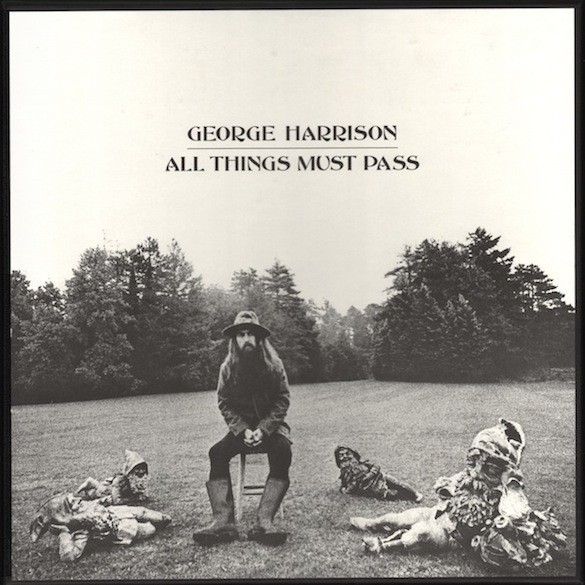
While slightly delayed by the COVID-19 pandemic, the Harrison Estate approved a deluxe overhaul of the album for its golden anniversary. Dhani Harrison supervised a modern remix of the album, pulling down some of the walls of sound and bringing out George’s voice in most places. Once again, sides one and two made up one CD, while the other four sides (in the original order) filled a second. A third disc was devoted to a day’s worth of demos recorded with Ringo and Klaus Voormann—some of which sound more like early takes with a lot more musicians involved—while a fourth replicated the Beware Of Abkco! bootleg of solo demos recorded the day after. Among the tracks left in the fabled bullpen: the Elvis pastiche “Going Down To Golders Green”; “Dehra Dun” and “Sour Milk Sea” from early 1968; “Window Window” from 1969; the sublime lament “Nowhere To Go”; Dylan’s “I Don’t Want To Do It”; and future LP track “Beautiful Girl”. A fifth disc of “session outtakes and jams”—which was included as the third disc in the cheaper of the expanded editions—provided some variety on familiar songs. (Fans who’d benefitted from the material world could have sprung for an “uber box” that also included more detailed session notes, a copy of a pamphlet by one of George’s gurus, a bookmark carved out of one of George’s trees, and scale replicas of the gnomes on the cover.)

George Harrison All Things Must Pass (1970)—4½
2001 remaster: same as 1970, plus 5 extra tracks
2021 50th Anniversary Edition: “same” as 1970, plus 17 extra tracks (Super Deluxe adds another 30 tracks)

Friday, July 11, 2008

Elvis Costello 12: Blood & Chocolate

A mere six months after the release of King Of America, Elvis returned with both the Attractions and old producer pal Nick Lowe on an album full of the same snotty punk that critics had been asking for since This Year’s Model. But by this time, neither his US nor UK record label knew what to do with him, so Blood & Chocolate was all but ignored. Not for lack of trying on Elvis’s part; he promoted both of the year’s albums with an ambitious tour, playing several nights in select cities, alternating performances with the Attractions, a variety of Confederates, acoustic sets, special guests, and even a request night involving a spinning wheel normally seen in the company of Vanna White. (Then again, maybe rendering all of the album credits in Esperanto was considered less than accessible. Plus, the pseudonym of Napoleon Dynamite added further confusion.)

The album itself should have made lots of people happy. The band fires on all cylinders from the get-go, as “Uncomplicated” pounds the album title into your brain. After several attempts over the years, “I Hope You’re Happy Now” finally makes it to a release in its best version ever. “Tokyo Storm Warning” is a surreal Dylanesque travelogue running six dizzying minutes, and there’s a similar nasal twang in “Home Is Anywhere You Hang Your Head”, the breathy tale of a certain unsavory character named Mr. Misery. As if two lengthy songs in a row wasn’t enough, the six-minute nightmare within the stark “I Want You” would provide a theme song for stalkers for generations to come.

Side two has some quieter moments, they don’t exactly provide relief. “Honey, Are You Straight Or Are You Blind?” is a basic 12-bar that crashes through until “Blue Chair”, one of those commiserating-over-a-mutual-minx plaints. Another long one, “Battered Old Bird”, is a childhood snapshot of a dysfunctional household, complete with a “Strawberry Fields Forever”-inspired splice for a jarring transition. “Crimes Of Paris” is more acoustic-based, and his lyrics are getting more obtuse by the line. His new bride Cait O’Riordan provides vocals here, as well as on “Poor Napoleon”, a bedroom tale awash in feedback and white noise. And there are few album closers as satisfying as the biting kiss-off of “Next Time Round”.

Since its initial release, Blood & Chocolate has been something of a totem for fans, being the last Attractions album for ten years and the last “loud” album for even longer. As the finale to Rykodisc’s reissue campaign, their version of the CD included a handful of single sides—one of which dated from the King Of America sessions, allowed here for space reasons, while “Return To Big Nothing” was unlisted—and one unreleased track, the promising “Forgive Her Anything”. Initial copies came bundled with a bonus disc consisting of an interview about the albums reissued by Rykodisc for Record Collector magazine on a single track.

Rhino ignored the interview and used just four of the singles, and added a few other alternate takes alongside an odd sequence of acoustic demos of country covers, three of which he’d record again one day. Even more frustrating was that the disc was hardly filled to capacity, adding insult to the injury of those neglected songs. Still, the alternate take of “Battered Old Bird”, taken at breakneck speed, is hilarious, and another version of “Forgive Her Anything” only enhanced the quality and tension of the one it replaced. “New Rhythm Method” is a frenetic outtake Elvis professed to have no memory of recording, while “Leave My Kitten Alone” was learned from a Beatles bootleg and would feature onstage.

Elvis Costello & The Attractions Blood & Chocolate (1986)—5
1995 Rykodisc: same as 1986, plus 7 extra tracks (and interview disc)
2002 Rhino: same as 1986, plus 15 extra tracks

Wednesday, July 9, 2008

Elvis Costello 11: King Of America

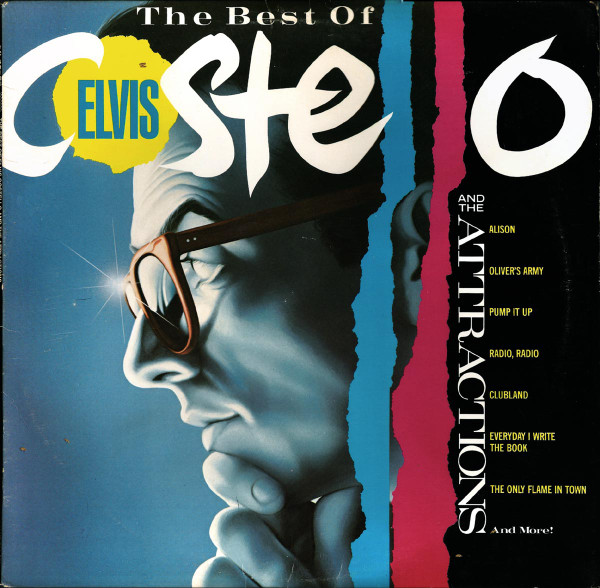
The title of his previous album—along with the lyrical tone and subsequent critical reaction—hinted strongly that some kind of transitional period was necessary, and with no new Elvis Costello album in 1985, both the US and the UK were treated to compilations in time for Christmas. Besides having better cover art, the American release pointedly credited the Attractions on the front, spine, and label, and sported a mostly chronological sequence of songs. (The CD version even added three extra tracks, all excellent choices.) Though it would go out of print once the catalog was reissued and replaced by other attempts to sum him up in a disc or two, this was a terrific doorway into the catalog, and primed the pump for the next real album, which appeared only months later.

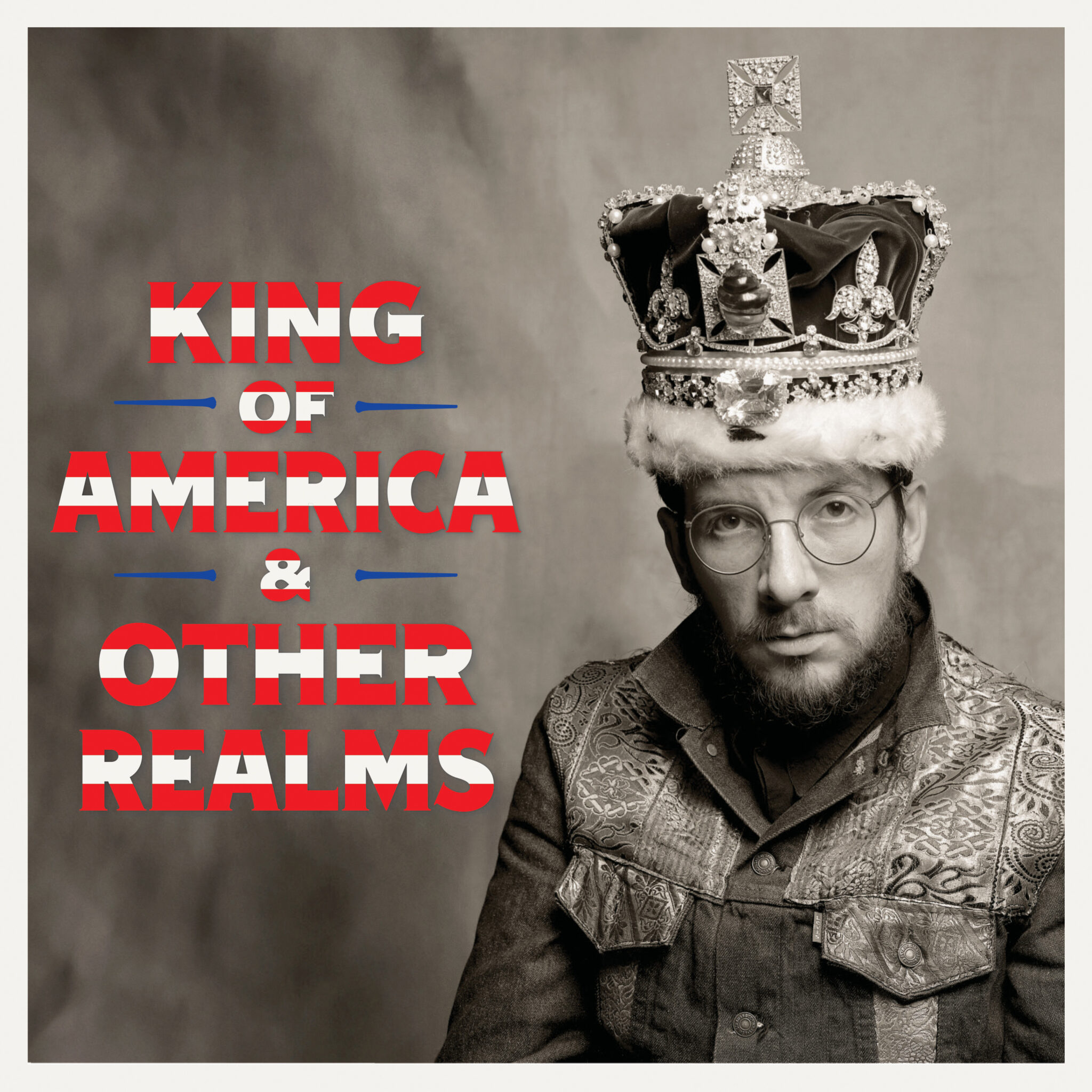
As if to confirm the implicit threat of Goodbye Cruel World, Elvis had embarked on a series of sessions produced by new buddy T Bone Burnett, with a rotating cast of American session guys, collectively dubbed The Confederates. He’d already reverted to using his given name of Declan MacManus to copyright his songs, but management insisted he stick with the established brand for the time being, so King Of America was credited to The Costello Show (to which Columbia in the US made sure to add “featuring Elvis Costello” in parentheses on the spine and labels in case nobody recognized the face behind the beard on the cover).

From the start, the sound is much different to both the current music scene as well as Elvis’s own trajectory, making for a startling but ultimately rewarding listen. Acoustic guitars, mandolins, and string basses drive the songs, with pianos, organs, and accordions providing the extent of the keyboards. Nearly all the songs are upbeat, and even the slow ones don’t drag.

Opening with “Brilliant Mistake”, which provides the album’s title, the album kicks off at a steady trot that continually satisfies. (After the Bruce Springsteen song of a similar title became better known, Elvis would occasionally modify the third verse to reference it; he’s also been known to work in a quote of Bob Dylan’s “Tangled Up In Blue” due to the chordal similarity.) “Lovable” is a singalong with David Hidalgo of Los Lobos and a very successful use of key changes. The sentimental portrait of “Our Little Angel” is just one of several saloon-based songs here. If there’s a clunker here, it would be the cover of the Animals’ “Don’t Let Me Be Misunderstood” (though he would probably insist he heard Nina Simone’s first), delivered at a seething pace yet still released as a single. But it still works, and leads well into “Glitter Gulch”, which derides Vegas and game shows. “Indoor Fireworks” is a sad lament working every possible metaphor and “Little Palaces” is a bitter indictment of the Thatcher regime, tempered by “I’ll Wear It Proudly” is one of his most tender love songs.

In between the accordions, “American Without Tears” relates an encounter in a different kind of saloon, and its view of history is underscored by the drunken protest in the obscure cover of J.B. Lenoir’s “Eisenhower Blues”. (This track, along with the torchy “Poisoned Rose” that follows, featured the one-time rhythm section of Ray Brown and Earl Palmer.) “The Big Light” is a happy hangover song, with a riff borrowed from “Mystery Train” and an overt reference to Merle Haggard in the second verse. And the majestic final trinity of “Jack Of All Parades”, “Suit Of Lights” (which features both the Attractions in their only appearance on the album as well as Elvis’s first use of the f-word on record), and “Sleep Of The Just” provides a magnificent ending to an hour well spent.

King Of America was not a resounding success, and many critics were suspicious of his motives. But Elvis was definitely rejuvenated by the experience, and the album certainly held up in the wake of the alt.country movement at the turn of the century.

With only seventeen minutes of CD time to spare, Rykodisc added just five tracks to the end of their reissue: both sides of the single Elvis and T-Bone released as the Coward Brothers, plus three songs from the sessions—the B-side “Shoes Without Heels”, the outtake “King Of Confidence”, and the stellar demo “Suffering Face”. To make up for it, initial copies included a bonus disc of six songs—five of which were covers, and one of those was a reprise—performed live with several Confederates, including James Burton, T-Bone Wolk, and Jim Keltner.

Ten years later, Rhino had a full bonus disc to work with, and hence found some more nuggets to include along with those extras. “Having It All”, a gorgeous piano ballad, finally got release, along with the reworked “Deportee”, Richard Thompson’s “End Of The Rainbow”, a solo “I Hope You’re Happy Now”, and other demos of album tracks. One more live cover from the same Confederates show didn’t add much, while “Betrayal”, an early draft of “Tramp The Dirt Down” recorded with the Attractions, was also anticlimactic. (They also colorized the cover.)

Two decades after that, the album was chosen for another remastering and expansion in a set dubbed King Of America & Other Realms. This time, six previously unreleased demos—including two songs that would end up on Blood & Chocolate and different verses for “Brilliant Mistake” and “Sleep Of The Just”—were interspersed on a disc with some but not all of the extras from the last two upgrades. A third disc presented most, but again, not all of a performance with the Confederates (now with Benmont Tench on keys) at the Royal Albert Hall three months after the concert sampled earlier. (It also shuffles the setlist as played, and includes none of his solo set.) Along with a lot of James Burton on lead guitar, and different versions of songs we’ve already heard, there are some good renditions of songs from the album, a few covers making their first official appearance in the catalog, and some that would feature one day on Kojak Variety.

That would have been fine, except he decided that this collection should encompass his larger journey through what we now call Americana, touching on further albums produced by T Bone Burnett and collaborations with various musical icons. Following the lead of the recently upgraded Painted From Memory, he added a pile of songs recorded well after the original album sessions and subsequent promotion, spread throughout three further CDs. And we mean a pile: six songs from The Delivery Man (and two from the Deluxe Edition), four from The River In Reverse, two from Momofuku, five from Secret, Profane & Sugarcane, nine from National Ransom, one from Look Now, and one of the title tracks from Lost On The River. Even “Deep Dark Truthful Mirror” shows up, seeing as it was recorded with Allen Toussaint, and maybe we should be thankful that “Walking On Thin Ice” was overlooked. Other previously released off-cuts included the “Complicated Shadows” demo, “That Day Is Done” with the Fairfield Four, and the timely “April 5th” collaboration with Roseanne Cash and the recently departed Kris Kristofferson.

These are mostly enjoyable tracks, sequenced well, and a deep sampler of his less familiar projects of this century. But these commingled with several items of more recent vintage appearing here for the first time. Three songs came from live DVDs: “Heart Shaped Bruise” in Memphis with Emmylou Harris, and “Bedlam” and “Clown Strike” in Montreal with Toussaint. The alternate of “The Greatest Love” had appeared on the soundtrack of Treme, while “Red Wicked Wine” came from a Ralph Stanley “& Friends” project. A rehearsal of “The Monkey” with Dave Bartholomew and the Dirty Dozen Brass Band is a lot of fun, while “Quick Like A Flash”, an outtake from the New Basement Tapes project, has a very barrelhouse New Orleans feel. Three demos for National Ransom include the unreleased “For More Tears”, a lovely piano and vocal piece. “That’s Not The Part Of Him You’re Leaving” is performed with Larkin Poe in the style of their live arrangement. Finally, there are two lengthier, recent updates of songs from the album. A soulful “Indoor Fireworks” comes from the tour rehearsals for The Boy Named If, while “Brilliant Mistake” is melded with the oldie “Boulevard Of Broken Dreams” in a minor key and dubbed “Cape Fear Version”.

So in order to get the new material, consumers would be purchasing three discs’ worth of music they had already. A condensed version offered the remastered album on one disc plus a seemingly random selection of “highlights” from the other five discs on a second. Had a set merely contained the demos disc and full, uncondensed concert, it would a no-brainer, but at least they didn’t cram two vinyl discs into an already expensive package. Lengthy liner notes from the artist attempt to explain everything, with some stories repeated and a surplus of extraneous commas. Somewhere, Bruce Thomas is smirking.

Elvis Costello and the Attractions The Best Of Elvis Costello And The Attractions (1985)—4½
Current CD availability: none
The Costello Show King Of America (1986)—5
1995 Rykodisc: same as 1986, plus 11 extra tracks
2005 Rhino: same as 1995, plus 10 extra tracks
2024 King Of America & Other Realms: same as 1986, plus 82 extra tracks

Tuesday, July 8, 2008

Ringo Starr 2: Beaucoups Of Blues

A cursory listen to Ringo’s solo spots on Beatle albums might suggest a slight bias toward country music. With nothing else to do in the middle of 1970, he indulged his love of the genre by hooking up with pedal steel legend Pete Drake (most famous to rock fans for his work on Nashville Skyline and All Things Must Pass) to record Beaucoups Of Blues with the cream of Nashville’s studio cats in support. Some of these luminaries included Charlie Daniels, Ben Keith, Jerry Reed, and Charlie McCoy, plus the Jordanaires, who harmonized throughout. The only drummer listed is D.J. Fontana, unless Ringo’s in there somewhere; most reports say he didn’t touch a pair of sticks during the sessions.

It’s not a half-bad album for its genre, his lonesome voice supported by not too much syrup, and constantly betraying his Scouse roots. Unlike last time, these weren’t all golden hits; every song was brand new, and conveniently administered through Drake’s own publishing company. Once again the opening track is the title track, and probably the best choice for a single. “Love Don’t Last Long” isn’t as maudlin as Bobby Goldsboro’s “Honey”, which it resembles, but it delivers the same heartache as “Without Her”, “I’d Be Talking All The Time”, and “Waiting”. He nicely tackles the key changes on “I Wouldn’t Have You Any Other Way”, a sweet duet with one Jeanie Kendall, then all of 16 years. Titles like “Fastest Growing Heartache In The West”, “Loser’s Lounge”, “Wine, Women And Loud Happy Songs”, and “$15 Draw” (which refers to the “boot” rather than the trunk of a car) are novelties, not designed for any museum. “Woman Of The Night” might have been a hit if the message weren’t so mixed, but the real surprise is “Silent Homecoming”, which could almost be a Vietnam War protest.

Given the low-key approach and how it was recorded, Beaucoups Of Blues has aged pretty well. But as we’ve said before, would anyone care were it not for that name on the spine? (The CD gets bonus points for including “Coochy Coochy”, Ringo’s one-chord exercise that was a contemporary B-side, but it’s also a head-scratcher for adding the pointless “Nashville Jam”, except that he might actually be playing drums on it.)

Ringo Starr Beaucoups Of Blues (1970)—3
1995 CD reissue: same as 1970, plus 2 extra tracks

Monday, July 7, 2008

Neil Young 6: Time Fades Away

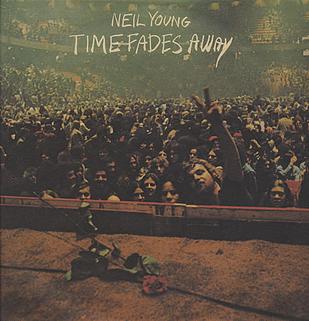
Following the success of Harvest, Neil embarked on his first big stadium tour. Had it been anyone else, the audiences would have enjoyed all the hits they knew and loved. Instead, Neil and the fractured Stray Gators tore their way through a pile of unfamiliar songs. The performances were ragged every night and Neil quickly lost the rest of his voice, but the recordings included on Time Fades Away show the urgency and absolute dedication to the moment. The tarnished picture on the cover shows an ocean of shaking hands; faced with this view show after show, Neil was starting to feel surrounded. Some of the songs reflect this.

After a few seconds of ambience, the title track is a country stomper that bashes along with Neil and Ben Keith yelling the best they can. He goes alone to the piano for the gentle, loping “Journey Through The Past”, which would have been more than welcome on the album of the same name. David Crosby helps out with “Yonder Stands The Sinner”, a performance that’s just this side of silly, while the rocking “L.A.” is a fairly blatant wish for the whole town to get swallowed up by the ocean. “Love In Mind” (solo on piano and recorded at the same 1971 show as “The Needle And The Damage Done” from Harvest) has clumsy notes and lyrics about religion, but ends the side nicely.

Side two contains only three songs, but he makes the most of the time allotted. “Don’t Be Denied” is an autobiography of sorts, with a distinctive riff and characteristic rhythm. Over several verses he talks about his troubled childhood, his first ventures into music and his view of the music business without sounding mawkish. “The Bridge” is the weakest of the piano tunes here, not least because his voice is absolutely shot, but it’s still a pleasant detour before the final tour de force. “Last Dance” is still a mystery, helped out by Crosby and Graham Nash, culminating in a standoff between Neil and both the unnamed antagonist and the audience. He sounds absolutely spent as the album ends; look at that cover shot again.

Time Fades Away remains a necessary artifact, and was long out of print despite various threats. Unlike Journey Through The Past, it’s indispensable for figuring out what he was about and where he was going. Well into the millennium, it wasn’t available on CD, so we held onto our precious vinyl copies. In 2017 it finally surfaced on streaming sites and some legal download services, as well as part of a pricey “Original Release Series” box set curated by Neil himself, first on vinyl only, and eventually on CD. A standalone CD finally appeared in 2022, and a 50th anniversary pressing on clear vinyl a year later added the live B-side of “Last Trip To Tulsa”, which was rightfully included on Archives Vol. II, as a bonus at the end of side two. A deluge after a drought, certainly, but at least it was finally possible for listeners to fill in the ongoing puzzle.

Neil Young Time Fades Away (1973)—3½

Friday, July 4, 2008

Neil Young 5: Journey Through The Past

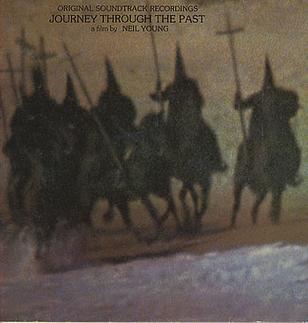
While Everybody’s Dummy has only screened the film but once, has yet to meet anyone else who has nor read any reasonable synopsis, it has been affirmed that the Journey Through The Past album has little to do with said film, despite its classification as a soundtrack. The album doesn’t lend itself to repeated listening, except as a reminder of what’s on it.

It starts out as a kind of retrospective, with television performances by Buffalo Springfield that sound as if they were recorded by pointing a microphone at a TV speaker. We hear CSN telling an audience to listen to their “wooden music”, followed by a lackluster live rendition of “Ohio”. Another tedious “Southern Man” starts side two, then half of “Are You Ready For The Country?” fades into a version of “Let Me Call You Sweetheart” performed by what appears like a dance school. That is followed by a studio meld of “Alabama”, going into the control room so Neil can teach the harmonies to Crosby. The side ends with soundbites of a TV preacher, Nixon, and Crosby ranting about something.

The sidelong rehearsal of “Words” can be pretty taxing, but side four is really odd, even compared to all that has gone before. Outside of Neil talking to a Jesus freak and the slightly meandering “Soldier” (which was recorded in a foundry), everything else is music by other people, including selections from Handel’s Messiah and the movie King Of Kings. One gets the feeling that even if the connection between “Let’s Go Away For A While” from the Beach Boys’ Pet Sounds and the movie could be determined, it wouldn’t have been worth the effort.

The film was shown on Neil’s official website during an online film festival, followed by a few years in the form of grainy YouTube clips and bootleg DVDs. When the Archives actually surfaced in 2009, it was included in the DVD and Blu-Ray packages. The album itself is out of print, and unavailable on CD; an edited mix of “Soldier” is on Decade, and the side three take of “Words” is on the first Archives box, along with a different edit of “Soldier”. Neil finally made the whole thing—dialogue and Beach Boys and all—available for streaming and download from his official website in 2023. Strangely enough, but par for his course, the “title track” wouldn’t appear until his next album, even though he’d been performing it onstage for the better part of two years.

Neil Young Journey Through The Past (1972)—2
Current CD equivalent: none

Wednesday, July 2, 2008

Elvis Costello 10: Goodbye Cruel World

As his last album was a surprise hit, Elvis stuck to the formula and brought the same producers back for another go. The problem was that he had seemingly used up his capacity for pop; plus, his personal life was in the toilet. The songs he prepared for Goodbye Cruel World are dour and gloomy (hence the title), inspired by the country weepers and Richard Thompson songs he’d been obsessed with of late. Elvis himself has called this his worst album, but took the blame off his producers for his failure to rise to the occasion and indulging the current zeal for the Yamaha DX7 synthesizer, which everybody was using in those days.

The producers did what they could, reducing the previous album’s horn section to a single braying saxophone, which heralds “The Only Flame In Town”, which features prominent backing vocals by Daryl Hall, of all people. Despite the automated rhythm, it’s still a catchy tune, with a wacky video to match. Repeated listens will bring out the charms of such tracks as “Home Truth” and “Love Field”, but one also had to navigate through noisy tracks like “Room With No Number”, an unnecessary return to the cheaters’ rendezvous trope. “Inch By Inch” is more of a list than a song, notable only for its spy film arrangement, while “Worthless Thing” keeps toes tapping as it rails against game shows, MTV, and Elvis Presley fetishers.

“I Wanna Be Loved” is an obscure soul cover put through the sequencer, with the guy from Scritti Politti singing along, but it too is more notable today for its own influential video. The promise of “The Comedians” is torpedoed by a clumsy 5/4 arrangement, just as “Joe Porterhouse” and “The Great Unknown” would be a lot more appealing if we had any idea what he was on about. The trashy “Sour Milk-Cow Blues” deserves a better title and chorus hook, while “The Deportees Club”, a solid rocker, is taken at such a pace that the words are indiscernible. The album ends with “Peace In Our Time”, another political statement previously released as a quickie Imposter single a la “Pills And Soap” that fell on deaf ears (in America, anyway).

While a select group of fans still holds incredible affection for Goodbye Cruel World, it was skewered by the critics, and still gets slammed today. Just as the original album tried to replicate the success of its predecessor, the reissues aimed to make up for any mistakes. Along with superior B-sides like “Turning The Town Red”, Rykodisc included an early take of “I Hope You’re Happy Now” and a later acoustic rearrangement of “The Deportees Club” under its alternate truncated title “Deportee”. Much more interesting were the handful of live acoustic performances from a solo tour undertaken between the album’s completion and release, where he realized too late how the songs should have sounded.

Rhino went even further, adding two more live tracks from the same show—again, another candidate for an archival concert release—and several simpler demos along with most of the Ryko extras to fill up its bonus disc. (“The Comedians” appears in the Roy Orbison-styled arrangement the man himself would eventually use, but with different lyrics.) There were also two key outtakes: a ballad version of “The Only Flame In Town”, and “Young Man Blues” from a session that occurred after the Honeydrippers version came out (though they’d been playing it onstage prior to that). And perhaps because they forgot to make room for it on the reissue for the previous album, “Tomorrow’s (Just Another Day)” features Elvis singing with Madness on a rearrangement of their own song.

Covers show up in the demos and onstage: John Hiatt’s “She Loves The Jerk”, “What I Like Most About You Is Your Girlfriend” by The Special A.K.A., and “Sleepless Nights”, previously covered by his beloved Gram Parsons. Through these examples one gets a better sense of how and why the record turned out like it did, as well as insight into the inner turmoil and confusion that put him at odds with his chosen career. And in a small way, they provide a transition to his next grand experiment.

Elvis Costello & The Attractions Goodbye Cruel World (1984)—2
1995 Rykodisc: same as 1984, plus 10 extra tracks
2004 Rhino: same as 1984, plus 26 extra tracks