Tuesday, October 6, 2015

Waterboys 4: Fisherman's Blues

Ever changing and constantly evolving, the fourth Waterboys album shared only a few components to what went before. Recorded over a period of two years, Fisherman’s Blues was built around the core group of Mike Scott, Anthony Thistlethwaite on sax and Steve Wickham on violin, abetted by traditional instruments picked up while immersed in rural Ireland. The combination was inspiring as it is toe-tapping, and it’s gone on to match “The Whole Of The Moon” as the Waterboys’ best work.

The difference is apparent right away, as we’re treated to an acoustic strum, mandolin trill and fiddle pull, in short order, before Scott whoops his way through the title track. Sometimes the simplest songs can be as mesmerizing as any. The fiddle saws frenetically throughout “We Will Not Be Lovers” for a seven-minute attack, given some relief by the quieter Irish blues of “Strange Boat”. Karl Wallinger’s name appears in the writing credits for “World Party”, bridging the connection to his own project. A cover that shouldn’t work but does is what they did to Van Morrison’s “Sweet Thing”, given an appropriate homegrown lilt, the drummer keeping a clockwork pace even through the quotes from “Blackbird”.

Side two is even more Gaelic, beginning with a jig or reel called “Jimmy Hickey’s Waltz” on the CD, and moving to the charming romantic reverie of “And A Bang On The Ear”. “Has Anybody Here Seen Hank” is a better title before it’s learned to be about Hank Williams, though the pairing of the traditional “When Will We Be Married” and “When Ye Go Away”, with its sinewy slide guitar, gets things back on track. After a minute or so of “Dunford’s Fancy”, “The Stolen Child” pairs a recited Yeats poem with Scott’s percussive piano for a stirring finish, via a busked epilogue of “This Land Is Your Land”.

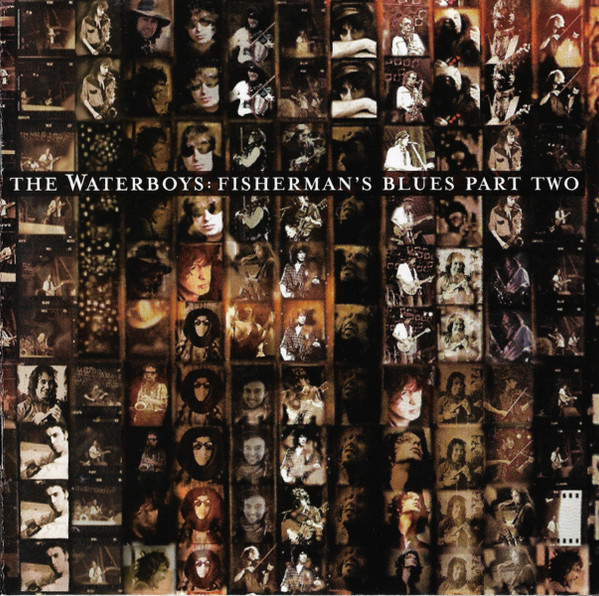
Fisherman’s Blues set a bar that Mike Scott would never really attain again. This was acknowledged in 2001 with the release of Too Close To Heaven, containing ten more songs from the sessions, augmented by a further five when it was released as Fisherman’s Blues Part Two in the US. These tracks are more reminiscent of the Big Music than the Celtic mix, and thus a companion in name only. Still, the 12½-minute title track lives up to the moniker of “epic”. (The original album was bolstered with more folky-sounding tracks on a “Collector’s Edition”, only to be outdone for the album’s 25th anniversary by the seven-disc Fisherman’s Box, collecting all of the sessions in chronological order.)

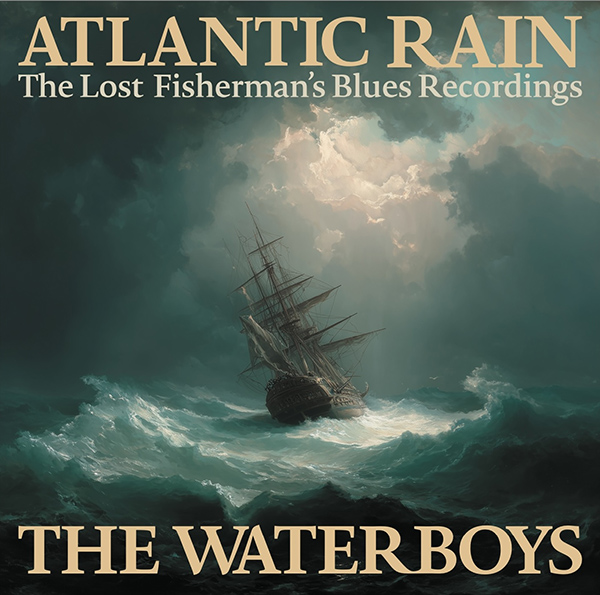
Or so we thought; ten years after that, Mike Scott came into possession of even more tape reels from the three-year gestation of the album, and got another three records (or CDs, if you bought it that way) out of them. Atlantic Rain is thematically organized, with the first disc devoted mostly to original songs, including an excellent, shorter version of “Too Close To Heaven”, a lovely on-the-spot improv dubbed “And Then The Gods”. Covers dominate the second disc, from Dylan, Willie, and Hank to “No Expectations” and “When Doves Cry”, rounded out by “Killing My Heart” and “We Will Not Be Lovers”, here the original live takes that resulted in the released versions. The final is all jams, yet with enjoyable interplay, except maybe for the two takes of “Sgt. Pepper’s Lonely Hearts Club Band” recorded four months apart that span twenty minutes, including a descent into “Hey Jude” because he got the chords wrong. In some cases he added vocals to tracks that hadn’t had any, which is always risky after forty years, and used modern AI techniques to edit tracks from longer takes, but those aren’t dealbreakers. Copious liner notes detail each track, musicians, studios, and an exhaustive chronology of recording dates and other events along the way. (The official Waterboys online shop also offered another side’s worth of material via the Strange Boat EP, including a longer version of the title track, “The Stolen Child” without vocals, a drunk-sounding take on “He’ll Have To Go”, and a lovely instrumental called “The Library In Heaven”.)

The Waterboys Fisherman’s Blues (1988)—4
2006 Collector’s Edition: same as 1988, plus 14 extra tracks
The Waterboys Fisherman’s Blues Part Two (2001)—3
The Waterboys
Fisherman’s Box (2013)—3
The Waterboys
Atlantic Rain: The Lost Fisherman’s Blues Recordings (2026)—3

Friday, October 2, 2015

Gene Clark 6: No Other

Following the fleeting Byrds reunion, the Asylum label held onto Gene Clark, still trying to establish himself as a lucrative singer-songwriter. (They also tried another supergroup with Chris Hillman, Eagles cohort J.D. Souther, and Richie Furay, late of Buffalo Springfield and Poco, fronting former members of Manassas and drummer Jim Gordon, but since we’re talking about Gene Clark here, let’s get back to him.) No Other received the red carpet treatment for its recording, relying on plenty of session cats—Russ Kunkel, Lee Sklar, Joe Lala, even the Allman Brothers’ Butch Trucks—and unlimited studio time, and was promptly ignored upon release, most likely because it didn’t sound like anything else at the time. (The glam portrait on the back cover surely didn’t help.)

It’s a wide-ranging album, beginning with the country of “Life’s Greatest Fool”, which could have fallen off of any of his other solo albums, but is soon overtaken by the backing vocals of the Blackberries. The mysterious “Silver Raven” is too long to be a hit single, but could have been nicely tackled by, say, labelmates the Eagles for some welcome radio exposure. The funky title track rumbles into the frame like the soundtrack of a blaxploitation film; the verse even bears a mild melodic similarity to Sly Stone’s “Don’t Call Me Nigger, Whitey”, while the overall spirit of later Traffic pervades. “Strength Of Strings” takes even longer to formulate, beginning with a riff that becomes something of a tribal chant that seems independent of the song itself, until it’s revealed as the bridge.

But for the clavinet, “From A Silver Phial” is more country-rock, ending in a terrific wah-wah solo by Jesse Ed Davis. “Some Misunderstanding” runs for an epic eight minutes, fulfilling the “cosmic American music” espoused by Gram Parsons, especially after the fuzz-tone violin comes in. Speaking of which, “The True One” sports a melody and picking evocative of “One Hundred Years From Now”. It’s a relatively upbeat palate cleanser for the more introspective “Lady Of The North”, which melds all the styles heard so far.

All good songs, as might be expected, with lyrics that are anything but hokey, the constant is his lonesome voice, which maintains the same welcome, weary tone no matter the backing. Fast forward 45 years, and No Other had gained a reputation as one of those lost masterpieces certain obsessives like to revere. This time, the British 4AD label—which made its bones on such icons as This Mortal Coil and the Pixies—oversaw a remastered expansion of the album, with arty packaging to match and, in the deluxe vinyl version for those with the shekels to spare, even more session outtakes on SACDs (which we didn’t know they still made) and a Blu-ray with multiple mixes including 5.1 surround. Additional tracks included alternate versions of every song on the album, plus a remake of “Train Leaves Here This Morning” from the first Dillard & Clark album, which had been also covered on the debut album by—no kidding—the Eagles a couple years before.

Gene Clark No Other (1974)—3½
2019 Expanded Edition: same as 1974, plus 9 extra tracks (Limited Deluxe Boxset adds another 11 tracks)

Tuesday, September 29, 2015

Frank Zappa 27: Orchestral Favorites

Throughout his lifetime, and towards the end of it, Zappa often went on at length about all the problems he had with “real” musicians, and how people in the classical field ignored him, ripped him off, or otherwise disrespected him. (Can’t imagine why they didn’t hit it off right away.) Insult added to injury anytime he financed an orchestral performance himself, paying for the copying, rehearsing and sundry. But that was usually the only way he could get the dots on the paper to be played.

The final album of music owed to his old label, Orchestral Favorites presents most of the rest of the material originally recorded in 1975 for a larger project, then siphoned off, re-edited and shelved. Timing being everything, it was seemingly rush-released in the wake of Sheik Yerbouti; those looking for more of the same humor would have been disappointed. Instead, they’d get a well-recorded representation of Zappa’s composing abilities.

As the title suggests, this is an orchestral album, with no vocals, which alone makes it an improvement on his last released orchestral experiment, 200 Motels, even repeating some themes. “Strictly Genteel” and “Bogus Pomp” bookend the set and take up the most space, striking a balance between grand themes and avant-garde expressionism. “Pedro’s Dowry” was written specifically for the project, and recalls elements of Lumpy Gravy and “Holiday In Berlin”. “Naval Aviation In Art?” is a brief, suspenseful violin piece, and the old standby “Duke Of Prunes” reappears with a ‘70s shuffle and overdubbed guitar solo.

Throughout Orchestral Favorites, horns and strings rub up against percussion, a standard drum kit, harmonicas, electric violins and electronic keyboards. Together, it provides an alternative to the standard menu of filthiness.

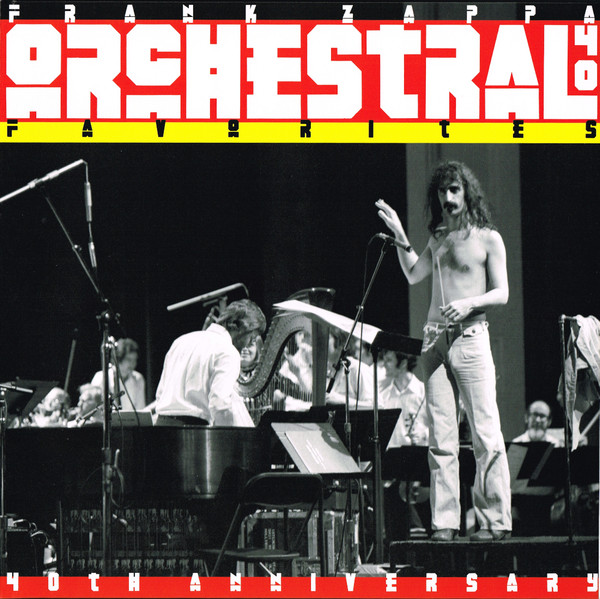
As was common throughout his career, the album as released didn’t sound right to Frank’s ears, and four decades went by before the technology (and tapes) appeared to rectify this. Orchestral Favorites: 40th Anniversary presented the new and improved original sequence on one disc, bolstered by an unused version of “Strictly Genteel” with jaunty keyboard overdubs. Two further discs presented one of the concerts staged for the project in its entirety. In addition to including Frank’s narration of the pieces performed, it turns out there were several other contenders for the original album. Highlights include the rare “Rollo” as well as the first performance of “Black Napkins” actually taught to the players on the spot since he hadn’t transcribed it yet, both with live guitar solos, a sizable chunk of “Greggary Peccary”, and suites of music derived from themes heard on Lumpy Gravy and Uncle Meat.

Frank Zappa Orchestral Favorites (1979)—3
2019 40th Anniversary: same as 1979, plus 21 extra tracks

Friday, September 25, 2015

Joni Mitchell 12: Shadows And Light

Live albums can preserve a key moment in time, or serve to sum up a chapter of an artist’s career. Or sometimes it’s just a way to fulfill contractual obligations. Shadows And Light, Joni’s second double live set, puts her in front of a tight jazz combo, featuring no less than Jaco Pastorius, Pat Metheny, Lyle Mays, Michael Brecker, and Don Alias—a long way from that lovelorn folksinger.

The concert was also a video production at the time, evidenced by the introduction, which melds the title track with sound bites from Rebel Without A Cause and Frankie Lymon. Then it’s right into songs from Hissing Of Summer Lawns, Hejira, and Mingus, which this tour was basically supporting, but only one from Don Juan’s Reckless Daughter. She’s clearly about the band here, letting “Pat’s Solo” bridge “Amelia” and “Hejira”, just as “Don’s Solo” connects “Black Crow” and “Dreamland”. The crowd eats them up, too. A capella group The Persuasions were on the tour as well, and back her up on “Why Do Fools Fall In Love” and the title track, both hinted at in the intro. The only early “hits” here are “Free Man In Paris” and the closing, moody arrangement of “Woodstock”, played on guitar, not piano—almost Hejira-style.

The songs benefit from the unified context, and the sound is clean and full, as befits the players and their concern for tone. Shadows And Light ends up being a good entrée into Joni’s less commercial work, capping off a busy decade and setting the stage for one with less activity. (The first CDs omitted two songs and “Don’s Solo” to fit the program on a single disc; the current two-CD set has everything, though you’ll have to get the DVD for “Jaco’s Solo” and “Raised On Robbery”.)

Joni Mitchell Shadows And Light (1980)—3½

Tuesday, September 22, 2015

Robyn Hitchcock 29: Love From London

After thirty years as a solo artist, with a catalog that has sold well into the dozens, Robyn Hitchcock doesn’t inspire more than a raised eyebrow from most people, least of all those who wonder why he gets so much attention from this blog. Admittedly, his heyday is well in the past, but for those still longing for the consistency he supplied in the late ‘80s/early ‘90s, Love From Londøn comes the closest yet.

First of all, a circular piano part drives “Harry’s Song”, a mysterious number and oddly foreboding opener. “Be Still” is more upbeat, harmonious and pinned by an insistent cello part, while “Stupefied” combines a tabla effect with handclaps and dotty piano. It takes bollocks to write a song called “I Love You” at this late date, and he marries it to a pretty obnoxious backing. More successful is “Devil On A String”, with its college-rock guitar and canned sax.

Besides having a very Hitchcockian title, “Strawberries Dress” could have easily been lifted from an Egyptians album. “Death & Love” are topics he’s covered fully, but here don’t really figure past the title. “Fix You” takes the lyrical hook from the Coldplay song and turns it into a commentary on capitalism (“Now that you’re broke, who’s gonna fix you?”) with a suitably tense backing. “My Rain” is very intricate acoustically and electrically, and matches “Harry’s Song” for the gem of the album. Just to keep things constant, “End Of Time” is a happy sounding song about death, with seashore effects that recall his first solo album and a reprise of what is presumably the album’s title track.

The credits would have us believe that any drums heard on Love From Londøn are computerized, yet the album sounds just as lively as any of his recent work with a human percussionist. We hesitate to give it a higher rating than what we have, but it really is one of his better albums of this century.

Robyn Hitchcock Love From Londøn (2013)—3

Friday, September 18, 2015

Ben Folds 14: So There

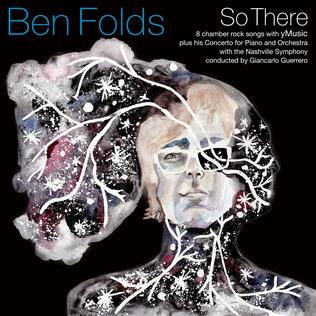
String accompaniments have been features of every Ben Folds album, going back to his first with the Five. So it shouldn’t be a surprise that each of the new songs on So There are all accompanied by an ensemble called yMusic, who provide strings, wind and brass accordingly.

With one exception, most of the songs are opaque lyrically, with an overlying effect of melancholy, even on the upbeat ones. “Capable Of Anything” can’t decide if it’s an apology, a rejoinder or a pep talk, and we’re dying to know who inspired the molasses-slow “Not A Fan”. The title track is the most complex, with its lightning piano runs and extended bridge. “Long Way To Go” is a completed version of a snippet dating back to the fake leak of Way To Normal, and the backing to “Phone In A Pool” sounds like something he’s written before. There’s an odd juxtaposition of references in “Yes Man”, which mentions both “click and drag” and a Fotomat; something the amateur photographer in Ben likely meant intentionally. Of course, Mr. Locker Room returns for “F10-D-A” (“with a big fat D… C what it’s like to B”), which is musically interesting, but the joke doesn’t survive the first verse. “I’m Not The Man”, written with actress and former paramour Alicia Witt, is another sad song in a string of several.

That’s just half of the album, and a setup for his very first completed “Concerto For Piano & Orchestra”. Commissioned and performed by the Nashville Symphony, this three-movement piece sounds very American to these ears, and anything with a prominent piano is going to be compared to “Rhapsody In Blue” anyway. Unlike other “rockers do classical” pieces, such as by Paul McCartney, Elvis Costello or Joe Jackson, this piece doesn’t try to marry the genre, nor is it obvious that it’s written by someone without a classical background. So for that, it works.

The listener is left thinking of such low-key conclusions as “Boxing”, “Evaporated” and “The Luckiest”—all nice songs, but an album full of them needs variety. So There lacks a really standout hook, but at least he’s not repeating himself. Too much.

Ben Folds So There (2015)—3

Tuesday, September 15, 2015

Genesis 9: Seconds Out

At another crossroads, Genesis chose to present their progress in the form of their second live album, and a double to boot. Seconds Out was recorded mostly during the tour for their last album, and occasionally features the sound of two drummers: Chester Thompson, who was brought in to cover the beat while Phil Collins was up front singing, and to play off of him when Phil ran back to his own kit during instrumental sections. (One song, recorded the year before, features the sticks and skins of Bill Bruford, plus Phil. The poor guy had left Yes to join King Crimson, only to see that band fall apart after two years.) Already gaining a reputation as an incomparable live band, here they show off the template which, with another adjustment to come, they’d follow for the best part of the next two decades.

The more interesting parts are the songs originally sung by Peter Gabriel, which is most of the album, and Phil handles those characters pretty well. This is evident when the band moves from “Squonk” to what’s labeled here as “The Carpet Crawl”, building from near silence to the glorious crescendo and back again. “Robbery, Assault And Battery” isn’t any less insufferable live, but “Afterglow” makes a surprise appearance at the end of side one. “Firth Of Fifth” does okay without the piano intro, and Hackett covers the flute solo on guitar with some help from Tony, while “I Know What I Like” is twice as long due to an extended coda that touches on other, older songs (like “Stagnation”), and would continue to do so. “The Lamb Lies Down On Broadway” melds neatly into the “closing section” of “The Musical Box”, providing abridged slices of those epics.

That’s not to say they were already cutting corners on their past. All 24 minutes of “Supper’s Ready” are pretty impressive, Phil navigating the words, melody and voices well, and even joining in on drums for the 9/8 section. “Cinema Show” is also close to the original, but given an abrupt ending. “Dance On A Volcano” culminates in a drum duel, nicely setting up “Los Endos” to bring us full circle to the start. The album fades to the sound of thousands of clapping Parisians being treated to Ethel Merman over the PA.

Seconds Out is successful both at presenting the band’s show, as well as providing something of a “hits” sampler through their more recent work. Steve Hackett left the band before it was released, bringing us one step closer to the Phil Collins we know today.

Genesis Seconds Out (1977)—3½