Friday, September 20, 2024

David Gilmour 5: Luck And Strange

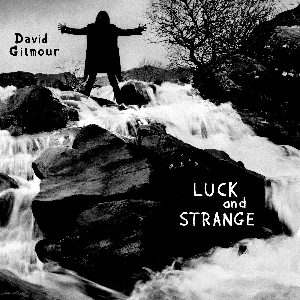
Seemingly on something of a nine-year plan, David Gilmour emerged post-pandemic with only his fifth solo album. Luck And Strange apparently came together very quickly, for him, and he’s settled into his older voice, which we feared was on its way out last time. In co-producer Charlie Andrew he gained a foil who kept him on track, and didn’t let him fall back on old habits or tropes. That’s a tall order when the lyric, which focus on the familiar themes of aging and mortality, provided as ever by wife Polly Samson. Some familiar sidemen appear in the credits, and his now-adult children contribute to several tracks, but the biggest surprise is the legendary Steve Gadd drumming on half the album. Orchestra and choirs appear, but not excessively.

“Black Cat” is a haunting instrumental, Gilmour playing his signature tone over Roger Eno’s piano. If anything, it’s too short. The title track stemmed from a jam with Richard Wright a year before his death, and his distinctive electric piano adds all the color. If the verses seem a little simple musically, wait for the choruses and bridge, and daughter Romany’s harmonies are lovely. “The Piper’s Call” begins with a plaintive ukulele strum but soon builds, with another soaring chorus, then almost imperceptibly into a funky stomper with a solid solo taking it out. It’s a stark contrast into “A Single Spark”, which almost seems like a throwback to Beth Orton trip-pop, with some wonderful layers. “Vita Brevis” is all too brief for an instrumental, the title of which translates as “life is short”.

Romany plays the harp on that, and her voice is front and center on “Between Two Points”, a cover of an obscure (to us) song from 1999 originally written and recorded by the Montgolfier Brothers duo. It’s a haunting performance, and her take is exquisite. At this point the relative heaviness of “Dark And Velvet Nights” sticks out, opening with feedback and a bombastic fanfare. He spends a lot of time wailing on this, supported by another throwback in the ‘70s, almost Philly soul strings. Then it’s back to being pensive on “Sings”; after albums full of imagery and near-poetry, it’s striking to hear him sing of such things as “Portobello Road”. (Near the end we hear a snatch of his original hummed sketch for the tune, with his then-toddler son adding encouragement. It’s very sweet.) As “Scattered” crawls in, a Leslied piano recalls the effect on “Echoes”. A more successful version of the ruminating that slowed down Rattle That Lock, it all builds via some crazy cocktail piano to first an acoustic solo then a more archetypal electric one, but he’s wise enough to calm things down for a subdued coda.

As usual, the album was released in various permutations with extra material. The so-called deluxe CD added the one-off, gypsy-flavored single “Yes, I Have Ghosts” from 2020, sung with Romany and originally released on the audiobook of the novel Polly published that year, and the original 14-minute “barn jam” from 2007 with Richard Wright that was the genesis of the title track. (Vinyl and Blu-ray boxes also added two alternate “orchestral” mixes and sometimes a demo of “A Single Spark”.)

Possibly the best thing about Luck And Strange is that it doesn’t pointedly sound like Pink Floyd, yet it sounds completely like David Gilmour. It may not be, as he’s stated, his best work since The Dark Side Of The Moon—he’s certainly had several high points since then—but it is very strong, and perfectly timed for a fall release. Though we still don’t know what Ozzy Osbourne is doing on the cover.
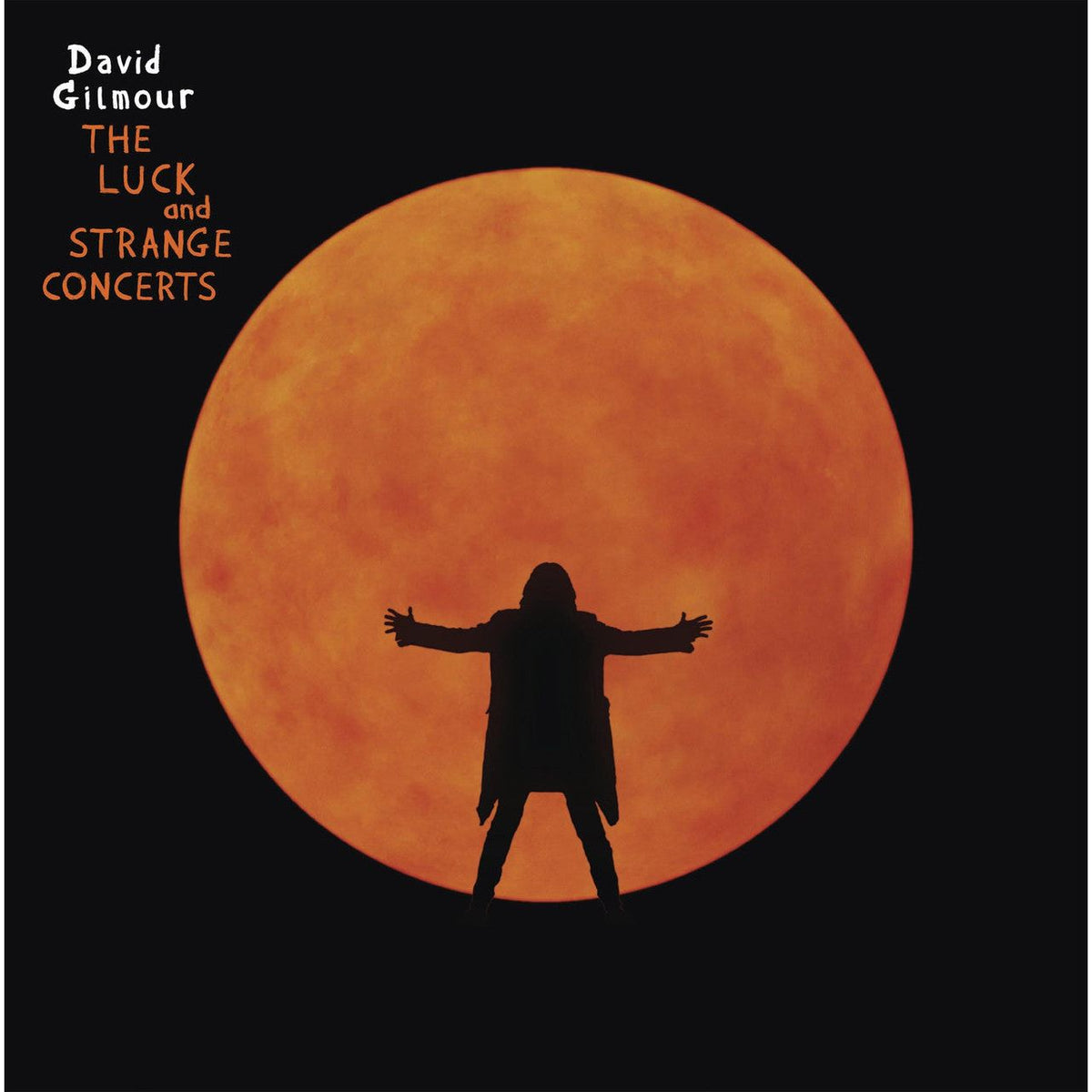
He toured behind the album, kinda, playing residencies in five cities, and just as with the last two, a live album followed. But rather than spotlight a single show, The Luck And Strange Concerts was culled from the entire run. The band is solid as usual, with the stalwart Guy Pratt on bass, Greg Phillinganes on keys, and a few of the supporting players from the album. Romany gets her spotlight on “Between Two Points”, as well as part of the backing vocalists who tackle a subdued “Great Gig In The Sky”. Following the intros of “5 A.M.” and “Black Cat”, the title track kicks off the vocal portion. The “Breathe” into “Time” sequence is back at the top of the set, and the rest of the program goes between songs from the album and the usual cherry-picked oldies from his and the Floyd catalog. Only “A Great Day For Freedom” hadn’t been played on the last tour. David’s in great voice throughout, and taking breaks to play lead helps. (The shows in Rome were filmed and released on DVD and Blu-ray as Live At The Circus Maximus, as well as in a box set that also had the live album on CD and LP. And a book. And postcards. And stickers. And a poster.)

David Gilmour Luck And Strange (2024)—3½
David Gilmour
The Luck And Strange Concerts (2025)—3
Friday, September 13, 2024

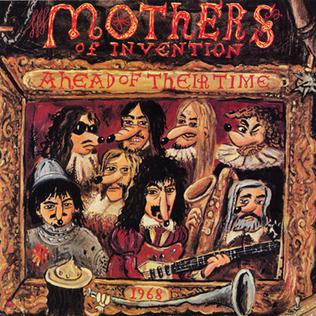
Frank Zappa 53: Ahead Of Their Time

Back in 1968, once the Mothers of Invention included trained individuals—or at least people who could read increasingly intricate music—Frank Zappa began introducing more complicated, almost classical pieces in the band’s sets. Some of this he called chamber music that he wrote himself, some were arrangements of Stravinsky and Zappa idol Edgard Varèse. Either to appeal to the less adept members of the band or with the excuse that audiences needed things dumbed down, silly skits involving scripts and in-jokes would accompany these performances.

Two such performances at London’s Festival Hall included contributions from an actual orchestra alongside the Mothers. Excerpts from the “dramatic” portion emerged in the ‘80s, and the visuals were included as part of the perennially incomplete Uncle Meat film (on VHS), but the shows appeared in more or less a complete form as Ahead Of Their Time.

Because the audio can’t adequately demonstrate the dramatic portion, the first half of the disc is an acquired taste. Much of the music would end up incorporated into “Bogus Pomp”, while the content detailing struggle between “serious music” and its opposite would recur in 200 Motels. Luckily, the guys sound into it, so it’s not too tedious.

The political rarity “Agency Man” is followed by the dramatic “Epilogue”, and the remainder of the disc is pretty much non-stop Mothers rock ‘n roll. “King Kong” eventually segues into “Help, I’m A Rock” and “Transylvania Boogie”, “Pound For A Brown” begets “Sleeping In A Jar”, and the “Orange County Lumber Truck” suite is heard nearly complete, and more than the excerpt already used on Weasels Ripped My Flesh. Being abridged to fit on a single disc, it’s a shame that to date the album hasn’t been expanded to provide at least the equivalent of a full set.

Nearly thirty years went by before the era was revisited. The inaugural release of the Road Tapes series presented a concert in a Vancouver hockey arena (a.k.a. “the local electric icebox”) two months before the Festival Hall show. Obviously there’s no play to perform, so they start right in with improvisations; others dot the setlist. Along with material also heard at the London show, this performance includes a piece introduced as “Shortly” and said to be released on an upcoming album; the music is better known now as “Holiday In Berlin”, and said album was reduced to two records from three, and without this piece. Other highlights include the first album appearance of the doo-wop parody “Oh, In The Sky” and their arrangement of “Octandre” by Varèse. Thanks to some apparently exhaustive restoration work by Vaultmeister Joe Travers, the mono sound is excellent.

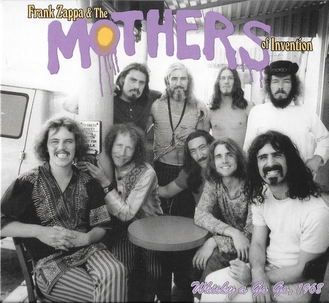
A little over a decade later, another relic from the era emerged. Whisky A Go Go, 1968 was recorded about a month before the Vancouver gig, and just before Ray Collins quit the band for the fourth and last time. The reason for this lengthy occasion was the intention of getting decent live performances from the nine-piece band on tape for future purposes that didn’t exactly develop.

A ten-minute improvisation leads perversely into “America Drinks And Goes Home”. Self-styled impresario (and accused sexual predator) Kim Fowley is brought up help shriek his way through “My Boyfriend’s Back”, followed by the original response of “[I’m Gonna] Bust His Head” and a lengthy “Tiny Sick Tears Jam”. Another improvisation goes into “Status Back Baby”, followed by some doo-wop, original and otherwise. “King Kong” is indexed as two parts, the second of which stops halfway through so the GTO’s [sic] can yell along with “Getting To Know You” and the Bugs Bunny Show theme. (Other guests on the evening included affiliated acts Alice Cooper and Wild Man Fischer; some of the Turtles were supposedly in the audience in a bit of foreshadowing.)

“The Duke” is played twice so they could get a decent usable take; this would eventually form part of “The Little House I Used To Live In”, but here’s it’s mostly Frank soloing over drums. Then there’s “Khaki Sack”, a more structured R&B jam that would be properly recorded in 1970 and shelved for half a century. “The Whip” and “Whisky Chouflée” run together for twenty minutes of mostly one-chord jamming, and the “world premiere” of “Brown Shoes Don’t Make It” for the first time on stage leads into an extended shuffle on the main theme and further improvisation.

In the end, only one segment from the evening was released at the time (“God Bless America” on Uncle Meat), though at least two other songs were mixed by Frank; one snippet made it to YCDTOSA #5, and more finally emerged on 2021’s Zappa documentary soundtrack. As the first full-length concert made available with Ray singing (save a few Beat The Boots), it’s about time.

Zappa/Mothers Ahead Of Their Time (1993)—3
Frank Zappa
Road Tapes, Venue #1 (2012)—3½
Frank Zappa & The Mothers Of Invention
Whisky A Go Go, 1968 (2024)—3

Tuesday, September 10, 2024

Rickie Lee Jones 5: Flying Cowboys

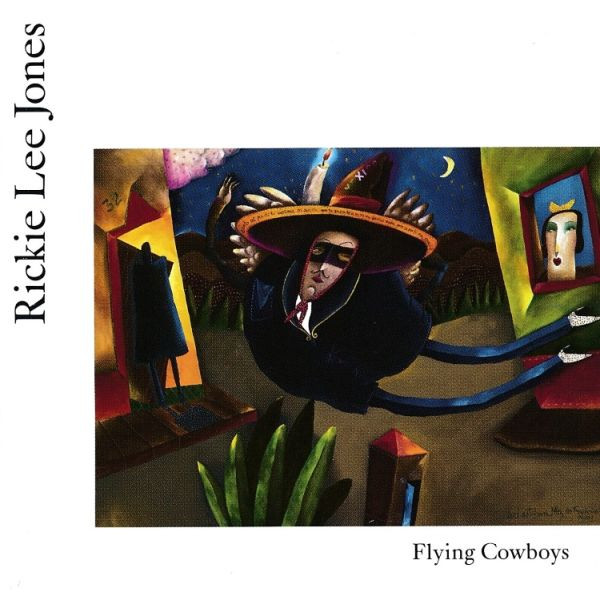
After a long break, during which she got married, and started a family, Rickie Lee Jones returned to public consciousness in early 1989 with a duet with Dr. John on “Makin’ Whoopee”, which went on to win a Grammy. It was a good setup for her next album. Flying Cowboys was notable for being her first album in five years, and also for production work by Steely Dan’s Walter Becker, who’d been off the radar for even longer.

“The Horses” sets the mood right away, and if it’s not a love song to her newborn daughter it works as one anyway, just as “Just My Baby” is a joyful celebration of the first twinges of excitement of new love. “Ghetto Of My Mind” celebrates a similar joie de something, and she’s playing the steel drum amidst all the other island-inspired sounds. “Rodeo Girl” is even more striking when you realize she’s singing and playing everything except the programmed drums. “Satellites” is the catchiest track, and the obvious single, as well as a stark contrast to the talking blues character in “Ghost Train”.

The title track is a collaboration with not just her husband but her old partner Sal Bernardi, who plays the infectious riff and harmonizes with her when she’s not speaking the words. Her cover of Gerry & The Pacemakers’ “Don’t Let The Sun Catch You Crying” obviously comes from a place of affection, but the processed arrangement doesn’t do it any favors. Similarly, “Love’s Gonna Bring Us Back Alive” sounds like the type of reggae groove that would bring Bonnie Raitt platinum albums soon enough. “Away From The Sky” finally brings the tender pretty one this album has needed, and “Atlas’ Marker” is as inscrutable as any of her lyrics, here colored by then-trendy rainforest percussion.

Flying Cowboys is a microcosm of VH-1 adult contemporary in the late ‘80s. This was a sound she’d always had, using many of the players she’d relied on before, but people looking for grit may be disappointed not to find it. (Footnote: To promote the album overseas, she appeared on a British TV show to perform not only the album’s title song but a “duet” with the Blue Nile on their “Easter Parade”, both with Sal in tow.)

Rickie Lee Jones Flying Cowboys (1989)—3

Friday, September 6, 2024

Tears For Fears 8: Everybody Loves A Happy Ending

Come the 21st century, Tears For Fears had become something of a relic of an earlier time. Curt Smith laid low for a while, eventually releasing two solo albums—one under the nom de plume Mayfield and the other as himself. Roland Orzabal emerged after a quiet spell with Tomcats Screaming Outside, a strange techno concoction wisely not credited to Tears For Fears.

But the boys managed to patch things up as well as record an album together, once again having to wait until label shenanigans were worked out. Everybody Loves A Happy Ending loads up on the psychedelia from where they left off with a lot more sexy soul, truly enjoying the potential of the studio. The Beatles remain a touchstone; we counted at least two samples of the “Day In The Life” orchestral buildup throughout the album. In addition to the dynamic duo, Charlton Pettus is a main collaborator, having already worked with Curt on his solo projects.

The title track emerges like a spaceship appearing over the horizon, then an alarm clock rings and the song becomes an XTC pastiche (a redundant statement to be sure). About halfway through there’s another mood shift to a completely different vibe—a hallmark of the album as a whole. “Closest Thing To Heaven” is even closer to “Sowing The Seeds Of Love”, right up to the backwards drum fill, but gosh, what a hook. A 12-string jangle drives the chamber-pop touches of “Call Me Mellow”—wherein they didn’t realize they took the melody from “There She Goes”—and things finally slow down for the lightweight “Size Of Sorrow”. No points for guessing whence they copped the drum pattern for “Who Killed Tangerine?”, another song where the choruses don’t match the verses. They finally sound almost contemporary, or at least less retro, on “Quiet Ones”, which is pretty straightforward pop and not at all complicated.

We hear a little Brian Wilson in the melodies of the lyrically sparse but still catchy “Who You Are”, which just soars until the processed closing reprise of the title track. It’s a strange transition to the unsettling effects throughout “The Devil”, a brooding number that gets a lift from the guitar before winding to a halt. They save all their tricks for the glorious “Secret World”, with its Paul Buckmaster arrangement (before Ben Folds hired him); the studio applause at the end is justified. “Killing With Kindness” juxtaposes slow and faster sections, a battle of psychedelic grooves that don’t always gel. “Ladybird” recalls some of the textures of the last album before maneuvering through tricky time signatures, and “Last Days On Earth” takes us out with trippy soul; both tracks recall Seal, in a good way.

At 12 tracks and just under an hour, Everybody Loves A Happy Ending is a very dense album, with a lot of style but none of the overbearing substance that marked their earliest work. For one thing, they’re twice as old as they used to be. It’s the sound of people enjoying making records, and for fans of the duo, it was just nice to hear them playing together again.

Tears For Fears Everybody Loves A Happy Ending (2004)—3

Friday, August 30, 2024

Jon Anderson 1: Olias Of Sunhillow

Unlike his colleagues in Yes, Jon Anderson’s first solo album was exactly that. He played and sang everything on Olias Of Sunhillow, a dense collection of songs inspired by a previous Yes album cover—namely, Fragile. The titular hero builds an ark-like hang glider to carry the four tribes of his home planet to another before the first is destroyed. (This isn’t clear from the songs, but explained in the narration within the elaborate packaging.) As he was working completely on his own, with only an engineer for assistance, it took a while, but when complete it turned out to predict the kind of New Age music that would be dominated by synthesizers as well as esoteric instruments, with only his distinct voice (and ecological lyrical concerns) tying it all into Yes proper.

“Ocean Song” rumbles into form with a wash of keyboards and harp-type things, then layers of voices bring in “Meeting (Garden Of Geda)”, a mere prelude to “Sound Out The Galleon”, a proper song. More harps play “Dance Of Ranyart”, supposedly the navigator, and he’s gotten quite proficient at the instrument, but this is another prelude, this time to the bloops and beeps that begin “Olias (To Build The Moorglade)”, another actual song that helps us pronounce the guy’s name right. He follows the Tolkien path of creating his own language in “Qoquaq Ën Transic/Naon/Transic Tö”, a suite of synth beds interrupted by indiscernible chanting over tribal drums. “Flight Of The Moorglade” is suitably trilling and hopeful.

Presumably they got airborne, as “Solid Space” nicely evokes the sensation of flight, or at least watching such a thing. The aural journey continues for the lengthy “Moon Ra/Chords/Song Of Search” suite, wherein the notes tell us fear and discord took hold of the refugees, yet Olias was able to quell everything with his music. (The music itself, however, stays lofty and progressive throughout.) “To The Runner” provides another trilling celebration of something, culminating in music we’re sure we heard on the Narada label at some point or another.

Olias Of Sunhillow is one of those albums that provides an immersive, multi-sensory experience should one choose to delve so deep, but it also works as a nice album to listen to for the sake of enjoyment. This too was mostly ignored in the digital era in this country, but has since been given the deluxe treatment with remastered sound and 5.1 surround content. He’s been threatening a sequel, so who knows if that will ever happen.

Jon Anderson Olias Of Sunhillow (1976)—3

Tuesday, August 27, 2024

Chris Squire: Fish Out Of Water

Released only weeks after Steve Howe’s solo debut, Chris Squire’s own effort got somewhat lost in the shuffle. Part of the problem was the cover art, which resembled that of the first John Entwistle album. But like Howe’s album, Fish Out Of Water relied on contributions from former cohorts, yet was intended to stand on its own.

His bass was always a key part of Yes compositions, so one needn’t be concerned that the album would be overly dominated by the instrument. Also, his vocal support was also very much part of the band’s brand, so he sounds that much more familiar. Along with Bill Bruford and Patrick Moraz, his main collaborator on the album was one Andrew Pryce Jackman, a pre-Yes bandmate who’d gone on to a career in arranging and conducting. Being recorded when it was, each side is something of a suite, and flows accordingly.

The pipe organ from London’s St. Paul’s Cathedral drives much of the busy “Hold Out Your Hand” along with the bass. An orchestra comes in at the end for a sharp segue into “You By My Side”, a near power ballad for piano with a gravitas similar to that of Zappa’s “Strictly Genteel” until the flute comes in. His vocal blend is nicely constructed too. Another pastoral passage opens “Silently Falling”, with a wandering flute distracting from the verse until the drums come in. A fairly straight section gets more complicated meter-wise to set up a Moraz organ solo that builds to a frenzy before spiraling to stop. A moment of silence allows the piano and voice to come back in, slowly joined by drums and even a couple of stabs of guitar. At its core, it’s a simple motif, but moving.

A funky electric piano appeals to Bruford’s jazz tendencies for “Lucky Seven”, while Mel Collins (also formerly of King Crimson) gets to add saxophones to the groove, and yes, there’s plenty of bass. After the jam peters out, we have another pastoral passage for “Safe (Canon Song)” to grow on over fifteen minutes. Portions of this a very reminiscent of other Yes epics, in the melodies and syncopated pianos, but the orchestra dominates. It’s another track that spirals into a wall of sound as different instruments navigate the odd time signature. But like the best prog, it all comes together rather than sounding like a mess. After the final chord fades, the subdued bass solo provides a coda that somehow matches the pipe organ when we started.

For all its popularity among fans, Fish Out Of Water was ignored for much of the digital era. Unlike Steve Howe’s albums, it was not included in 1994’s Yes catalog revamp, only appearing a decade later on the Wounded Bird label (a home for similar castoffs), followed shortly by an expansion that included one bonus track plus DVD content. In time for what would have been his 70th birthday, it got a new mix by King Crimson’s Jakko Jakszyk, which was issued alongside a remaster of the original mix, plus bonus tracks in the form of single versions of two songs, and both sides of 1981’s “Run With The Fox” Xmas single with Alan White. (A limited edition added DVDs with the expected 5.1 mix and previously released content, plus vinyl versions of the album and singles.)

Chris Squire Fish Out Of Water (1975)—3
2018 Deluxe Edition: same as 1975, plus 9 extra tracks

Friday, August 23, 2024

Steve Howe 1: Beginnings

With the idea that everyone in Yes was teeming with ideas that strained the limits of vinyl, the band went on a brief hiatus so everyone could do a solo album. First out of the gate was Steve Howe, whose Beginnings got a visual boost with a Roger Dean album cover, and utilized longtime band engineer Eddy Offord along with a few ringers like Alan White to handle the handful of instruments he didn’t play himself. Unfortunately, he also insisted on singing.

After some chatter from (presumably) one of his children, lots of strummed acoustics propel “Doors Of Sleep” into place, with a poem by an English suffragist poet sung where the solo should have stayed without competition. “Australia” is even more intricate, and awfully overwrought for what seem to be impressions of touring that continent. After a near-jazz intro, “The Nature Of The Sea” follows some intriguing dynamics, and best of all, it’s all instrumental, supported by members of Gryphon, who’d opened for Yes on recent tours. But for its trilling intro section and vocal sections designed for Jon Anderson, “Lost Symphony” should have stayed that way, drenched as it is in honking saxophones.

The title track is based on a classical guitar piece, given a very twee, faux-baroque arrangement by Patrick Moraz. It would be very nice to hear unadorned. Speaking of faux, “Will O’ The Wisp” has a brief backwards intro nod to “Roundabout” in its own, and some very challenging meters, so there’s potential, but he hits about every sixth note he tries to sing. “Ram” is fun, a snappy pickin’ piece that’s a cousin of “Clap”, overlaid with slide guitar, banjo, and washboard for even more hokiness. “Pleasure Stole The Night” is mildly medieval, but “Break Away From It All” sounds the most like Yes, with harmonies, choogling bass, and particularly Bill Bruford on drums.

As his guitar arguably had a lot to do with the band’s appeal, that should be enough for most fans to give the album the benefit of the doubt. But they’d also likely think Beginnings would have better benefitted from another singer. Apparently pitch wasn’t the concern of anyone involved.

Steve Howe Beginnings (1975)—2